Search This Blog

Thursday, May 28, 2015

Transferring Dead Trees from Source of Wildfire Fuel to Biofuel

From the USDA:


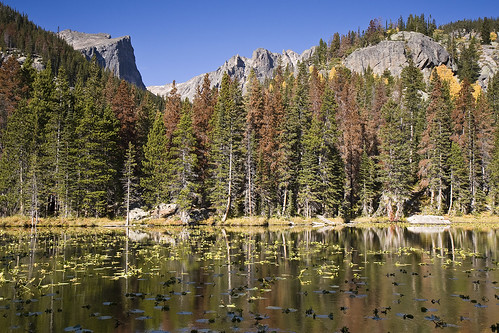
Mountain lake with pine beetle damaged forest
Researchers are harvesting beetle-killed trees in the Rocky Mountain region for use as feedstock for biofuel. (iStock image)
This post is part of the Science Tuesday feature series on the USDA blog. Check back each week as we showcase stories and news from USDA’s rich science and research portfolio.
Trees killed by bark beetles have, for years, been a source of fuel for forest fires.  Now, those very trees are being turned into biofuel and biobased products.
This vast bioenergy resource—approximately 46 million acres—requires no cultivation, circumvents food-versus-fuel concerns, and may have a highly favorable carbon balance compared other forestry feedstocks. The problem, however, is that beetle-killed biomass is typically located far from urban industrial centers in relatively inaccessible areas, which means transportation costs are a key barrier to widespread utilization of this vast resource.
The U.S. Department of Agriculture’s National Institute of Food and Agriculture (NIFA) supports seven regional integrated Coordinated Agricultural Projects (CAPs) that develop regional systems for the sustainable production of advanced biofuels and biobased products. The regional systems focus on non-food dedicated biomass feedstocks such as perennial grasses, sorghum, energy cane, oilseed crops, and woody biomass.
One such program, the Sustainable Bioenergy Alliance Network of the Rockies (BANR), is led by Colorado State University.  BANR brings together scientists, educators, and extension specialists from universities and government agencies to work with industry partners to address the major challenges that impact economical and sustainable utilization of insect-killed trees for the production of biofuels and biochar.
Because collecting beetle-killed trees is more of a salvage operation than a harvest, BANR has created teams to address the various challenges.  The first order of business is locating the feedstock, which BANR does through various sensing approaches.  They will also develop models to predict future beetle infestations.  Another team is tackling the logistical problems of harvesting, collecting, transporting, and storing the raw biomass without negatively impacting natural forest regeneration and water resources.  Specifically, goals for this aspect of the operation include benchmarking the performance of equipment used to harvest, process, and deliver beetle-killed trees, and then optimize the logistics for site conditions, specific end uses, and facility locations.
Education is also high on the list of program priorities.  BANR’s education team is developing middle and high school science units that focus on bioenergy; professional development for K-12 teachers; research opportunities for K-12 teachers and undergraduate students; and online coursework for undergrads, graduate students, and K-12 teachers.
Through federal funding and leadership for research, education, and extension programs, NIFA focuses on investing in science and solving critical issues impacting people’s daily lives and the nation’s future. For more information, visit www.nifa.usda.gov.
    

Duke Energy, LG Chem, Greensmith to build fast-response energy storage system in Ohio - Duke Energy

CHARLOTTE, N.C. -
Duke Energy, LG Chem and Greensmith will team up to build a battery-based energy storage system in Ohio, designed to enhance reliability and increase stability on the electric power grid, the companies announced today.
Duke Energy, the nation's largest electric utility, currently owns nearly 15 percent of the grid-connected, battery-based energy storage capacity in the U.S., according to independent research firm IHS Energy.


Duke Energy, LG Chem, Greensmith to build fast-response energy storage system in Ohio - Duke Energy

Clean Energy Leaders from the U.S. and China to Convene in Washington, D.C.

From the U.S. Department of Energy Office of Energy Efficiency and Renewable Energy:


Climate change is not just an American problem. It’s a world problem. We’re doing our part to advance clean energy technologies worldwide to mitigate #climate change. Clean #energy leaders from the #US and#China will convene in Washington, D.C., next week for the fourth U.S.-China Renewable Energy Industries Forum. This high-level event—co-hosted by the U.S. Department of Energy, the American Council On Renewable Energy (ACORE), and China's National Energy Administration—brings together 150+#government#industry, and #academic leaders from both countries to discuss #policy and #market outlook, share best practices, assess joint work, prioritize future collaborations, and unlock #commercial opportunities. Learn more about the forum: http://go.usa.gov/396fd.

Duke Energy, University of South Florida St. Petersburg unveil solar battery project - Duke Energy

ST. PETERSBURG, FLA. -
Duke Energy Florida and the University of South Florida St. Petersburg (USFSP) today unveiled a new solar battery project that will explore how to store and use energy from the sun. A $1 million grant from Duke Energy is funding the research at USFSP.
As part of the grant, a 100-kilowatt (kW) solar photovoltaic (PV) system has already been installed on the top of the university's 5th Avenue South parking garage.


Duke Energy, University of South Florida St. Petersburg unveil solar battery project - Duke Energy

Tuesday, May 19, 2015

Algae is Wonderful Stuff

From the U.S. Department of Energy Office of Energy Efficiency and Renewable Energy:


#ICYMI: Soon you can #HangTen with a #surfboardmade from #algae instead of plastics produced from petroleum. An Energy Department joint research and development investment with biotech firm Solazyme and the UC San Diego’s (UCSD) California Center for Algae Biotechnology has resulted in the world’s first surfboard made using algal oil. Read more about this project which is key in our effort to produce more plastics using algae instead of petroleum:http://go.usa.gov/38VqQ.
#Cowabunga

Monday, May 18, 2015

Standard Messaging Platform for Distributed Energy Resources

From the National Renewable Energy Laboratory:


NREL and EPRI have developed and tested a standard messaging platform for distributed energy resources--solar panels, wind turbines, microgrids, and battery storage--that use smart inverters to communicate with other systems effectively. http://www.nrel.gov/esi/news/2015/18502.html

Energy Star Homes

From Energy Star:


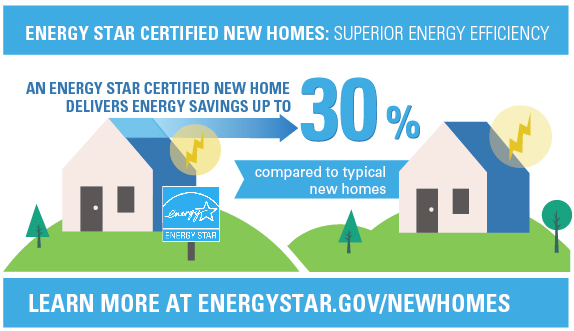
Saving energy = Saving money. #ENERGYSTARCertified New Homes are up to 30% more efficient than typical homes! bit.ly/_ESH