Search This Blog

Sunday, October 6, 2013

GE Energy Financial Services and Partners Announce Completion of Expansion at Colorado Highlands Wind Project

GE Press Release:

GE Energy Financial Services and Partners Announce Completion of Expansion at Colorado Highlands Wind Project

October 2, 2013
Output at Colorado Highlands Wind increased by 36 percent

The expansion of Colorado’s newest renewable energy facility is complete, with the Colorado Highlands Wind project now capable of generating 91 megawatts of electricity for Tri-State Generation and Transmission Association.

The facility originally came on-line in December of 2012, with 42 1.6-megawatt GE turbines able to produce 67 megawatts of power. The expansion – which was announced in April and began construction in July – consists of an additional 14 1.7-megawatt GE turbines, increasing the facility’s total current capacity by 36 percent.

Tri-State has a 20-year power purchase agreement to receive all the electricity and environmental attributes from the wind farm, which is jointly owned by Alliance Power, Inc. of Littleton, Colo., and GE Energy Financial Services of Stamford, Conn. It is located on 6,640 acres in northeast Colorado’s Logan County – in the service territory of Tri-State member co-op Highline Electric Association.

“Colorado Highlands Wind has been performing extremely well since being brought on-line late last year,” said Tri-State senior vice president Brad Nebergall. “Since it was originally designed to accommodate 91 megawatts on the existing transmission system – and since Tri-State is always proactively pursuing projects that make sense for us and our member electric co-ops – the expansion of Colorado Highlands Wind was an opportunity we quickly embraced.”

Jim Michael, managing member of Colorado Highlands Wind, said, “We are pleased to be able to increase the long-term cost-effective renewable energy that our project is generating for Tri-State and its members, while providing other significant benefits to the community.”

Colorado Highlands Wind is currently one of three utility-scale renewable energy facilities from which Tri-State receives all of the electrical output and renewable energy credits.

In 2010 the wholesale power supplier began purchasing the electricity generated at the 51-megawatt Kit Carson Windpower Project in eastern Colorado as well as the 30-megawatt Cimarron Solar Facility in northeastern New Mexico. Combined with Tri-State’s renewable hydropower resources, renewable energy generation makes up approximately 18 percent of the energy the association provides to its member co-ops.

In addition, Tri-State’s member co-ops have another 49 megawatts of local, community-based renewable and distributed generation projects in operation or scheduled to be operational in the near future.

In 2013, Tri-State adopted a new wholesale rate, along with demand management and energy shaping product offerings that, among other benefits, will assist the association to better integrate intermittent renewable resources into its power supply.

Based in the Denver suburb of Westminster, Tri-State Generation and Transmission Association is a not-for-profit wholesale power supplier to 44 electric cooperatives and public power districts serving approximately 1.5 million consumers throughout a 200,000 square-mile service territory across Colorado, Nebraska, New Mexico and Wyoming.

About GE Energy Financial Services
GE Energy Financial Services—GE’s energy investing business—works as a builder, not just a banker, to help meet the world’s power and fuel needs. We offer more than money—expertise—for essential, long-lived and capital-intensive power, oil and gas infrastructure—GE’s core business. Drawing on GE’s energy technical know-how, financial strength and risk management, we see value where others don’t and take on our customers’ toughest challenges with flexible equity and debt transaction structures. Based in Stamford, Connecticut, GE Energy Financial Services holds approximately $18 billion in assets. More information: www.geenergyfinancialservices.com. Follow GE Energy Financial Services on Twitter: @GEEnergyFinServ

GE Lighting Showcases Long-Lasting, Durable Automotive LED Headlight Technology at AAPEX

GE Press Release:

GE Lighting Showcases Long-Lasting, Durable Automotive LED Headlight Technology at AAPEX

October 2, 2013
EAST CLEVELAND, Ohio — Oct. 2, 2013 — (NYSE:GE) — GE Lighting delivers improved visibility and a long life rating for drivers with its GE NIGHTHAWK™ LED headlights, which are designed to last for 15,000 hours and draw less amperage than standard halogen headlights.
GE will showcase its NIGHTHAWK LED headlight technology in booth #1432 at the upcoming Automotive Aftermarket Products Expo (AAPEX), from Tuesday, Nov. 5 through Nov. 7, 2013, at the Sands Expo and Convention Center in Las Vegas, Nev.
The NIGHTHAWK LED headlight provides a reliable automotive exterior lighting solution that is compatible with a variety of vehicles, including motorcycles, Jeeps, off-road vehicles and classic car models from 1983 and older. Available in 5” x 7” rectangular and 7” round models, NIGHTHAWK LED headlights are a direct-fit replacement for conventional sealed beam halogen headlights.
Utilizing a standard HB2/H4 wiring connection that works with both 12-volt and 24-volt systems, NIGHTHAWK LED headlights require no adapters or special tools to install. Drivers can install each headlight within 30 minutes or less, on average.
Crisp, White LightNIGHTHAWK’s filament-free LED light source provides a bright, white light with greater visibility on road surfaces when compared with standard halogen bulbs.
“The result of crisp, white LED light is a dramatic improvement in distance projection and better overall driver visibility for increased reaction time,” said Rob Gill, North American automotive sales manager with GE Lighting. “Our NIGHTHAWK LED headlights also deliver a color temperature that is close to daylight [5600 Kelvin], which improves drivers’ abilities to perceive contrast.”
NIGHTHAWK LED headlights also feature a horizontal split-lamp design, which produces a unique low beam and high beam appearance. Its sharp, low beam “cutoff” of upward light also results in very little light being cast into the eyes of oncoming drivers. Further, its non-yellowing polycarbonate lens distributes light evenly and helps protect against damage from typical road debris.
Exceptional DurabilityUndergoing GE’s thorough engineering and testing procedures to deliver high-quality performance, NIGHTHAWK headlights are built using a rugged aluminum die-cast lamp housing and solid-state circuitry design to withstand rough conditions and vibration. Further, its epoxy-sealed electronics help to protect against damaging moisture and corrosion.
Automotive aftermarket distributors and suppliers can benefit from opportunities to upsell and better satisfy customers with dependable LED lighting technology that requires no maintenance beyond normal lens cleaning. NIGHTHAWK LEDs are also ideal for commercial owners/operators and fleet maintenance managers looking to improve productivity and maximize driver efficiency by helping to eliminate hazards and costly downtime associated with lamp failure.
GE’s NIGHTHAWK LED headlamps meet all DOT requirements and come with a 3-year limited warranty. For more information, visit www.gelighting.com.
About GE Lighting
GE Lighting invents with the vigor of its founder Thomas Edison to develop energy-efficient solutions that change the way people light their world in commercial, industrial, municipal and residential settings. The business employs about 14,000 people in more than 100 countries, and sells products under the Reveal® and Energy Smart® consumer brands, and Evolve™, GTx™, Immersion™, Infusion™, Lumination™, Albeo™ and Tetra® commercial brands, all trademarks of GE. General Electric (NYSE: GE) works on things that matter to build a world that works better. For more information, visit www.gelighting.com.

GE Energy Financial Services Provides Structured Equity Commitment for Invenergy’s Prairie Breeze Wind Energy Center in Nebraska

GE Press Release:

GE Energy Financial Services Provides Structured Equity Commitment for Invenergy’s Prairie Breeze Wind Energy Center in Nebraska

October 2, 2013
Invenergy Wind LLC (“Invenergy”) announced today that it has arranged debt and tax equity financing for its 200.6 MW Prairie Breeze Wind Energy Center project (“Prairie Breeze”), which is under construction approximately 100 miles northwest of Lincoln, Nebraska.

The financing included construction and term loans with Sovereign Bank, N.A. (an affiliate of Banco Santander S.A.), Prudential Capital Group, and Rabobank, acting together as Joint Lead Arrangers and Joint Bookrunners. Tax equity commitments were secured from affiliates of GE (NYSE: GE) unit GE Energy Financial Services, Bank of America Merrill Lynch, and JP Morgan.

Prairie Breeze will feature 118 GE 1.7 MW wind turbines and produce enough clean, renewable energy to power approximately 100,000 homes. Commercial operations are scheduled to begin later this year, with output to be purchased by the Omaha Public Power District (“OPPD”) under a long-term power purchase agreement.

“Invenergy is delighted to complete financing for our first wind energy generation project in Nebraska, and to work with the Omaha Public Power District in bringing clean energy to the state,” said Jim Murphy, Invenergy’s Chief Financial Officer. “We are pleased to have many of our key relationship lenders and tax equity providers committed to investing with us in this outstanding project.”

Prairie Breeze is located on approximately 25,000 acres of private land in Antelope, Boone, and Madison Counties. Blattner Energy is the project’s general contractor, and currently more than 230 skilled workers are constructing the facility.

The project will further benefit its host community economically through tax payments; salaries paid to local, full-time operations and maintenance staff members; and annual lease payments to landowners.


About Invenergy
Invenergy and its affiliated companies develop, own and operate large-scale renewable and other clean energy generation facilities in North America and Europe. Invenergy is committed to clean power alternatives and continued innovation in electricity generation. Invenergy's home office is located in Chicago and it has regional development offices throughout the United States and in Canada and Europe.

Invenergy and its affiliated companies have developed over 7,900 MW of clean energy projects that are in operation, in construction, or under contract, including 61 wind, solar, and natural gas power facilities. For more information, please visit www.invenergyllc.com.

About GE Energy Financial Services
GE Energy Financial Services—GE’s energy investing business—works as a builder, not just a banker, to help meet the world’s power and fuel needs. We offer more than money—expertise—for essential, long-lived and capital-intensive power, oil and gas infrastructure—GE’s core business. Drawing on GE’s energy technical know-how, financial strength and risk management, we see value where others don’t and take on our customers’ toughest challenges with flexible equity and debt transaction structures. Based in Stamford, Connecticut, GE Energy Financial Services holds approximately $18 billion in assets. More information: www.geenergyfinancialservices.com.
Follow GE Energy Financial Services on Twitter: @GEEnergyFinServ.

Thursday, October 3, 2013

Weatherization Work Guidelines Launched

NREL Press Release:

Weatherization Work Guidelines Launched

September 30, 2013

Photo of a man in a suit blowing insulation into an attic. Enlarge image
William Stewart with Veterans Green Jobs blows cellulose insulation in the attic of a home A recent collaboration between the Energy Department, NREL, and the home energy performance industry is supporting the weatherization workforce with consistent on-the-job tools and accreditations that lead to better-defined career paths.
Credit: Dennis Schroeder
Getting up and going to work is hard enough every day. But add to your burden the need to remember every step of your job down to the smallest detail — and the fact that if you want to change careers, your lack of credentials might mean starting from scratch. These are the challenges faced by many of the weatherization professionals working to make U.S. homes more energy efficient.
A recent collaboration between the Energy Department, its National Renewable Energy Laboratory (NREL), and the home energy performance industry is seeking to change this by supporting the weatherization workforce — for which demand has exploded in recent years — with consistent on-the-job tools, accredited training programs, and credentials that lead to better-defined career paths.
The Energy Department's weatherization program has been in existence for more than 30 years and has provided weatherization services to more than 6.4 million low-income households, reducing building energy use by 36%. To shepherd the weatherization industry into a new technological era, the Department's Weatherization Assistance Program (WAP), with support from the WAP National Training and Technical Assistance Plan, introduced the Guidelines for Home Energy Professionals project — and with it, three goals:
  • Define quality work through standard work specifications
  • Define quality training through a vetted accreditation process
  • Define quality workers through advanced professional certifications.
Three years ago, NREL was tapped by the Energy Department to lead the project, and the end result was a new tool for weatherization processionals —Standard Work Specifications (SWS). SWS define the minimum requirements needed to ensure that the work performed during energy upgrades in single-family, multifamily, and manufactured homes is effective, durable, and safe.
"NREL was chosen because of our ability to bring industry together for market transformation activities," NREL Principal Lab Program Manager Dan Beckley said. "The industry wasn't going to invest in creating a document like this because it's not organized in that way. It was a great role for NREL to bring in existing partners and then parlay that into an industry effort."
The SWS can be used as an industry guide for workers, training instructors, homeowners, and program administrators involved in the home performance industry. In addition, the Energy Department is working to mandate that all WAP-funded weatherization efforts be inspected by a certified quality control inspector. The new Home Energy Professional Certifications require home energy professionals to demonstrate comprehensive and technical proficiency in the four most common job classifications in the home energy upgrade industry: energy auditor, retrofit installer technician, crew leader, and quality control inspector.

Collaboration from the Get-Go

Photo of a woman shaking hands with a weatherization professional. Enlarge image
Steve Lemaire (left) and Zump Urycki (right) are thanked by Tammara Thayer, whose home they are auditing in Loveland, Colorado. Thayer is participating in an Energy Department program that assists homeowners with weatherizing their homes. Soon, weatherization customers will be able to seek out contractors with the program's new Home Energy Professional Certifications.
Credit: Dennis Schroeder
According to the project team, before launching the SWS there was no go-to source on how to go into a house, retrofit it, and walk away recognizing that the job was done right.
"When we started the project three years ago, it was somewhat unprecedented. We initially brought together well over 100 experts to draft up the first of what these standards would look like," Beckley said. "This wasn't a lab exercise where we said, 'We think we know what's best'; rather, this was driven by industry. It was for industry, by industry — we simply were the facilitators and provided some technical expertise.
"We broke out the work activities into the sections of the house. For instance, if you are going to seal an attic, we want to make sure that as you come down the ladder, you know what the outcome should be. These standards don't tell you how to do the work; industry has its own standards and best practices."
NREL Project Manager Chuck Kurnik also noted: "We solicited all of industry for comments on the SWS, including industry associations and trade groups. We feel that all the industry feedback helped to make it a stronger document. Every time we would do a public comment period, the document would become stronger."
Over a three-year period, NREL had more than 300 industry professionals involved in the development of the SWS.
Shortly after the creation of the SWS, a new online SWS tool was in the works and launched in the last few months.
"One of the functionalities of the tool is that as a crew leader approaches a house, they will have a scope of work so they can hand out checklists to their crews," Beckley said. "The tool has a 'Favorites' functionality that allows you to identify and store details associated with any part of the house you are going to touch on that given day. Then you can go ahead and send those details via email to a mobile device, so workers have in their hands clear expectations for the expected outcome. And with the checklist, they can make sure before they walk away that they accomplished the task at hand."
NREL also developed an application programming interface (API) that is publicly available. Companies can take the API and integrate it into the tools that they develop for their employees — which could be handy for the industry partners integrating SWS guides into their training.

Industry Immediately Puts the SWS to Use

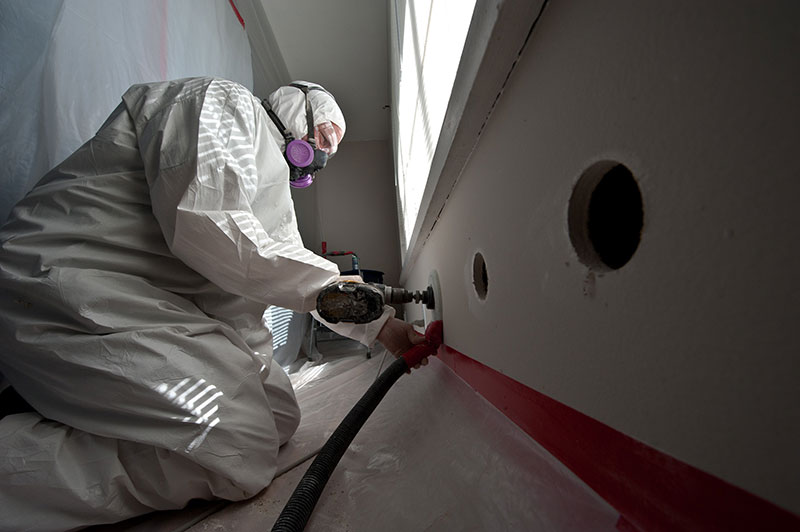
Photo of a man working in protective clothing in a home. Enlarge image
Joe Spreer with Veterans Green Jobs, drills holes to blow cellulose insulation in the interior walls of a Lakewood, Colorado, home. This home is part of the Energy Department's Weatherization Assistance Program, which supports energy efficiency upgrades to low-income homes in the Denver area.
Credit: Dennis Schroeder
Amanda Evans, director of the New Mexico Energy$mart Academy, is using the SWS as part of an accredited training program for weatherization work.
"We like to put students in pairs and give them something they think they know how to do and ask them to write all the steps down in as much detail as they can," Evans said. "Once they've done that, we'll pull up the SWS, and they go through and see what they got and how many they missed. It's a tool to show them how their memory isn't as effective as using something that is clearly written out. We talk about how even pilots and doctors have checklists for their work."
Austin Energy is looking to revamp its multifamily rebate program, and for this municipal utility, the timing of the development of the SWS couldn't have been better.
According to Jaime Gomez, coordinator for Austin Energy's multifamily rebate program, his team was recently reviewing old notebooks from when the program was first developed. They discovered that all of the forms and information had not changed since the early 1980s.
"We realized that everyone has caught up to what we are doing; we decided the time had come to change up our program," Gomez said. "We've come up with a new way of thinking about how we are doing things. We decided to include a stringent handbook with the use of registered contractors. Along with that handbook, we need technical specifications, and it was going to be really difficult for us to come up with all of that on our own. This cut our workload considerably — maybe by more than half."
Austin Energy is looking to launch its new multifamily rebate program this fall. "The fact that there is an online resource that includes very detailed work specifications, and to be able to just click and choose whichever ones we want to use and then include them in our handbook, is just phenomenal for us," Gomez said.

Advancing Careers with Certifications

The SWS are intended to serve as a universal resource for the home energy upgrade industry and to ensure that everyone can speak the same language and have the same expectations around work. In addition, these specifications serve as the basis for the new Home Energy Professional Certifications.
"More than half of U.S. states require certification for retrofit work, so there is a precedent for the weatherization market and retrofit market to maintain and hold certifications," Beckley added. "These certifications are also transferrable nationally, so we're now creating a more mobile workforce. Now, if there is a natural disaster somewhere, workers looking for employment have the skills and ability to help rebuild in another state."
The goals of the new Home Energy Professional Certifications are to provide weatherization workers with a logical progression for advancing their careers and businesses.
"The consumer is going to see an impact in consistently higher-quality work," Kurnik said. "And the worker is going to appreciate it because they can now distinguish themselves from rogue contractors who are not investing in their workers."
Other anticipated benefits of the professional certification program are improved service delivery, fewer callbacks, and reduced installation errors, which in turn should drive new business by delivering consistent performance that builds consumer value and trust.
"The program lends credibility to the growing weatherization industry, and as a result, it becomes recognized as its own industry," Kurnik added. "This program should help the owners of these companies retain their workforce and gain market credibility."
Learn more about the Standard Work Specifications and NREL's deployment work.

— Heather Lammers