Search This Blog

Showing posts with label Berkeley Laboratory. Show all posts

Monday, August 28, 2023

Report Highlights Technology Advancement and Value of Wind Energy

 Berkeley Lab News Release:


New dynamics expected in the years ahead as deployment and supply chains expand
MEDIA RELATIONS | (510) 486-5183 | AUGUST 24, 2023
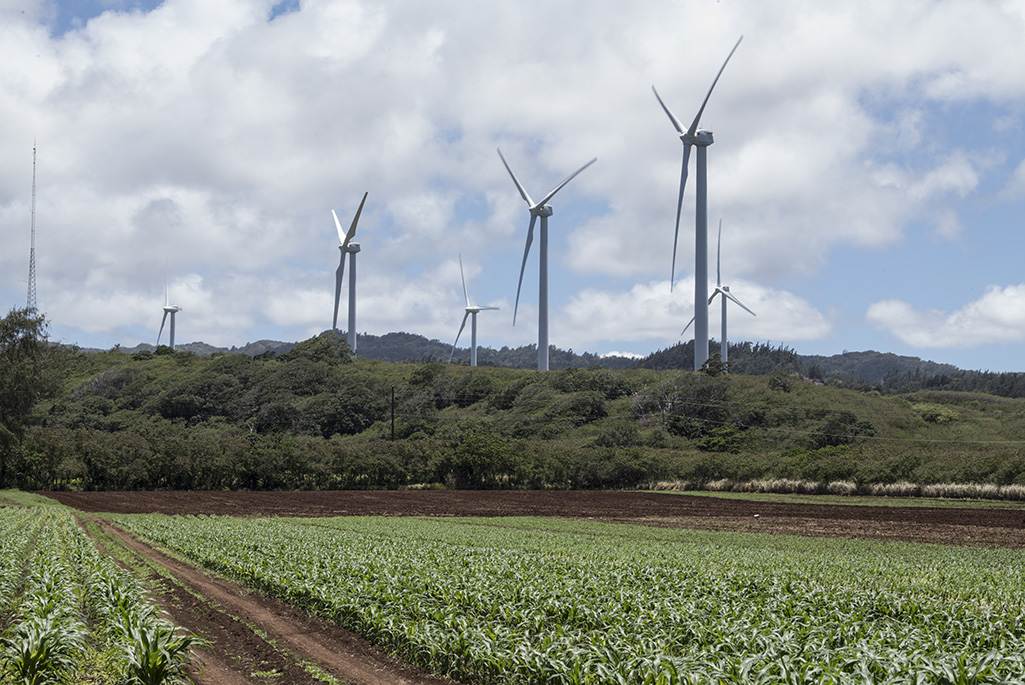
A wind farm on the north shore of Oahu, operated by the Hawaiian Electric Company. (Credit: Dennis Schroeder, NREL 57714)
Wind energy continues to see growth, solid performance, and attractive prices in the U.S., according to a report released by the U.S. Department of Energy (DOE) and prepared by Lawrence Berkeley National Laboratory (Berkeley Lab). 

With levelized costs averaging under $40 per megawatt-hour (MWh) for newly built projects, the cost of wind is well below its grid-system, health, and climate value. “Wind energy prices – particularly in the central United States – remain attractive even with ongoing supply chain and inflationary pressures,” said Ryan Wiser, a senior scientist in Berkeley Lab’s Energy Technologies Area. “Considering the health and climate benefits of wind energy makes the economics even better,” he added.  

Though 2022 was a relatively slow year for new wind power deployment, the Inflation Reduction Act promises new market dynamics in the years ahead. Key findings from DOE's annual “Land-Based Wind Market Report” include the following: 

• Wind comprises a growing share of electricity. U.S. wind power deployment totaled 8.5 gigawatts (GW) in 2022, representing a $12 billion investment. Wind energy contributed more than 10% of the nation’s electricity supply, and as much as 38% in the Southwest Power Pool. A record-high 300 GW of wind is seeking transmission interconnection.

• Wind turbines continue to get larger as technology advances. Improved plant performance over the last decades has been driven by larger turbines mounted on taller towers and featuring longer blades. In 2012, only 1% of turbines employed rotors that were 115 meters in diameter or larger, while 98% of newly installed turbines featured such rotors in 2022. Proposed projects indicate that total turbine height will continue to rise.

• Wind energy prices have risen, but remain attractive for purchasers. Wind power purchase agreement prices have been drifting higher since about 2018, with a recent range from below $20/MWh to more than $40/MWh depending on region and other details. These prices, which are possible in part due to federal tax support, are similar to recent solar sales prices and to the projected future fuel costs of gas-fired generation. 

• The grid-system value of wind surged in 2022 across many markets. The value of wind sold in wholesale power markets is affected by the location of wind plants, their hourly output profiles, and how those characteristics correlate with real-time electricity prices and capacity markets. The market value of wind generally increased in 2022, driven higher by high natural gas and wholesale power prices. The highest wind values were in New England and California (above $75/MWh), with the lowest values in the Southwest Power Pool ($18/MWh).

• The average levelized cost of wind energy was $32/MWh. Levelized costs vary across time and geography. The national average stood at $32/MWh for wind plants built in 2022, driven lower by the concentration of new wind projects in the nation’s lowest-cost wind regions: Texas and the central part of the country. (Cost estimates do not count the effect of federal tax incentives for wind.)

• The health and climate benefits of wind in 2022 far exceeded the levelized cost of wind. Wind generation reduces power-sector emissions of carbon dioxide, nitrogen oxides, and sulfur dioxide. These reductions, in turn, provide public health and climate benefits that vary regionally, but together are economically valued at an average of $135/MWh in 2022.

• The domestic supply chain began 2022 in decline, but passage of the Inflation Reduction Act created renewed optimism. Though domestic manufacturing of towers and nacelles was strong in 2022, blade manufacturing has plummeted in recent years. The Inflation Reduction Act contains, for the first time, production-based tax credits for domestic manufacturing of key wind components like nacelles, towers, and blades; it also extends the tax credit for wind deployment, inclusive of a new 10% bonus for projects that meet domestic content requirements. Consequently, there have been at least eleven announcements of manufacturing facilities that plan to open, re-open, or expand to serve the land-based wind industry.

• Energy analysts project growing wind deployment, spurred by incentives in the Inflation Reduction Act. The Inflation Reduction Act provides a long-term extension of tax credits for wind energy along with opportunities for wind plants to earn two 10 percent bonus credits. The average wind deployment forecast for 2026 among analysts is 18 GW, a significant increase from the 11 GW 2026 forecast from a year ago (before the Inflation Reduction Act).  

Berkeley Lab’s contributions to this report were funded by the U.S. Department of Energy’s Wind Energy Technologies Office.

Additional Information:
The full Land-Based Wind Market Report: 2023 Edition, a presentation slide deck that summarizes the report, several interactive data visualizations, and an Excel workbook that contains the data presented in the report, can be downloaded from windreport.lbl.gov. Companion reports on offshore wind and distributed wind are also available from the Department of Energy.

The U.S. Department of Energy’s release on this study is available at energy.gov/windreport.
###

Founded in 1931 on the belief that the biggest scientific challenges are best addressed by teams, Lawrence Berkeley National Laboratory and its scientists have been recognized with 16 Nobel Prizes. Today, Berkeley Lab researchers develop sustainable energy and environmental solutions, create useful new materials, advance the frontiers of computing, and probe the mysteries of life, matter, and the universe. Scientists from around the world rely on the Lab’s facilities for their own discovery science. Berkeley Lab is a multiprogram national laboratory, managed by the University of California for the U.S. Department of Energy's Office of Science.
 
DOE's Office of Science is the single largest supporter of basic research in the physical sciences in the United States, and is working to address some of the most pressing challenges of our time. For more information, please visit energy.gov/science.

Monday, June 12, 2023

Railways Could Be a Key 'Utility Player' for Backup Power

 Berkeley Lab News Release:


Berkeley Lab researchers demonstrate trains can cost-effectively dispatch grid-scale batteries in emergencies
MEDIA RELATIONS | (510) 486-5183 | JUNE 12, 2023
(Credit: David Routt/Paint It Black TV Productions)
– By Christina Nunez

The U.S. electric grid faces simultaneous, evolving pressures. Demand for power from the grid is increasing as people adopt electric cars and building energy is transitioned from gas to electricity. At the same time, climate change is driving more extreme weather. Events like the 2020 heat wave that led to rolling blackouts in California are relatively infrequent, but they are happening more often – and utilities need to be ready for them.

New research points to a flexible, cost-effective option for backup power when trouble strikes: batteries aboard trains. A study from the U.S. Department of Energy’s Lawrence Berkeley National Laboratory (Berkeley Lab) finds that rail-based mobile energy storage is a feasible way to ensure reliability during exceptional events.

Previous research has shown that, in theory, rail-based energy storage could play a role in meeting the country’s daily electricity needs. Berkeley Lab researchers wanted to take this idea further to see whether rail-borne batteries could cost-effectively provide backup power for extreme events – and whether the scenario was feasible on the existing U.S. rail network.

“There’s a lot of uncertainty around when extreme supply shortfalls are going to happen, where they will happen, and how extreme they may be,” said Jill Moraski, a graduate student at the University of California Berkeley, a researcher at Berkeley Lab, and the paper’s lead author. “We found that the U.S. rail network has the capacity to bring energy where it’s needed when these events happen, and that it can cost less than building new infrastructure.”

The paper, “Leveraging rail-based mobile energy storage to increase grid reliability in the face of climate uncertainty,” was published recently in the journal Nature Energy.

A Ready Resource in Freight Rail

The idea for the study came to Amol Phadke, a Berkeley Lab staff scientist and co-author of the study, while he was watching a long freight train trundle past at a railway crossing. He began counting the cars and tallied over 100 on that single train.

“A thought then struck me – how many batteries could such a massive train carry? If those were used for emergency backup power, how significant would their contribution be?” Phadke writes in a briefing on the study.” A quick, back-of-the-envelope calculation revealed an astounding capacity, potentially sufficient to provide power to every household in Berkeley for a few days.”

To meet electricity demand and build capacity for backup power, the U.S. is building long-distance transmission lines and installing stationary banks of batteries.

“While both of these resources are necessary, we wanted to explore additional, complementary technologies,” said Natalie Popovich, a Berkeley Lab research scientist and co-author of the study. “We have trains that can carry a gigawatt-hour of battery storage, but no one has thought in a cohesive way about how we can couple this resource with the electric grid.”

The U.S. rail network is the largest in the world, covering nearly 140,000 miles (220,000 kilometers). The study looked at historical freight rail flows, costs, and scheduling constraints to see whether railroads could be summoned to transport batteries for high-impact events, given that grid operators typically have at least a few days’ notice, and sometimes up to a week, when extreme weather is coming. The analysis found that mobile energy storage could travel between major power markets along existing rail lines within a week without disrupting freight schedules.

What About Stationary Options?

The researchers compared the cost of deploying batteries on rail for low-frequency events with the investment costs of stationary energy storage and transmission lines. In cases where the trains need to cover distances of about 250 miles (400 kilometers) or shorter – roughly equivalent to a trip from L.A. to Las Vegas – rail-based energy storage could make more sense cost-wise than building stationary battery banks to fill supply gaps that happen during less than 1% of the year’s total hours.

At those shorter distances, transmission lines remain cost-effective compared to batteries on rail if they are used frequently. When the travel distance grows to more than 930 miles (1,500 kilometers) – say, a trip from Phoenix to Austin – rail becomes cheaper than transmission lines for low-frequency events. This third option could save the power sector upwards of 60% of the total cost of a new transmission line or 30% of the total cost of stationary battery storage, the study concludes.

The study points to New York State, with its robust freight capacity and current transmission constraints between upstate clean energy generation and downstate load centers, as an example of where rail-based mobile energy storage could work well. In other cases, it may make sense for multiple states to share the additional capacity from a rail-based battery bank.

“This is not necessarily a resource that needs to be in one region,” Moraski said. “It can operate similar to an insurance policy, where you spread the coverage across risks for a wide geographic region.”

A Train of Thought Worth Following

Regulatory and infrastructure hurdles exist, the authors note. The U.S. lacks adequate interconnections to take power off the train and essentially plug it into the grid. And current electricity markets have no framework for approving, pricing, and regulating a mobile energy asset the way they do for conventional power plants. Policies would need to be revised, and efforts to deploy the storage would need to capitalize on existing interconnections where possible, such as retiring coal plants, which have existing rail lines and interconnection rights.

The researchers see further opportunities to quantify the benefits of rail-based mobile energy storage beyond the scope of the current study, taking into account larger territories, a decarbonized grid, and future climate conditions. They emphasize that extending energy storage across the rail network is not a replacement for important infrastructure such as transmission lines, but could be an important complement.

“Our paper gives a top-level overview of how rail-based mobile energy storage could benefit today’s grid, in today’s climate,” Moraski said. “As we look toward a future with more electrification, more fluctuating renewable energy, and more frequent extreme events, the case for adding rail-based energy storage to the mix may become even stronger.”

This research was funded by the William and Flora Hewlett Foundation.
###

Founded in 1931 on the belief that the biggest scientific challenges are best addressed by teams, Lawrence Berkeley National Laboratory and its scientists have been recognized with 16 Nobel Prizes. Today, Berkeley Lab researchers develop sustainable energy and environmental solutions, create useful new materials, advance the frontiers of computing, and probe the mysteries of life, matter, and the universe. Scientists from around the world rely on the Lab’s facilities for their own discovery science. Berkeley Lab is a multiprogram national laboratory, managed by the University of California for the U.S. Department of Energy's Office of Science.
 
DOE's Office of Science is the single largest supporter of basic research in the physical sciences in the United States, and is working to address some of the most pressing challenges of our time. For more information, please visit energy.gov/science.

Thursday, June 1, 2023

How Fiber-Optic Sensing and New Materials Could Reduce the Cost of Floating Offshore Wind

 Berkeley Lab News Release:


Researchers are giving floating offshore wind turbines abilities to self-monitor and self-heal
MEDIA RELATIONS | (510) 486-5183 | JUNE 1, 2023
Shake table tests at the Richmond Field Station are used to mimic ocean waves and test turbine stability. They also test the ability of fiber optic sensing to measure the response of the turbines. (Courtesy of Yuxin Wu)
– By Julie Bobyock and Christina Procopiou

In shallow waters, offshore wind turbines are fixed to the ocean floor. However, in deep water areas where winds are typically stronger and have the capacity to reap more than double the energy, floating offshore wind turbines must be moored to the seabed where the ocean is too deep for fixed structures. Floating offshore wind (FOSW) is one of the most promising clean energy technologies with a potential market worth nearly $16 billion – but science and technology solutions are needed to help reduce the cost of developing, deploying, and maintaining these complex systems.
Scientists at the Department of Energy’s Lawrence Berkeley National Laboratory (Berkeley Lab) are developing sensing technologies consisting of fiber-optic cables, which could be installed on FOSW structures that have been planned off the California coast. This would allow structures to self-monitor damaging conditions that could lead to costly repairs and would also help gauge how FOSW impacts marine mammals by detecting their activity. 

In collaboration with experts in materials science, engineering, geophysics, and FOSW developers from around the world, Berkeley Lab scientist Yuxin Wu is developing solutions to reduce the cost of FOSW development and deployment, while minimizing potential environmental impacts.
Yuxin Wu (Courtesy of Yuxin Wu)
Q. What is the biggest obstacle to expanding floating offshore wind technologies?

Wu: So far, there have been few FOSW deployments because the technology is in the early stages of development. Currently, no such systems have been deployed anywhere near 1000 meters in depth. We want to leverage scientific innovation by co-designing structural materials that are better able to withstand harsh marine environments and extreme weather events. And we want to add distributed fiber optic sensing to FOSW systems to enable systems to self monitor in real time for potential problems, a capability that could prolong a system’s lifespan and lower operating and maintenance costs. 

Q. How does your team apply fiber-optic sensing to these innovations?

Wu: A fiber cable has a glass core that allows you to send an optical signal at the speed of light; when there is any vibration, strain, or change in temperature of the material that is being monitored, that information will be carried in the light signal that is scattered back. When attached to or embedded within the wind turbine structure, this gives it a “nervous system” which allows it to “hear” and “feel.” The fiber is able to monitor surrounding acoustic signals, such as whale calls, which can help scientists assess potential impacts to large marine mammals from FOSW operations. 

We’ve been testing the deployment of this sensing technology to structural components – such as towers and turbines – to monitor physical and mechanical conditions experienced by the structure itself, like temperature or strain. Our research so far has focused on testing fiber optics on the tower and gearbox, some of the most expensive components where there is benefit to identifying damage before it leads to problems. 

Q. How important is materials science to reducing the cost of floating offshore wind systems?

Wu: By revealing what is happening within a FOSW system in real time, fiber-optic sensing gives us the knowledge needed to develop more resilient, cost-effective materials at the system level. Designing FOSW systems at lower cost and to withstand harsh marine environments requires cutting-edge materials science combined with computing science to produce better materials and to effectively simulate how the materials perform. Materials can be developed to give the structures self-healing capabilities; for example, seawater intruding into a crack in concrete triggers reactions to seal the crack without interventions.

We are partnering with experts in materials science and simulations from the molecular to structural scale to bring about innovations that have great potential for future deep-water floating systems because of their large cost-saving potential, local producibility, better performance, and environmental sustainability. DOE Office of Science user facilities at Berkeley Lab, such as the Molecular Foundry, Advanced Light Source, and National Energy Research Scientific Computing Center (NERSC), play key roles in facilitating innovations in our research. 

Q. These systems are far offshore, making them challenging to access for maintenance. How can technology help track and predict their performance when people aren’t nearby to monitor operations?

Wu: Digital twins are representations of structures made using advanced computer modeling, often jointly with real-time monitoring data, that scientists can use to control, simulate, and monitor how the FOSW system would respond to different weather or marine conditions. For example, we can simulate conditions of a hurricane and see exactly how the system would function under this extreme weather – right from our desktop computers. With real-time data feeding into the digital twins, system response to actual “on-the-water” field conditions can be monitored to support decision-making, for example when to send a crew to conduct system inspection. This could significantly reduce costs by avoiding unnecessary trips, and by allowing proactive maintenance of the system before larger, expensive failures. 

Last summer, our team used shake table testing of an actual turbine at the Pacific Earthquake Engineering Research Center at UC Berkeley’s Richmond Field Station, to test the ability of the fiber optic sensing to monitor how the turbines would respond to wave movements far offshore. The shake test helps evaluate and optimize deployment of sensors which eventually will be sitting on structures in the middle of the ocean and autonomously communicating data to land via fiber cables.

Q. How important is collaboration to reducing the cost of floating offshore wind?

Wu: DOE’s floating offshore wind earthshot has an ambitious goal of 70% cost reduction by 2035. This requires a system-level approach that optimizes all steps through the entire lifecycle of FOSW from material design, structural construction, deployment, operation, and maintenance. Partnering with institutions and industries with different expertise allows us to efficiently develop these new and complex technologies that can help shift the nation’s energy economy to one built on clean, renewable sources.
###

Founded in 1931 on the belief that the biggest scientific challenges are best addressed by teams, Lawrence Berkeley National Laboratory and its scientists have been recognized with 16 Nobel Prizes. Today, Berkeley Lab researchers develop sustainable energy and environmental solutions, create useful new materials, advance the frontiers of computing, and probe the mysteries of life, matter, and the universe. Scientists from around the world rely on the Lab’s facilities for their own discovery science. Berkeley Lab is a multiprogram national laboratory, managed by the University of California for the U.S. Department of Energy's Office of Science.
 
DOE's Office of Science is the single largest supporter of basic research in the physical sciences in the United States, and is working to address some of the most pressing challenges of our time. For more information, please visit energy.gov/science.

Monday, May 8, 2023

Tiny Microbes Could Brew Big Benefits for Green Biomanufacturing

 Berkeley Lab News Release:


Scientists find new route in bacteria to decarbonize industry. The discovery could reduce greenhouse gas emissions from the manufacturing of fuels, drugs, and chemicals.
THERESA DUQUE | (510) 424-2866 | MAY 8, 2023
A team co-led by Berkeley Lab has discovered a metabolic process in bacteria that could enable sustainable alternatives to chemical manufacturing processes that typically rely on fossil fuels. (Credit: artjazz/Shutterstock).
A research team led by Lawrence Berkeley National Laboratory (Berkeley Lab) and UC Berkeley has engineered bacteria to produce new-to-nature carbon products that could provide a powerful route to sustainable biochemicals.

The advance – which was recently announced in the journal Nature – uses bacteria to combine natural enzymatic reactions with a new-to-nature reaction called the “carbene transfer reaction.” This work could also one day help reduce industrial emissions because it offers sustainable alternatives to chemical manufacturing processes that typically rely on fossil fuels.

“What we showed in this paper is that we can synthesize everything in this reaction – from natural enzymes to carbenes – inside the bacterial cell. All you need to add is sugar and the cells do the rest,” said Jay Keasling, a principal investigator of the study and CEO of the Department of Energy’s Joint BioEnergy Institute (JBEI).  
During experiments at DOE's Joint BioEnergy Institute, researchers observed an engineered strain of the bacteria Streptomyces as it produced cyclopropanes, high-energy molecules that could potentially be used in the sustainable production of novel bioactive compounds and advanced biofuels. (Image courtesy of Jing Huang).
Carbenes are highly reactive carbon-based chemicals that can be used in many different types of reactions. For decades, scientists have wanted to use carbene reactions in the manufacturing of fuels and chemicals, and in drug discovery and synthesis. 

But these carbene processes could only be carried out in small batches via test tubes and required expensive chemical substances to drive the reaction. 

In the new study, the researchers replaced expensive chemical reactants with natural products that can be produced by an engineered strain of the bacteria Streptomyces. Because the bacteria use sugar to produce chemical products through cellular metabolism, “this work enables us to perform the carbene chemistry without toxic solvents or toxic gases typically used in chemical synthesis,” said first author Jing Huang, a Berkeley Lab postdoctoral researcher in the Keasling Lab. “This biological process is much more environmentally friendly than the way chemicals are synthesized today,” Huang said. 

During experiments at JBEI, the researchers observed the engineered bacterium as it metabolized and converted sugars into the carbene precursor and the alkene substrate. The bacterium also expressed an evolved P450 enzyme that used those chemicals to produce cyclopropanes, high-energy molecules that could potentially be used in the sustainable production of novel bioactive compounds and advanced biofuels. “We can now perform these interesting reactions inside the bacterial cell. The cells produce all of the reagents and the cofactors, which means that you can scale this reaction to very large scales” for mass manufacturing, Keasling said. 

Recruiting bacteria to synthesize chemicals could also play an integral role in reducing carbon emissions, Huang said. According to other Berkeley Lab researchers, close to 50% of greenhouse gas emissions come from the production of chemicals, iron and steel, and cement. Limiting global warming to 1.5 degrees Celsius above pre-industrial levels will require severely cutting greenhouse gas emissions in half by 2030, says a recent report by the Intergovernmental Panel on Climate Change.

Huang said that while this fully integrated system can be envisioned for a large number of carbene donor molecules and alkene substrates, it is not yet ready for commercialization. 

“For every new advance, someone needs to take the first step. And in science, it can take years before you succeed. But you have to keep trying – we can’t afford to give up. I hope our work will inspire others to continue searching for greener, sustainable biomanufacturing solutions,” Huang said. 

Other authors on the paper are Andrew Quest, Pablo Cruz-Morales, Kai Deng, Jose Henrique Pereira, Devon Van Cura, Ramu Kakumanu, Edward E. K. Baidoo, Qingyun Dan, Yan Chen, Christopher J. Petzold, Trent R. Northen, Paul D. Adams, Douglas S. Clark, Emily P. Balskus, John F. Hartwig, and Aindrila Mukhopadhyay.

This work was supported by the DOE Office of Science and DOE Office of Biological and Environmental Research. Additional support was provided by the National Science Foundation. 
###