Search This Blog

Showing posts with label landfill. Show all posts

Tuesday, July 31, 2012

GE Technology Powers First Landfill-Gas-to-Energy Project in Alaska

Press release:

31 July 2012
GE Technology Powers First Landfill-Gas-to-Energy Project in Alaska
 

  • Power Produced by GE’s Jenbacher J420 Gas Engines to Save Military up to $50 Million
  • Located on the Joint U.S. Army-Air Force Base, Doyon Utilities’ Project Helps Improve Energy Security for U.S. Military
  • Ribbon-Cutting Ceremony Held in Anchorage to Celebrate Opening of Plant

ANCHORAGE, ALASKA—July 31, 2012—Doyon Utilities, LLC (Doyon) held a ribbon cutting ceremony today to celebrate the opening of the first landfill-gas-to-energy (LFGTE) project in Alaska, which is powered by GE’s (NYSE: GE) ecomagination-qualified Jenbacher gas engines. Located on the Joint Base Elmendorf-Richardson in Anchorage, a joint U.S. Army and Air Force base, the project will provide approximately half of JBER–Richardson’s 13 megawatts (MW) of peak demand power.

“Beginning in 2013, federal agencies will be required to use renewable energy sources to provide at least 7.5 percent of total electric consumption,” said Dan Gavora, CEO of Doyon Utilities LLC. “GE’s technology allows us to turn landfill gas (methane) into an energy source for the U.S. military base and also into a revenue stream for the municipal utility, which currently flares the gas instead of selling it. In addition, the plant will help the military improve its energy security and move closer to its renewable energy target.”

Doyon will own and operate the facility and will buy the gas produced for at least the next 20 years, with an option for an extension to 40 years, under the agreement with the municipality. According to military officials, the power produced will offset what the military would have to buy from the municipality, which will add up to more than $30 million in savings over the life of the project[1].

The Anchorage Regional Landfill, which opened in 1987, has the capacity to hold 40 million cubic yards of waste. Currently one-third full, the landfill will likely reach capacity around 2045. As the landfill grows, so will the opportunity to increase the LFGTE plant’s capacity.

“This project with Doyon Utilities is another example of how GE’s Jenbacher gas engines are supporting distributed power projects around the world,” said Roger George, regional sales leader, Gas Engines for North America. “Our Jenbacher gas engines provide the fuel flexibility needed to accommodate the use of alternative fuels such as landfill gas while offering high levels of electrical efficiency.”

Western Energy Systems (WES), GE’s authorized distributor for Jenbacher gas engines in Alaska, provided the four Jenbacher J420 engine-generator sets and integrated these with balance of plant equipment required for a successful installation. WES provided project management services for all equipment provided, performed commissioning services, and has opened a product support facility in Anchorage with technicians and parts inventory committed to support this project.

GE's fuel-flexible Jenbacher gas engines are powered by landfill gas, which is created from solid waste decomposition and then recovered as a valuable renewable fuel. This gas would otherwise have been wasted by being released into the atmosphere as a potent greenhouse gas. Methane has a global warming factor that is 21 times greater than carbon dioxide.

GE's Jenbacher J420 landfill gas engines are part of GE’s ecomagination portfolio. To qualify for the ecomagination portfolio, products and services must demonstrate both improved economic value and environmental performance. Ecomagination is GE's commitment to innovative solutions that maximize resources and efficiencies and make the world work better. Overall, GE's Gas Engines business has more than 1,650 units operating on landfill gas with an electrical output of over 1,650 MW.

In a changing world with diverse power needs, GE’s portfolio of innovative distributed power solutions, gives businesses and communities around the world the ability to generate reliable and efficient power using a variety of fuels anywhere, whether on or off the grid. GE’s distributed power solutions gives customers of all types—from industrial businesses, to developing communities, to government officials managing disaster relief and other emergency power situations—the ability to generate reliable, sustainable power whenever and wherever it is needed. GE’s distributed power portfolio includes GE aeroderivative gas turbines, Jenbacher and Waukesha gas engines and waste heat recovery solutions.

About GE
GE (NYSE: GE) works on things that matter. The best people and the best technologies taking on the toughest challenges. Finding solutions in energy, health and home, transportation and finance. Building, powering, moving and curing the world. Not just imagining. Doing. GE works. For more information, visit the company's website at www.ge.com.

GE Energy works connecting people and ideas everywhere to create advanced technologies for powering a cleaner, more productive world. With more than 100,000 employees in over 100 countries, our diverse portfolio of product and service solutions and deep industry expertise help our customers solve their challenges locally. We serve the energy sector with technologies in such areas as natural gas, oil, coal and nuclear energy; wind, solar, biogas and water processing; energy management; and grid modernization. We also offer integrated solutions to serve energy- and water-intensive industries such as mining, metals, marine, petrochemical, food & beverage and unconventional fuels.

Follow GE Energy and ecomagination on Twitter @GE_Energy and@ecomagination

Friday, February 24, 2012

News Release from GE - Landfill Gas

23 February 2012
GE Gas Engine Technology to Power China’s Largest Landfill Gas Project
 

  • GE’s Jenbacher Gas Engines to Reduce Carbon Dioxide Emissions by More than 340,000 Tons per Year and Greenhouse Gas by Nearly 19 Million Cubic Meters Each Year
  • Project Supports Chinese Government’s 12th Five-Year Plan to Invest More than RMB260 Billion in the Waste Treatment Industry by 2015
  • GE Cements Leadership Position in China with Latest Alternative Power-to-Energy Project

SHANGHAI, CHINA—February 23, 2012
GE (NYSE: GE) today announced that its ecomagination-qualified Jenbacher gas engines will power China’s largest landfill gas (LFG) power generation project. The Laogang LFG project is owned by Laogang Renewable Energy Co., a joint venture formed by Veolia and Shanghai Environment Group, and supports the Chinese government’s 12th Five-Year Plan, during which China plans to invest more than RMB$260 billion in the waste treatment industry including waste-to-energy initiatives by 2015[1].
“Traditionally, landfill methane as a potent greenhouse gas has been released directly into the air,” said Chen Hongzhang, general manager, Laogang Renewable Energy Co. “By using GE’s gas engines fueled by LFG, we expect to save emissions by over 340,000 tons of carbon dioxide equivalent per year, significantly improving the local environment in Shanghai.”
Seven of GE’s ecomagination-qualified Jenbacher J420 gas engines, which will provide about 10 megawatts of electricity, will power the new Laogang LFG facility located in Shanghai. Each J420 engine combusts 2.7 million cubic meters (m3) of methane each year, providing an overall yearly reduction of greenhouse gas of around 18.9 million m³ for the seven gas engines. The Renewable Energy Company will sell any excess electricity generated to the grid. This project is an example of how GE’s portfolio of innovative distributed power solutions, ranging from 100 kilowatts (kW) to 100 megawatts (MW), gives businesses and communities around the world the ability to generate reliable and efficient power anywhere, whether on or off the grid.
GE’s Jenbacher landfill gas engines use the gas—consisting of methane, carbon dioxide (CO2) and nitrogen—created during the decomposition of organic substances in a landfill. Methane has a global warming factor 21 times greater than carbon dioxide, the most widely recognized greenhouse gas affecting climate change. With a calorific value of approximately 5 kWh/Nm³, landfill gas constitutes a high-value fuel for gas engines that can be effectively used for energy generation. One of GE’s Jenbacher J420 gas engines running on landfill gas can generate 1.4 MW electricity while saving the emissions of more than 49,000 metric tons of CO2-equivalent per year through methane destruction and displaced grid electricity production; this is equivalent to the annual CO2 emissions of more than 9,500 passenger cars on U.S. roads.
“This important project underscores our commitment to providing alternative energy solutions to help China meet its energy goals and cements our position as a leader in this segment,” said Rafael Santana, president and CEO—Gas Engines for GE Energy. “Our Jenbacher gas engines combine high efficiency and reliability with fuel flexibility to meet our customers’ needs with positive environmental impact. The seven Jenbacher J420 gas engines running on landfill gas are designed to generate almost 80 megawatt hours of electricity per year, which could power more than 46,000 Chinese households per year[2].”
The gas engines are scheduled to begin shipping in the second quarter of 2012 with commercial operation expected in December 2012.
This project is the latest in GE’s landfill gas solutions using Jenbacher gas engines. On October 31, 2011, GE announced that it had supplied a fourth J420 Jenbacher gas engine to Asja Brasil’s new 4.3-megawatt Belo Horizonte landfill-gas-to-energy (LFGTE) project in Brazil, helping to meet the country’s goals to increase the production of renewable and alternative energy.
On October 11, 2011, GE announced that it joined government officials and utility representatives at the Golden Triangle Regional Landfill in northeastern Mississippi in the United States to mark the commercial start up of the state’s first LFGTE project that will support the regional grid. Owned by the Golden Triangle Regional Solid Waste Management Authority (GTRSWMA), the LFGTE facility uses an ecomagination-qualified, GE J320 Jenbacher landfill gas engine to generate nearly 1 MW of renewable power sold through Tennessee Valley Authority’s renewable power initiative—enough to support about 700 average U.S. homes.
GE’s alternative gas-to-power portfolio includes its Jenbacher andWaukesha gas engines, which are specifically designed to provide the fuel flexibility needed to accommodate the use of alternative fuels such as landfill gas while offering high levels of electrical efficiency. GE’s Jenbacher landfill gas engines are part of the ecomagination portfolio for successfully demonstrating that converting landfill gas to electricity demonstrates both improved value and environmental performance. Ecomagination is GE’s commitment to invest in a future that creates innovative solutions to global environmental challenges.

Wednesday, February 8, 2012

The Rise of Landfill Gas to Energy

The following is an excerpt of an article with the above title in the January 2012 issue of Waste Age magazine:


Landfill gas (LFG) provides power for one million homes and heat for 737,000 homes across the country.  It provides 14 billion kilowatt-hours of electricity and 102 billion cu. ft of LFG for direct use by industry.  It contributes to the nation’s supply of natural gas and clean-burning fuel for vehicles.

The environmental benefits of these LFG uses are huge.  According to the U.S. Environmental Protection Agency (EPA), the use of LFG reduced the consumption of oil in the United States by about 229 million barrels of oil last year.

Using LFG also reduces greenhouse gas emissions.  EPA says that landfills rank as the third-largest human-generated source of methane emissions in the United States.  Among greenhouse gases, methane, the fuel component of LFG, is one of the most potent.  For instance, it is 21 times stronger than carbon dioxide.

The EPA also estimates that a typical LFG energy project collects and uses 60 to 90 percent of the methane emitted by a landfill.

Thanks to the environmental benefits of putting LFG to use, landfill-gas-to-energy has begun to emerge as a renewable energy industry.

Consider the landfill-gas-to-energy (LFGTE) project at the Newton County Landfill in Brook, Ind., for example.  There, LFG is helping to manufacture egg cartons.

One of the largest landfills in the country, Newton County, owned by Phoenix-based Republic Services, Inc., receives nearly 2.7 million tons of trash per year.  Recently, the landfill began sending LFG to the neighboring Newton County Renewable Energy Park through a 2,500-foot pipeline.

At the industrial park, Canadian firm Urban Forestf Recyclers Inc. (UFR) of Swift Current, Sask., manufactures packaging, such as egg cartons, from recycled fiber.  The process blends mixed newsprint and cardboard into a slurry that is poured into molds.  The LFG fuels the system of blowers used to dry the molds.

Thursday, February 2, 2012

WM Named EPA LMOP Industry Partner of the Year

Sometimes propaganda can have informational value.  News release from Waste Management:


Waste Management Named EPA Landfill Methane Outreach Program Industry Partner of the Year

North America's largest landfill gas-to-energy owner and operator recognized for leadership in waste-based renewable energy development


Houston — January 18, 2012 — The U.S. Environmental Protection Agency’s Landfill Methane Outreach Program (LMOP) has named Waste Management, Inc. (NYSE: WM) its 2011 Industry Partner of the Year for leadership in developing waste-based renewable energy. Waste Management is the largest landfill gas-to-energy (LFGTE) developer and operator in North America and is continuing to expand its roster of energy facilities. This year’s awards were presented earlier today at the 15th Annual LMOP Partner and Project of the Year Awards Ceremony in Baltimore, MD.

To view a short video explaining how landfills can power homes, college campuses and more, visit the WM video- Landfill Power: Turning Gas into Energy.

In 2011, WM commissioned nine LFGTE facilities with a collective capacity of 29.5 MW, bringing the number of LFGTE facilities to 133 active projects in North America. In total, these facilities produced the equivalent of 617 MW of power – enough to power 473,000 homes, and offset the consumption of over 2.4 million tons of coal. Waste Management plans to commission four additional projects in the first quarter of 2012 and is working on at least eight additional projects through its dedicated in-house project development team, which works on both WM-owned sites and those owned by municipalities and industry partners.

“It is an honor to be recognized as a leading partner in this sector by the EPA, and a testament to the hard work of our team over the last several years,” said Paul Pabor, vice president of renewable energy at Waste Management. “Waste Management developed much of the technology still in use today, and continues to find new ways to capture resources in waste. We’re looking forward to continued innovation, creating electricity, generating renewable fuels and powering local businesses with the resources at our disposal.”

Waste Management was active in two projects that won 2010 Project of the Year. The first, the University of New Hampshire EcoLineTM project, brought gas from Waste Management’s Turnkey Landfill through a 12-mile pipe, supplying 85 percent of the campus’s heat and electricity needs. The second, at the Altamont Landfill Resource and Recovery Facility in Livermore, CA, consisted of a partnership with Linde North America. There, the companies produce up to 13,000 gallons of liquefied natural gas (LNG) from landfill gas every day to fuel hundreds of WM fleet vehicles. The Altamont project is the largest landfill gas-to-LNG project in the world.                                                   

Landfill gas, generated by the natural breakdown of organic materials in a landfill, contains large amounts of methane that can be collected to generate electricity, power local businesses or be turned into transportation fuel. A successful program can turn a modern landfill from a mere disposal site to a source of clean, renewable energy to power homes and fuel vehicles.

Waste Management is continually exploring new technologies and services to generate renewable energy from waste. LFGTE complements the company’s other waste services in the areas of recycling, landfill operations and waste-based energy technology. LFGTE projects also contribute to one of Waste Management’s sustainability goals, doubling energy generation by 2020 to power the equivalent of 2 million homes.

EPA’s LMOP has assisted with more than 500 LFG energy projects over the past 16 years. The United States currently has about 575 operational LFG energy projects which annually supply more than 14 billion kilowatt-hours of electricity and ~102 billion cubic feet of LFG to direct-use applications. There is still significant potential for expansion of the technology; LMOP has identified over 500 landfills that could provide an additional 1,155 MW of electrical power.

Wednesday, January 11, 2012

NREL Helping Virgin Islands Cut Fuel Use

News release from the National Renewable Energy Laboratory.  Keep in mind that a typical rate for electricity on the mainland United States is about 10 or 11 cents per kilowatt-hour.

NREL Helping Virgin Islands Cut Fuel Use

January 11, 2012

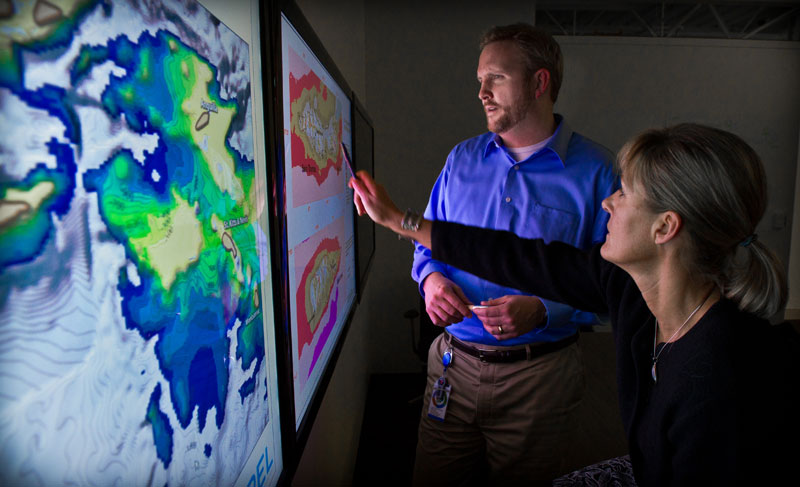
In this photo, a man and a woman are looking at a huge colorful wall map that shows sun resources in yellows and oranges, wind resources in blues. Enlarge image
NREL's Adam Warren, left, and Karen Petersen examine a map that shows the wind and sun resources of the U.S. Virgin Islands.
Credit: Dennis Schroeder

The U.S. Virgin Islands are a great place to visit, but you wouldn't want to pay energy bills there.

The tiny U.S. territory in the Caribbean has just 110,000 residents, all the beach, surf, wind and sun you'd ever want, but energy prices that are four to five times higher than are paid in the continental United States.

Like many islands on earth, the USVI are almost 100 percent dependent on imported oil for electricity.  Residents pay about 47 cents per kilowatt hour to light their homes and run their appliances. Imported oil is even used to desalinate the water because there is so little fresh water available other than what residences catch on their roof in the form of rain water.

But USVI Gov. John P. de Jongh Jr., working with the U.S. Department of Energy's National Renewable Energy Laboratory (NREL) and the U.S. Department of Interior, has vowed to transform energy use dramatically.  In January, at his State of the Territory address, he announced the goal of reducing use of fossil fuels by 60 percent in the next 15 years.

That's huge, and a great challenge, and just possibly a blueprint for how to achieve those similar reductions on the mainland.

"What we're attempting to do is integrate every large portion of renewable energy into our system," said Karl Knight, the director of USVI's energy office, who also is a board member of the Virgin Islands Water and Power Authority.  Think of it as a pilot for how to integrate renewables as a large proportion of the grid."

To get there, a half dozen different technologies need to be implemented, and energy efficiency will have to become a rallying cry.

A Recipe for Energy Savings

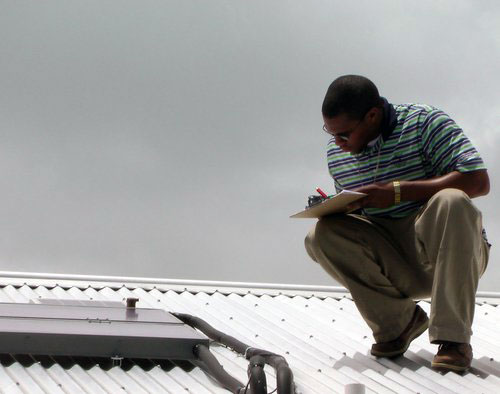
This photo shows a young man on an aluminum rooftop crouching as he looks at a solar collector and writes some data on a clipboard. Enlarge image
On a rooftop in St. Croix, U.S. Virgin Islands, an Energy Office intern inspects a solar collector.
Credit: Don Buchanan, USVI Energy Office

That's where NREL's scientists and engineers are helping.

The United States, New Zealand, and Iceland are three of the leading actors in the international partnership, Energy Development in Island Nations (EDIN), and for the United States, its Virgin Islands territory was a natural fit.

"We wanted to help USVI particularly because the governor was very committed to transforming the energy infrastructure, as was the CEO of their utility," NREL's Adam Warren, who heads NREL's EDIN program, said.

NREL has helped USVI — its government, utilities and public and private groups — to map the renewable energy potential, and to determine how to get to a 60 percent reduction by 2025. Early on, NREL produced a major technological report on grid integration, transmission and distribution.

"We think 60 percent is very realistic," Knight said. "The government established that goal in collaboration with NREL and the Island Nations global partnership. They challenged Gov. deJongh to be aggressive in his goal-setting and he took them up on it. We established the aggressive goal because we spend so much on  The only thing that people in the Virgin Islands talk about is the size of their electric bills."

The high rates have hurt low-income residents and have been a deterrent to economic investment, Knight said. "If the rate is going to be 40 cents a kilowatt hour or more, it shapes the type of business that's willing to locate in the Virgin Islands," he said. "Our total dependence on oil for power generation in an era of expensive crude oil is having a huge impact."

USVI burns 2.6 million barrels of oil each year to generate electricity and desalinate water.

The recipe to achieve a 60 percent reduction:
2 percent biomass
3 percent landfill gas
3 percent solar
6 percent wind
8 percent waste-to-energy

38 percent energy efficiency

NREL's Karen Petersen said the most cost-effective way to reduce fossil-fuel use — the low-hanging fruit, so to speak — is "to help the utility become more efficient in its operations." Simple measures such as turning off lights in buildings and lowering the air conditioning use in tourist hotels also will help immensely.

"We're working to create a whole cultural shift," Petersen said. "They're very conservative in their use of energy because of need, but it doesn't necessarily revolve around an environmental ethic."

Island residents "had a healthy dose of skepticism" when the plan for more solar, wind and biomass was proposed because past proposals haven't kept their promises, Knight said. "But we have tried to convince the community that we're not promising lightning in a bottle. This is a 15-year strategy," Knight said. "We're using tried and commercially proven technologies, gathering up the best practices and working in close consultation with energy experts such as the folks at NREL.

"This is not a developer selling some Star Trek technology that is going to save the day," Knight added. "It's is going to be a gradual build-up to what we believe is a successful achievement of our goals."

Energy Transformation Isn't Easy

In this photo, a long rectangular chain of solar panels sits in the foreground, surrounded by lush green vegetation. In the background is the Caribbean Sea dotted with large rocks. Enlarge image
The idyllic view of the coastline on St. Thomas, U.S. Virgin Islands, on Skyline Road near the capital Charlotte Amalie isn't spoiled by a 10-kilowatt photovoltaic system
Credit: Don Buchanan, USVI Energy Office

Dramatically changing how an island, a state or a nation gets its energy presents enormous challenges, not the least being a shaking of cultural norms.

"That's why we work with the entire community," said Warren. "In the past, they've seen systems go in by these fly-by-night developers that don't work the way they're supposed to.

"You need everyone on board — government, the private and public sectors to get something that big," Warren said. "We set up working groups to attack different areas — efficiency, renewables, transportation."

That's been key, Knight said. "We've been able to secure some good partnerships that have really put some effort into helping us achieve the goal.  Through the assistance of NREL, we've established local working groups, both public sector and private sector and the participation of non-government organizations."

Some 80 percent of the USVI's economy is dependent on tourism. Tourist hotels use much more electricity, especially in the form of A/C, than does the average full-time resident. "If you're not using A/C, most of the load is going toward heating water or keeping the refrigerator cold," Warren said. In all, the household usage is about half of what it is in the United States — 450 kwh per month compared to 900 kwh.

Moving Renewables onto the Grid


One of the thorniest challenges is how to get so much renewable energy on the grid and still have it operate smoothly all hours of the day.


Solar and wind energy are variable — they surge onto the grid when the sun is shining and the wind is blowing, but trickle or stop when the winds calm and the sun sets, or even when a thick cloud passes by.

Happily for the USVI, the highest electrical use is when the sun is shining — and all those tourists want the air conditioning cranked up.

Still, the variability means that distributed systems make more sense. So, USVI likely will have small solar arrays on dozens of rooftops, and just a few of the larger solar projects; likewise, wind energy is likely to be distributed widely, with a mix of small turbines and some larger turbine farms.

Combining wind and solar energy with electricity generated from closed landfills and waste gives a nice balance of variable sources and so-called dispatchable sources — the kind that utilities can ramp up and down to match demand.

Tackling how to load a high rate of renewables onto the grid will help the mainland United States, too. "We as a nation want to figure out the problems associated with a high-penetration of renewables," Warren said. "We hope we can show that first in the islands like USVI and Hawaii.

Islanders Face Tough Choices

Virgin Islanders have heard horror stories about installed renewables that couldn't handle the load because the variability was too much, so part of NREL's job is to show how the proper steps with the right technology can make it a success.

Island residents are leery of overloading the grid with too much renewable energy, but they're faced with the reality of 47 cents per kilowatt hour. They're facing serious tradeoffs, Warren said. "Do I pay my electricity bill or do I buy my medication?' is a real question that is forced on many."

"They're motivated to bring renewables on board and to conserve as much as possible because they need to," Petersen said. Businesses are closing daily because of the cost of electricity.

Optimism Grows from NREL/USVI Partnership

Knight is confident, and says NREL's participation has been crucial. "First, it has given the policy-makers the confidence that they're making the right decisions," Knight said. "To have a neutral party to discuss decisions with, to make sure that we are doing what is in the best interest of the population and the governor's goal, gives us and the policy makers credibility. We're able to say to the public, 'this isn't pie-in-the-sky.'

"We've sat down with the greatest experts in the nation out in Golden, Colo., and discussed our plans — and they've endorsed them fully. We can tell the most passionate members of our community that we've had conversations with NREL and, yes, they've endorsed the proposed projects."

"Our first and foremost goal is to assist other small island nations to curb their appetites for fossil-fuel-derived energy and to provide a model on the cost and investment return on the latest technologies."

"We're hoping there's a lesson to be learned here to benefit larger systems. Hopefully, we can be the test bed for the rest of the nation and the globe."

Learn more about what NREL is doing to move clean energy technologies into the marketplace.
— Bill Scanlon


Virgin Islands Energy Reduction Plan

U.S. Virgin Islands Gov. John P. de Jongh, Jr., and other dignitaries and energy leaders traveled to the U.S. Department of Energy's National Renewable Energy Laboratory in February of 2010 to sign a memo of understanding that is the centerpiece of the plan to reduce consumption of fossil fuels on the islands by 60 percent.

Here are some of the ways NREL and the Island government plan to pare the 2.5 million barrels of oil that were used in 2010.

Solar Energy: Photovoltaics and Solar Hot-Water Heating

Sixty-one thousand barrels can be saved if 40 percent of the USVI households take advantage of incentives to use the sun's energy to heat their hot water.

Another 100,000 barrels a year can be saved via capturing photons for electricity. NREL helped design a half-megawatt solar energy system on St. Thomas. "A half a megawatt is small from our standpoint, but is highly visible for the Virgin Islands," NREL's Adam Warren said.

Now, 27 different companies have submitted proposals hoping to be chosen to build a 10-megawatts or more of photovoltaic system by late 2013.

Energy Efficiency

920,000 barrels of oil can be saved via better efficiency, including generation efficiency.

A crucial strategy is to switch from a distillation system to a reverse-osmosis system to desalinate the water.

Wind Energy

178,000 barrels a year can be saved with 22.5 megawatts of wind energy. The plan is to deploy a mix of small and utility-scale wind turbines.

"The southern shore has a good wind resource that would probably come in at about 10 cents per kilowatt hour, vs. the 47 cents they're paying now," NREL's Adam Warren said.

Biomass, Landfill Gas and Waste-to-Energy

380,000 barrels can be saved each year by turning biomass into fuel, capturing and re-using the gas that forms below landfills, and turning waste into energy.

"We are very much engaged in a very rigorous public discourse on waste-to-energy," Karl Knight, the director of USVI's energy office, said.  "People are concerned about emissions, as well as its impact on promoting recycling and waste reduction. But we believe using the best practices available those concerns about emissions can be addressed."