Search This Blog

Showing posts with label bills. Show all posts

Wednesday, March 21, 2012

San Antonio Small Businesses "Seeing the Light" with Energy Upgrades

San Antonio Small Businesses “Seeing the Light” with Energy Upgrades

March 21, 2012 

If you were going to a new gallery showing of your favorite local artist, would you want to view the canvasses under dim lights? Or if you were reupholstering your favorite sofa, would you want to look at fabric samples under fluorescent lighting and risk mistaking indigo blue for charcoal black?

Small businesses are a main economic driver in cities across the country -- and San Antonio is no different. Lighting may seem like a small detail, but as more than 800 small businesses in San Antonio have discovered, having the right lighting can improve business and conserve energy. With over 40 percent of a company’s energy consumption coming from interior lighting, upgrading to more efficient lighting can dramatically reduce a company’s energy consumption and lower utility bills.

As part of San Antonio’s “Mission Verde” initiative, the city launched the City Lights Small Business Lighting Retrofit Program using Recovery Act funding through the Energy Department’s EECBG program. The City Lights program is helping business owners increase their lighting efficiency, reduce energy use and lower electricity bills.
In the first 10 months of City Lights, participating small business saved an estimated 4.9 million kilowatt-hours of electricity. Beyond these savings, the program trained and employed local energy audit experts and electrical contractors who helped businesses identify potential energy and cost saving measures. 

The program worked in cooperation with the municipally owned local utility, CPS Energy, as well as the energy-efficiency program management company EnerPath, which helped the city oversee the program.  
City Lights has not only lowered utility bills, but the city has also received positive feedback from owners and staff of the participating businesses as well as their patrons.

Richard Sanchez, co-owner of A.J’s Fresh Line Up barbershop, offered his views on his shop’s new lighting upgrades, which only cost the business approximately $20 after the program’s incentives were included.
“You can’t give a good haircut in bad lighting. We are already seeing our bills drop and it’s much brighter than it was before,” said Sanchez. 

Like Richard Sanchez, the 847 other businesses owners participating in the program are leading the way for San Antonio to become a sustainable community leader in the 21st century.

Wednesday, February 8, 2012

Smart Meters to Be Installed

News release from Southern California Edison:


Southern California Edison to Install Smart Meters in North Coast Area


ROSEMEAD, Calif., Feb. 8, 2012 – Southern California Edison (SCE) has started installing smart electric meters in the North Coast area as part of the Edison SmartConnect program. The technology will enable SCE residential and small-business customers to take advantage of new programs and services in the near future.


Communities in the upcoming installation phase include Camarillo, Carpinteria, Goleta, Isla Vista, Montecito, Oak View, Oxnard, Port Hueneme, Santa Barbara, Santa Paula, Ventura, Summerland and a small part of Fillmore and Moorpark.


Edison SmartConnect meters are digital, secure, two-way communicating devices. They are replacing traditional mechanical meters and provide a key step in transforming the electric system to a smart grid. Customers with smart meters will have access to their daily energy usage data through SCE.com. By signing up to receive e-mail, voice or text message alerts, customers can track usage against a monthly budget target of their choice, and reduce bills.
SCE began introducing these programs and services last year and more than 1.5 million customers now have access to them. More customers will be able to make better-informed decisions about energy use by enrolling in the smart meter-enabled programs and services throughout this year.


"Over the past several years, we have focused on developing an industry-leading smart meter program, including extensive testing of our smart meters and associated systems to ensure their quality and performance," said Ken Devore, director of SCE’s Edison SmartConnect program. "Smart meters will empower our customers to become better managers of their electricity usage through new tools, programs and services that will help them save energy and money, and help protect the environment."


Once advanced features are fully activated, SCE’s smart meters will be able to communicate with the next generation of smart thermostats, appliances and other devices.


The first smart meter in the Edison SmartConnect program was installed in September 2009 in Downey. Installations will continue through 2012 to a total of nearly 5 million SCE residential and small-business customers in the utility’s 50,000-square-mile service territory. To date, SCE has installed approximately 3.9 million smart meters.

SCE is partnering with Corix Utilities Inc. to perform most of the installations. Here is some important information for customers receiving the new meters:

  • Customers will receive advance notice by mail when installations are scheduled in their neighborhood. 
  • Customers do not need to be home, but should provide clear access to their meters. The installer will leave a door hanger indicating if the installation was successful, or if an appointment for installation is required due to access issues.
  • During a typical residential installation, customers will experience a short power interruption of less than a minute. As an extra measure of protection, customers are encouraged to plug electronic equipment, such as personal computers and televisions, into power surge protectors. Typically, no service interruption is required for smart meter installations at small businesses.
  • Customers who operate life support medical equipment at their addresses, or have concerns about power interruptions, may call SCE at 1-800-973-2356.
  • Corix installers carry identification indicating they are approved SCE contractors. 
  • Smart meter customers will receive follow-up mail, notifying them when new program features and services are available and how to access them.
For more information, please go to www.sce.com/edisonsmartconnect. To view videos about Edison SmartConnect, visit sce.com/smartfutureor YouTube.com/SCE.


Edison SmartConnect is a $1.6 billion program authorized by the California Public Utilities Commission. SCE's smart metering program was designed to help achieve California’s energy policy goals, relating to improved electric system reliability, customer energy efficiency and demand response, and reduced environmental impact. As an example, sustained energy conservation, resulting from customer response to energy use information, is expected to reduce greenhouse gas emissions and smog-forming pollutants by an estimated 365,000 metric tons per year – the equivalent of removing 79,000 cars from the road.


About Southern California Edison
An Edison International (NYSE:EIX) company, Southern California Edison is one of the nation’s largest electric utilities, serving a population of nearly 14 million via 4.9 million customer accounts in a 50,000-square-mile service area within Central, Coastal and Southern California.         
-###-

Monday, February 6, 2012

With USDA's Help, a Midwest Grocer Cuts his Energy Bill

From USDA blog:


Pat Longmire has owned a grocery store in Spring Grove, Minn., for 22 years. He knows customers want fresh produce, quality meats and weekly deals that save a buck here and there.
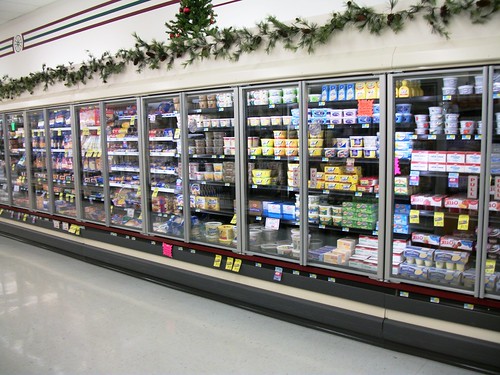
But he wasn’t sure how customers would react after he put glass doors on the coolers in the store. Longmire didn’t have to worry for long, however. “The response was overwhelmingly positive,” he said.
Longmire used a grant from USDA Rural Development’s Rural Energy for America Program(REAP) to purchase and install the doors. The doors resulted in a savings of about $500 per month on heating, cooling and electricity bills.
“It’s the smartest thing we could have done,” he said. “You get return on your investment back quickly.”
With energy costs rising and the grocery industry trying to become more energy efficient, Longmire knew the time was now to make the upgrade.
He originally considered replacing all the coolers in the store, but decided using the REAP program to install doors on the existing coolers was a better option. The entire project was completed for what it would have cost to replace just one cooler.
Using funding provided through USDA’s Rural Energy for America Program, a Minnesota grocer installed doors on coolers and cut his energy bill by $500 a month
Longmire set the thermostat inside the store to 72 degrees when he had open coolers. Since the doors have been added, he sets the temperature to 68 degrees and the store actually feels warmer than it did at 72.
“We were just wasting energy before,” Longmire said. “If every store across the country did what we did, the impact would be dramatic. It’s just one little thing, but it’s making everything more efficient.”
Without the REAP program, Longmire’s energy costs would have kept going up. Instead, he was able to do something about it and use the money he saves to improve his business and contribute to the local economy.
“This program really helps businesses like mine do projects like this and stay competitive,” Longmire said. “It’s great.”
USDA is currently accepting applications for funding through the REAP program.  For more information click here.

Wednesday, December 21, 2011

Dozens of Power Plants Closing

The following is an excerpt from an article by The Hill.  I am not sure that imposing tough new environmental regulations in a fragile economy with high unemployment is the smartest thing that we could be doing as a nation. But no one asked me for my opinion.


Dozens of Power Plants Closing Due to New EPA Rules
December 21, 2011
BRIAN KOENIG
Due to new federal air pollution regulations, more than 32 power plants across the country will be forced to close their doors, according to a recent Associated Press survey. Those plants, which are mostly coal-fired, discharge enough electricity to supply more than 22 million households, the survey notes, and their closure will lead to job layoffs, depleted tax revenues, and a considerable hike in electric bills. The areas that will be hit hardest are the Midwest and in the coal belt (Virginia, West Virginia, and Kentucky), where dozens of plants will likely be retired.

Two regulations are in question: One aims to curb air pollution in states downwind from pollutant-heavy power plants; and the second, which was finalized last week, would enact the first standards for mercury, acid gas, and other pollutants from plant smokestacks. In total, the new regulations could eliminate more than eight percent of coal-fired generation nationwide.

AP’s survey, the first of its kind, looked at the analyses by the Environmental Protection Agency (EPA) of plant retirements and interviewed 55 power plant operators about the effects on power supply and about their plans to deal with the new regulations.

Basing their assertions on energy analyses, congressional reports, and government regulators, critics have predicted that the new EPA regulations will lead to widespread blackouts, and possibly the retirement of coal as a power source altogether. However, proponents of the rules claim that those studies inflate closure numbers by considering plants shutting down for reasons other than the EPA’s new restrictions.

Tuesday, December 20, 2011

(Archive Article) Green Power's High Cost Scuttles Projects

The following was gleaned from a New York Times article with the above title published on or about November 8, 2010.

Electricity generated from wind or sun still generally costs more — and sometimes a lot more — than the power squeezed from coal or natural gas. 

Prices for fossil fuels have dropped in part because the recession has reduced demand. 

In the case of natural gas, newer drilling techniques have opened the possibility of vast new supplies for years to come.

The gap in price can pit regulators, who see their job as protecting consumers from unreasonable rates, against renewable energy developers and utility companies, many of which are willing to pay higher prices now to ensure a broader energy portfolio in the future.

In April, for example, the state public utilities commission in Rhode Island rejected a power-purchase deal for an offshore wind project that would have cost 24.4 cents a kilowatt-hour. The utility now pays about 9.5 cents a kilowatt hour for electricity from fossil fuels.

The state legislature responded by passing a bill allowing the regulators to consider factors other than price. The commission then approved an agreement to buy electricity from a smaller wind farm, although that decision is being challenged in the courts.

Companies that make solar cells and wind machines argue that a national energy policy is needed to guarantee them a market that will allow their industry to develop.

The United States has relied on a combination of state renewable energy mandates and federal tax credits to encourage greater reliance on energy from renewable sources. Legislation that would have set a price on carbon-dioxide emissions and included a standard for increasing the share of clean energy in the nation’s electricity portfolio failed in Congress this year.