Search This Blog

Showing posts with label costs. Show all posts

Wednesday, May 30, 2012

HP Unveils Architecture for First Net Zero Energy Data Center


Press Release : May 30, 2012

HP Unveils Architecture for First Net Zero Energy Data Center

HP Labs architecture significantly reduces data-center power costs and energy requirements

Topics:Technology and InnovationEnvironment
PALO ALTO, Calif. -- HP today unveiled research from HP Labs, the company’s central research arm, that illustrates the architecture for a data center that requires no net energy from traditional power grids.
The research shows how the architecture, combined with holistic energy-management techniques, enables organizations to cut total power usage by 30 percent, as well as dependence on grid power and costs by more than 80 percent.(1)
With the HP Net-Zero Energy Data Center research, HP aims to provide businesses and societies around the world the potential to operate data centers using local renewable resources, removing dependencies such as location, energy supply and costs. This opens up the possibility of introducing IT services to organizations of all sizes.
“Information technology has the power to be an equalizer across societies globally, but the cost of IT services, and by extension the cost of energy, is prohibitive and inhibits widespread adoption,” saidCullen Bash, distinguished technologist, HP, and interim director, Sustainable Ecosystems Research Group, HP Labs. “The HP Net-Zero Energy Data Center not only aims to minimize the environmental impact of computing, but also has a goal of reducing energy costs associated with data-center operations to extend the reach of IT accessibility globally.”
HP Labs researchers describe the HP Net-Zero Energy Data Center architecture, which precisely matches energy supply with energy demand required by the IT workload, in the research paper “Towards the Design and Operation of Net-Zero Energy Data Centers,” to be presented tomorrow atIEEE’s 13th annual Intersociety Conference on Thermal and Thermomechanical Phenomena in Electrical Systems. The sustainable data center at HP Labs headquarters in Palo Alto, Calif., has served as the initial “test bed” for building this game-changing blueprint.
The HP Net-Zero Energy Data Center architecture integrates energy and cooling supply from local renewable sources, with a novel demand-management approach that allows the scheduling of IT workloads based on resource availability and performance requirements.
For example, noncritical, delay-tolerant workloads could be scheduled during daylight hours to coincide with solar supply for data centers equipped with photovoltaic energy generation. In this way, demand can be “shaped” according to resource availability to reduce reliance on nonrenewable resources. As a result, organizations can lower overall data-center costs—from capital investment in upfront infrastructure technology to the operational costs of workload execution—enabling more customers to take advantage of IT services.
The architecture for net-zero energy
The HP Net-Zero Energy Data Center is based on an innovative management architecture that integrates energy and cooling resources with IT workload planning through four modules:
  • Prediction Module: Leverages powerful predictive analytics software to forecast the availability and cost of critical resources, such as renewable energy and IT workload demand.
  • Planning Module: Delivers an optimization algorithm that balances workload scheduling with high-level operational goals, such as achieving net-zero energy operation, enabling organizations to schedule workloads based on resource availability, while meeting data-center operational goals.
  • Execution Module: Enables organizations to manage workload and energy consumption in real time according to performance requirements and data-center operational objectives.
  • Verification and Reporting Module: Identifies and remediates misalignment between the plan and execution, ensuring plan accuracy.
As part of the HP Open Innovation initiative, the Prediction Model leverages technologies developed by HP Labs in conjunction with Virginia Tech (Blacksburg, Va.) and the University of Limerick (Ireland).
Delivering innovation to the business
The HP Enterprise Group plans to further develop the HP Net-Zero Energy Data Center technology in collaboration with other HP divisions through the HP Moonshot Discovery Lab initiative and an HP EcoPOD that is part of the Discovery Lab in Houston.
HP’s state-of-the-art research facility located in Fort Collins, Colo., built in collaboration with HP Labs, also provides a production environment to expand the HP Net-Zero Energy Data Center architecture and related research into demand-management technology. This is a key step in bringing cutting-edge sustainability technologies to market.
HP will be showcasing the HP Net-Zero Energy Data Center architecture at HP Discover, the company’s premier client event, which takes place June 4-7 in Las Vegas.
Supporting resources

(1) Based on internal HP testing and calculations in a lab environment, as compared to existing, nonintegrated techniques.

Wednesday, May 16, 2012

New Energy Efficiency Standards for Residential Clothes Washers and Dishwashers to Save Consumers Billions on Energy Bills

Press release from DOE:


New Energy Efficiency Standards for Residential Clothes Washers and Dishwashers to Save Consumers Billions on Energy Bills

May 16, 2012

WASHINGTON – As part of the Obama Administration’s focus on taking sensible steps to save families money while also reducing energy consumption,  the Department of Energy today announced common-sense energy efficiency standards for residential clothes washers and dishwashers that will save consumers $20 billion in energy and water costs. The new standards for both clothes washers and dishwashers were informed by important feedback from manufacturers, consumer groups and environmental advocates, producing significant savings while retaining consumer choice. The clothes washers standard announced today will save households approximately $350 over the lifetime of the appliance, while offering consumers a variety of more efficient machine choices, and as a result of the standards for dishwashers, home dishwashers will use approximately 15 percent less energy and more than 20 percent less water, directly providing consumers with savings on monthly bills.

Today’s announcement is only the most recent in a series of common-sense efficiency standards made by the Obama Administration that have covered nearly 40 different products, and will together save consumers nearly $350 billion on their energy bills through 2030.

“Working with consumer, industry and environmental groups to develop common-sense energy-saving appliance standards is an important part of the Obama Administration’s all-of-the-above approach to American energy and the Energy Department’s efforts to reduce energy costs for consumers,” said Secretary Chu. “Collectively, these energy efficiency standards for everyday appliances have saved American families hundreds of billions of dollars and offered consumers more efficient, less costly appliances without sacrificing performance.”

“DOE’s implementation of these new standards reflects the consensus agreement reached by stakeholders. It will result in tremendous energy savings for the consumer while preserving product choice and minimizing manufacturer impact. The home appliance industry is proud of its long history of energy efficiency advancements benefiting consumers and applauds DOE for working with stakeholders to increase energy efficiency,” said Joseph McGuire, President of the Association of Home Appliance Manufacturers.
“Clothes washer and dishwasher energy efficiency has improved dramatically over the past two decades while also improving clothes washing performance and maintaining dish washing performance,” said Steve Nadel, Executive Director of the American Council for an Energy-Efficient Economy.  “These improvements have been driven by a combination of manufacturer and utility efforts, Energy Star, federal tax incentives and minimum efficiency standards.  We support the new DOE minimum efficiency standards which will raise the floor, helping to spur further efficiency improvements.

The new standards – developed in partnership with companies like Whirlpool, General Electric and LG Electronics, industry advocates, national environmental organizations, consumer groups and other stakeholders – build on previous minimum energy efficiency requirements for clothes washers and dishwashers and go into effect starting in 2015 and 2013, respectively.

Today, clothes washers and dishwashers account for approximately 3 percent of residential energy use and more than 20 percent of indoor water use in homes across the country.  The new standards for clothes washers will reduce the energy consumption of front-loading clothes washers by 15 percent and reduce water consumption by 35 percent, while top-loading washers will save 33 percent on energy and 19 percent on water use.

As companies look for ways to further boost the efficiency of their products,  companies will continue to undertake additional research and development, partner with entrepreneurs working on new efficiency technologies and invest in manufacturing innovations that will help drive better, more efficient appliances and broader job creation across the economy. For example, according to a 2011 trade report, standards laws signed by President Reagan and both Presidents Bush and DOE rulemakings generated approximately 340,000 jobs in 2010 alone.

The standards announced today are part of the Obama Administration’s broader all-of-the-above approach to American energy and the Department of Energy’s efforts to help families save money by saving energy.  Other energy and cost-saving standards adopted under the Obama Administration include:
  • March 2009 - 14 consumer and commercial products with standards prescribed in the Energy Independence and Security Act of 2007 (EISA 2007), including dishwashers, general service incandescent lamps and residential clothes washers
  • April 2009 - Microwaves, kitchen ranges and ovens
  • July 2009 - General service fluorescent lamps and incandescent reflector lamps
  • July 2009 - Commercial heating, air-conditioning and water-heating equipment
  • August 2009 - Beverage vending machines
  • December 2009 - Commercial clothes washers
  • February 2010 - Small electric motors
  • March 2010 - Residential water heaters, direct heating equipment and pool heaters
  • April 2011 - Residential clothes dryers and room air conditioners
  • June 2011 - Residential furnaces and residential central air conditioners and heat pumps
  • September 2011 - Residential refrigerators, freezers, and refrigerator-freezers
  • October 2011 - Fluorescent lamp ballasts
  • November 2011 - Direct heating equipment
  • May 2012 - Residential clothes washers
  • May 2012 – Residential dishwashers
A full list of appliance efficiency standards is available on the Department of Energy website HERE.
DOE’s Office of Energy Efficiency and Renewable Energy invests in clean energy technologies that strengthen the economy, protect the environment, and reduce dependence on foreign oil. Learn more about the test procedures and minimum efficiency standards for residential appliances and commercial equipment developed by DOE’s Appliances and Commercial Equipment Standards Program and other building technologies projects

Wednesday, May 9, 2012

Superior Streets: City of Superior, Neb., reduces energy costs by nearly 70 percent with move to GE LED street lighting

Press release:

09 May 2012
Superior Streets: City of Superior, Neb., reduces energy costs by nearly 70 percent with move to GE LED street lighting

SUPERIOR, Neb. — May 9, 2012 — (NYSE:GE) — Like most municipalities, the City of Superior was looking for ways to save scarce tax dollars and keep utility rates down. The solution—a citywide streetlight replacement project, moving from high-pressure sodium lights to GE’s energy-efficient LED streetlights, ultimately reducing the city’s electricity costs by more than $20,000 annually.
The high-pressure sodium lights had lit Superior’s city streets and parks for many years, but the city wanted to reduce electricity costs while maintaining or improving light quality. Superior received 13 bids and accompanying light samples from the top four candidates. The city performed side-by-side testing of each light sample for two weeks before measuring light output and energy usage, balanced with pricing. The GE Evolve™ LED Medium Roadway fixture emerged as the clear winner. Superior had applied for and received an Energy Efficiency and Conservation Block Grant to cover part of the cost of the lighting upgrade. The grant program is a federal initiative to help fund energy efficiency and conservation programs across the country.
In 2009, Superior spent $30,260 on electricity for streetlights. The city expects the more than 600 LED fixtures installed will reduce electricity costs to approximately $9,300 annually, with the project paying for itself in just seven years. In addition to energy savings, the city will realize reduced maintenance costs, with the GE LED system expected to provide 11 years of service, based on a 50,000-hour life and 12 hours of operation per day.
Larry Brittenham, utility manager for Superior, acknowledges the monetary payback is important, but says the real payback is in reducing the city’s carbon footprint.
“We are saving 156 tons of CO2 per year from just the electrical generation of our streetlights, which doesn’t include the reduced impact from the transportation and manufacturing of parts, or installation every few years with our old lighting. Just imagine what larger cities could save in greenhouse gasses with GE’s LED systems,” says Brittenham. “For the combination of light output and cost, no other LED manufacturers came close to the GE lights.”
GE Evolve LED Roadway fixtures improve visibility on Superior’s roads with better horizontal and vertical lighting uniformity, reduced glare and light pollution, and less light trespass. As part of a major initiative for the state of Nebraska to move to green technology, Superior and five other Nebraska cities are retrofitting various mercury vapor and high-pressure sodium streetlights with GE LED systems.
“We’re seeing a rapid adoption of LED systems for roadways. In fact, 29 states have already installed or are evaluating GE’s Evolve™ LED fixture as a replacement for less-efficient lighting sources. This replacement project will improve visibility for Nebraska drivers, which can create a brighter environment. It will also reduce maintenance costs and lower energy consumption,” says Tim Miller, GE global product manager, outdoor lighting fixture platforms.
For more information on the GE Lighting products used in this project, visitwww.gelightingsolutions.com.
About GE LightingGE Lighting invents with the vigor of its founder Thomas Edison to develop energy-efficient solutions that change the way people light their world in commercial, industrial, municipal and residential settings. The business employs over 17,000 people in more than 100 countries, and sells products under the Reveal® and Energy Smart® consumer brands, and Evolve™, GTx, Immersion™, Infusion™, Lumination® and Tetra® commercial brands, all trademarks of GE. General Electric (NYSE: GE) works on things that matter to build a world that works better. For more information, visitwww.gelighting.com.

Tuesday, May 8, 2012

GE Announces First Customer in Europe for Its LEAPmbr* Wastewater Treatment System near Messina, Italy

Press release:

08 May 2012
GE Announces First Customer in Europe for Its LEAPmbr* Wastewater Treatment System near Messina, Italy
 

  • GE Technology to Reduce Energy Costs and Increase Productivity at ASI Messina Municipal Plant Near Messina, Sicily, Italy
  • LEAPmbr* System Offers the Lowest Lifecycle Costs Available from Any MBR Technology and Delivers Environmental Benefits in a Seasonal Tourist Area
  • Based on Industry-Standard GE ZeeWeed* High Performance, Rugged, Hollow-Fiber Membranes

    MUNICH, GERMANY—May 8, 2012—GE (NYSE: GE) today announced atIFAT Entsorga 2012 that ASI Messina of Italy is the first customer in Europe for its high-performance LEAPmbr* membrane bioreactor (MBR) wastewater-treatment technology, which helps address water quality while reducing energy costs and increasing productivity. GE sold the technology to Costruzioni Dondi S.p.A., the Italian engineering, procurement and construction company that won the international public open tender for ASI Messina‘s wastewater plant upgrade.

    “The ASI Messina plant will treat wastewater generated by two municipalities and by local industrial sites associated to the ASI Messina Consortium. By using GE’s LEAPmbr technology, ASI Messina will be able to reach the high effluent qualities imposed by the local authority and will have the possibilities to reuse the treated wastewater for industrial needs,” said Alessandro Rondina, technical director of Costruzioni Dondi S.p.A.

    GE’s LEAPmbr technology helps owners of municipal, industrial and residential water/wastewater treatment facilities around the world address their pressing water quality issues, while also reducing energy costs and increasing overall productivity of the treatment system. The Italian region is facing a number of issues related to poor wastewater management, either due to lacking infrastructure or existing plants that are obsolete and not in compliance with European Union water directives.

    When applied to the ASI Messina wastewater treatment plant, GE’s LEAPmbr ultrafiltration technology will control pollution and will help protect the environment through water reuse, coast preservation and low energy consumption. According to Alberto Dondi, CEO of Costruzioni Dondi S.p.A., “The ability of GE’s technology to reach high treatment levels in a very confined space while providing the lowest energy consumption among all advanced technologies today were key reasons that led to us selecting GE for this important project.”

    The ASI Messina plant is an upgrade of an existing installation, located in Giammoro, approximately 35 kilometers from the city of Messina, the third largest city on the island of Sicily. The municipal wastewater generated by municipalities and industrial activities in the area will be treated biologically through GE’s advanced ultrafiltration technology, which results in high-treatment efficiency and the best effluent quality of any advanced technologies available today. The plant is located on the sea coast and will be discharging into the Mediterranean Sea and will serve as a high-quality water source for non-potable use by the industrial activities served by A.S.I. Messina. The new plant, once completed, will be able to treat a yearly average flow of 21 million liters per day (MLD), or 21,000 m3/d, with daily peaks up to 40,000 m3/d, which is equivalent to the daily water use of roughly 125,000 people.

    “Governments and municipalities are looking into ways to reuse wastewater for not-potable purposes, particularly in places afflicted by droughts, like Southern Italy,” said Heiner Markhoff, president and CEO—water and process technologies for GE Power & Water. “Our LEAPmbr technology offers unique and advanced features to solve many of these issues through ultrafiltration membranes that are able to enhance the treatment capacity three-fold when compared to conventional technologies, while at the same time reaching high effluent standards at the lowest possible running costs.”

    The result of a four-year development effort, GE’s LEAPmbr system offers the lowest lifecycle costs available from any MBR technology, while also being cost-competitive with conventional treatment. These cost savings, along with operational simplicity and a compact footprint, derive from innovations to the popular GE ZeeWeed* 500 MBR product line—the most widely-used, reinforced, hollow-fiber ultrafiltration technologies available. The cost and efficiency savings of GE’s LEAPmbr system compared to existing GE MBR technologies include:
    • A minimum 30 percent reduction in energy costs.
    • A 15 percent improvement in productivity (greater water-treatment capacity).
    • A 50 percent reduction in membrane aeration equipment and controls, leading to a simpler design with lower construction, installation and maintenance costs.
    • A 20 percent reduction in physical footprint leading to further reduced construction and installation costs as well as lower ongoing consumption of cleaning chemicals.
    Under the terms of the ASI Messina wastewater treatment plant project, GE provided Costruzioni Dondi S.p.A. the total scope of the LEAPmbr filtration unit, which also includes a three-year service contract. GE’s equipment will be shipped in phases beginning in September 2012. Commercial operation is expected by the second quarter of 2013.

    This installation in Italy will be the next step in a successful rollout for GE’s LEAPmbr technology. In October of 2011, GE announced the results of an ongoing, nearly two-year demonstration project in Marco Island, Fla., which proved the capability of LEAPmbr technology to reduce energy costs and increase productivity.

    About GE
    GE (NYSE: GE) works on things that matter. The best people and the best technologies taking on the toughest challenges. Finding solutions in energy, health and home, transportation and finance. Building, powering, moving and curing the world. Not just imagining. Doing. GE works. For more information, visit the company's website at www.ge.com.

    GE Energy works connecting people and ideas everywhere to create advanced technologies for powering a cleaner, more productive world. With more than 100,000 employees in over 100 countries, our diverse portfolio of product and service solutions and deep industry expertise help our customers solve their challenges locally. We serve the energy sector with technologies in such areas as natural gas, oil, coal and nuclear energy; wind, solar, biogas and water processing; energy management; and grid modernization. We also offer integrated solutions to serve energy- and water-intensive industries such as mining, metals, marine, petrochemical, food & beverage and unconventional fuels.

    Follow GE Energy on Twitter @GE_Energy.

    *Trademark of General Electric Company; may be registered in one or more countries.

    Thursday, March 22, 2012

    Green Button Giving Millions of Americans Better Handle on Energy Costs

    Green Button Giving Millions of Americans Better Handle on Energy Costs

    March 22, 2012 


    Image courtesy of the National Institute of Standards and Technology. Image courtesy of the National Institute of Standards and Technology.
    This article is cross posted from the White House.


    More information about Apps for Energy, the Energy Department's software development competition, is here. On that page, you can submit app ideas and sign up for competition news and announcements.

    This afternoon President Obama is visiting Ohio State University to highlight some of the nation’s most advanced energy-related research and development projects. Technological innovation is a key element in the Administration’s “all-of-the-above” strategy to reduce energy costs for consumers while protecting health and the environment—a strategy that focuses on developing cleaner and more efficient energy sources and also on novel ways to help consumers conserve energy and save money right now. That’s why we are pleased to co-host a White House event today at which utility company CEOs from across the country are committing to participate in the “Green Button” initiative.

    Green Button is an industry-led effort that responds to a White House call-to-action to provide consumers with easy-to-understand data about their household energy use. At today’s event, nine major utilities and electricity suppliers will sign on to the initiative, committing to provide more than 15 million households secure access to their energy data with a simple click of an online Green Button. That builds on similar commitments made by utilities in January to provide Green Button capability to nearly 12 million households this year. With that information in hand, consumers can take advantage of a growing array of online services that can help them manage energy use and save on their bills.

    In fact, companies are already developing Web and smartphone applications and services for businesses and homeowners that can use Green Button data. These tools can help consumers choose the most economical rate plan for their energy use patterns; deliver customized energy-efficiency tips; provide easy-to-use tools to size and finance rooftop solar panels; and conduct virtual energy audits that can cut costs for building owners and speed the initiation of retrofits.  A number of companies today added their names to the growing list of innovators developing Green-Button-compatible apps and services.

    Federal agencies are doing their part as well. The Department of Energy today announced today an Apps for Energy contest to spur the invention of tools and services that will help consumers gain information, take action, and save on their utility bills. The contest complements $8 million in grant funding  that is helping consumers use new smart-grid technologies to better manage their energy consumption. The Department of Energy today also launched today an online map that shows the progress utilities are making towards providing their customers access to their own energy data in consumer-friendly and computer-friendly formats.

    The Environmental Protection Agency has also joined the Green Button team.  The agency has committed to working with entrepreneurs and utilities to take advantage of Green Button data to help commercial building owners benchmark the energy use of their buildings and deliver ENERGY STAR performance scores using the EPA's measurement and tracking tool, ENERGY STAR Portfolio Manager.
    We are excited about Green Button, which in its simplicity and innovative power is helping Americans track their energy use and save them money—all while helping the Nation achieve the important goals of saving energy and reducing pollution.

    For more information about Green Button and a complete list of utilities, electricity providers, apps developers, and other companies supporting the Green Button initiative,view the press release.

    John Holdren is Assistant to the President for Science and Technology and Director of the White House Office of Science and Technology Policy

    Nancy Sutley is Chair of the White House Council on Environmental Quality

    GE Energy Announces a Cost-Effective, Flexible, Advanced Smart Metering Solution for IEC Markets, Laying the Foundation for Global Grid Modernization

    22 March 2012
    GE Energy Announces a Cost-Effective, Flexible, Advanced Smart Metering Solution for IEC Markets, Laying the Foundation for Global Grid Modernization
     

    GE's SGM1100 Builds on 100 Years of Metering Experience to Help IEC Markets Increase Energy Efficiency, Improve Power Reliability and Better Manage Energy Costs

    BILBAO, SPAIN—March 22, 2012—GE (NYSE: GE) announced today the availability of the SGM1100, a PRIME (Power Line Intelligent Metering Evolution) PLC compliant smart meter designed for global utilities following IEC (International Electrotechnical Commission) requirements. The SGM1100 provides utilities with a cost-effective and flexible solution to meet the requirements of an advanced metering infrastructure (AMI), laying the foundation for increasing efficiency and better managing energy costs.
    “With almost a century of experience developing robust metering solutions for utilities, GE is proud to announce the availability of the SGM1100 smart meter for IEC markets,” said Luke Clemente, general manager, Metering & Sensing for GE’s Digital Energy business. ”GE has a deep understanding of the unique needs of the utility having built electric networks around the globe including everything from transmission, distribution and metering. With SGM1100, GE is helping utilities around the globe take the next step in their energy evolution, becoming more sustainable, reliable and productive through AMI.”
    AMI is the cornerstone to grid modernization, enabling two-way communication between the utility and the consumer. Through AMI, utilities and consumers can benefit from improved power reliability, greater availability of renewable energy and increased control of energy usage including enhanced electric vehicle charging.
    The SGM1100 is a single-phase meter designed to support residential and small commercial energy consumers. In alignment with local standards, the SGM1100 meets IEC requirements and provides PLC AMI communications with the PRIME and the DLMS/COSEM protocols.
    Designed for ease of use, GE’s SGM1100 enables utilities to accelerate installations, automate provisioning and reduce the amount of required post-installation support, which results in faster and more cost-efficient deployments. Additional benefits include:
    • Increased security features and a dual pole relay for increased safety during installation and service.
    • Remote upgradeable firmware via the PLC communications to reduce on-site visits for maintenance.
    • Local communications enabling site-specific configuration, firmware updates and on-demand diagnostics.
    • An integrated PRIME PLC modem providing reliable and interoperable communications with PRIME compliant data concentrators.
    For more information on the SGM1100, visit our website atwww.GESmartMetering.Com.
    About GE
    GE (NYSE: GE) works on things that matter. The best people and the best technologies taking on the toughest challenges. Finding solutions in energy, health and home, transportation and finance. Building, powering, moving and curing the world. Not just imagining. Doing. GE works. For more information, visit the company's website at www.ge.com.
    GE Energy works connecting people and ideas everywhere to create advanced technologies for powering a cleaner, more productive world. With more than 100,000 employees in over 100 countries, our diverse portfolio of product and service solutions and deep industry expertise help our customers solve their challenges locally. We serve the energy sector with technologies in such areas as natural gas, oil, coal and nuclear energy; wind, solar, biogas and water processing; energy management; and grid modernization. We also offer integrated solutions to serve energy- and water-intensive industries such as mining, metals, marine, petrochemical, food & beverage and unconventional fuels.
    Follow GE Energy on Twitter @GE_Energy.

    Friday, February 24, 2012

    News Release from the DOE - Energy Efficiency Training Centers

    President Obama Highlights Energy Department Efficiency Training Centers That Save U.S. Manufacturers $5.6 Billion

    February 23, 2012 

    WASHINGTON, D.C. – During a visit to the University of Miami to highlight his administration’s all-out, all-of-the-above approach to American energy, President Obama today touted the Energy Department’s cost-cutting Industrial Assessment Program. The program supports university-based Industrial Assessment Centers (IACs) across the country, which provide students with critical skills and training to conduct energy assessments in a broad range of facilities, while producing real cost savings for small to mid-size manufacturers. To date, these assessments have helped save over 530 trillion BTUs of energy – enough to meet the energy needs of 5.5 million American homes – and have helped participating manufacturers save more than $5.6 billion in energy costs.

    “As President Obama made clear, an American economy built to last will depend on American manufacturing, American energy and skills for American workers,” said U.S. Energy Secretary Steven Chu. “This is why the Energy Department invests in innovative initiatives like the Industrial Assessment Centers that help to train the clean energy workforce of tomorrow, while cutting energy waste for American businesses and making our manufacturing companies more competitive.”

    Through Industrial Assessment Centers at universities throughout the U.S., engineering students receive practical training in industrial processes, energy assessment procedures, and energy management principles, and gain real-world experience by working directly with small and medium-sized industrial and manufacturing facilities in their communities.

    For more than 30 years, the Industrial Assessment Program has provided valuable training and experience for students, while saving money for manufacturing plants. Since the program began in 1976, the university teams have conducted more than 15,000 energy assessments at U.S. manufacturing plants nationwide. To date, more than 3,000 students have graduated from the Industrial Assessment Center program, with more than 60 percent going on to careers in the energy industry.

    More information and a full list of Industrial Assessment Centers across the U.S. can be found HERE.

    Thursday, February 9, 2012

    Over $12 Million to Spur Solar Energy Innovation

    News release from the Department of Energy:


    Energy Department Announces Over $12 Million to Spur Solar Energy Innovation

    February 8, 2012 - 1:53pm

    WASHINGTON, D.C. -- As part of the Obama Administration’s blueprint for an American economy built to last, today U.S. Energy Secretary Steven Chu announced over $12 million to speed solar energy innovation from the lab to the marketplace through the Energy Department’s SunShot Incubator program. The funding will accelerate American innovation in solar energy and manufacturing by supporting advancements in hardware, reductions in soft costs, and the development of pilot manufacturing and production projects.

    “Investments in American energy and manufacturing are critical building blocks for an American economy built to last,” said Secretary Chu. “The SunShot Incubator program fosters the innovative small businesses that will rapidly bring technological advances to market and pioneer a new era in American energy.”

    The SunShot Incubator program helps launch new startups and business units within existing companies to accelerate the innovative solar technology development. Since 2007, DOE has invested $60 million through the Incubator in promising technologies as they are brought from the lab to the marketplace. These investments have catalyzed $1.6 billion in private sector support. The federal investment in these projects has been leveraged at a rate of more than 26-to-1.

    The funding opportunity announced today builds on the SunShot Incubator program’s history of successful partnerships. Nearly forty companies have participated in the Incubator, including Colorado-based PrimeStar. In 2007, DOE’s National Renewable Energy Laboratory and PrimeStar Solar announced a cooperative R&D agreement to transition NREL’s cadmium telluride solar technology to commercial production. PrimeStar also received a $3 million Incubator award that year to commercialize its highly-efficient, low-cost photovoltaic solar panels based on the technology pioneered by NREL. Today, PrimeStar is owned by GE, which has announced a $600 million investment in the company and the construction of a large-scale manufacturing plant in Colorado that will employ more than 350 American workers to produce state-of-the-art solar panels. Through the Department’s SunShot Incubator program, these types of investments help early-stage companies overcome barriers to bring innovative solar technologies to market faster.

    Today’s SunShot Incubator funding will support innovations in the development of hardware and non-hardware approaches from the proof-of-concept stage to prototype demonstration, including advances in photovoltaics, concentrating solar power and power electronics, as well as streamlined permitting, inspection and financing approaches, and to shorten the timeline for awardees to transition innovative prototypes produced at lab-scale into pilot and eventually full-scale manufacturing, production, or deployment. Each of the investments will require significant cost-share commitments from the awardees.

    Applications are due on April 9, 2012. For more information and application requirements for the Funding Opportunity Announcement, please visit the Funding Opportunity Exchange website.

    Launched in February 2011, DOE’s SunShot Initiative funds competitive research to make solar energy systems faster, easier, and cheaper for America’s homeowners, businesses and utilities to generate clean, renewable energy. The collaborative national effort aims to make solar energy cost competitive with other forms of energy by the end of the decade. Achieving this goal will drive widespread adoption of solar energy technologies, fortify the U.S. leadership in the global clean energy race, spur new industries, and create jobs across the nation. For more information, visit the SunShot Initiative website.

    DOE's Office of Energy Efficiency and Renewable Energy accelerates development and facilitates deployment of energy efficiency and renewable technologies and market-based solutions that strengthen U.S. energy security, environmental quality, and economic vitality.

    Wednesday, February 8, 2012

    Making Energy Data More Accessible

    From the blog of the U.S. Dept. of Energy:


    Taking Steps to Make Energy Data More Accessible

    February 7, 2012 
    From economic projections and fuel costs to renewable energy potential estimates and power outage reports, the Energy Department produces vast amounts of data. These data are most valuable when they are being used to produce reports, analyses, tools, and applications, and so it is no surprise that we are always looking for ways to make energy data more accessible.

    That is why we’re excited about the growth of tools for making energy data available via Application Programming Interfaces (APIs). APIs allow web and mobile applications to access updated energy data in a variety of formats, and often simplify the process of developing a data-driven application.

    The Socrata Open Data API (SODA) is one of these new tools. Data.gov makes this service available to federal agencies, providing a platform for interacting with data online and connecting that data to applications via the API. We’re just getting started with hosting energy data on SODA, but one example is the Energy Information Administration’s (EIA) State Energy Data System. You can access the SODA version here, and you should also check out the extensive analysis and documentation provided by EIA on their website.

    OpenEI is another example of Energy Department web services, this one sponsored by the Office of Energy Efficiency and Renewable Energy. OpenEI hosts a variety of U.S. and international energy data, with a focus on renewables. In particular, OpenEI contains a database of incentives and policies that encourage renewable energy generation and energy efficiency, and this database is available to developers.  For example, the team at DSIRE collects this information, but it also appears on Energy.gov via OpenEI’s data services.

    The national labs are also involved in efforts to make Energy Department data more accessible. The National Renewable Energy Laboratory (NREL) has launched their Developer Network to help software developers access and use renewable energy and alternative fuel data. Any aspiring coder can sign up for an API key and start using NREL’s first-rate data on electricity, solar energy, or alternative fuels.

    As the year goes on, we’ll be making more and more data sets available via these services, continuing our mission to make Energy Department data as open, and as useful, as possible.

    Monday, February 6, 2012

    With USDA's Help, a Midwest Grocer Cuts his Energy Bill

    From USDA blog:


    Pat Longmire has owned a grocery store in Spring Grove, Minn., for 22 years. He knows customers want fresh produce, quality meats and weekly deals that save a buck here and there.
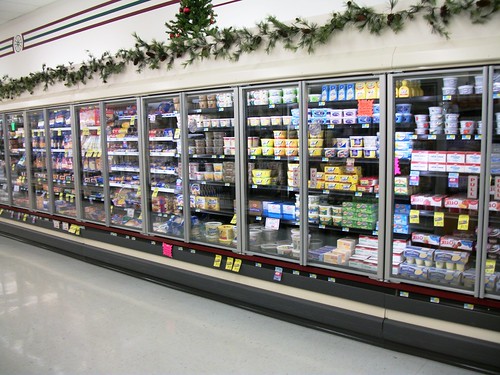
    But he wasn’t sure how customers would react after he put glass doors on the coolers in the store. Longmire didn’t have to worry for long, however. “The response was overwhelmingly positive,” he said.
    Longmire used a grant from USDA Rural Development’s Rural Energy for America Program(REAP) to purchase and install the doors. The doors resulted in a savings of about $500 per month on heating, cooling and electricity bills.
    “It’s the smartest thing we could have done,” he said. “You get return on your investment back quickly.”
    With energy costs rising and the grocery industry trying to become more energy efficient, Longmire knew the time was now to make the upgrade.
    He originally considered replacing all the coolers in the store, but decided using the REAP program to install doors on the existing coolers was a better option. The entire project was completed for what it would have cost to replace just one cooler.
    Using funding provided through USDA’s Rural Energy for America Program, a Minnesota grocer installed doors on coolers and cut his energy bill by $500 a month
    Using funding provided through USDA’s Rural Energy for America Program, a Minnesota grocer installed doors on coolers and cut his energy bill by $500 a month
    Longmire set the thermostat inside the store to 72 degrees when he had open coolers. Since the doors have been added, he sets the temperature to 68 degrees and the store actually feels warmer than it did at 72.
    “We were just wasting energy before,” Longmire said. “If every store across the country did what we did, the impact would be dramatic. It’s just one little thing, but it’s making everything more efficient.”
    Without the REAP program, Longmire’s energy costs would have kept going up. Instead, he was able to do something about it and use the money he saves to improve his business and contribute to the local economy.
    “This program really helps businesses like mine do projects like this and stay competitive,” Longmire said. “It’s great.”
    USDA is currently accepting applications for funding through the REAP program.  For more information click here.

    Meeting with USDA Officials to Discuss Renewable Energy Opportunities

    Earlier this week, I had the opportunity to facilitate a meeting with many rural energy stakeholders that USDA Rural Development works closely with here in Iowa.
    Joining me in the discussion were representatives from the Environmental Law and Policy Center, Iowa Farm Bureau Federation, MidAmerican Energy, USDA Farm Service Agency, Community Vitality Center at Iowa State University, the Iowa Economic Development Authority, the Iowa Department of Natural Resources and many more.
    Also in attendance were representatives from Senator Tom Harkin’s and Congressman Leonard Boswell’s offices.  Senator Harkin helped draft the original Energy Title in the 2002 Farm Bill.
    During the conversation it was very clear that USDA Rural Development’s energy programs are making significant impacts on rural communities throughout Iowa.  The business owners and farmers benefitting from this assistance are decreasing their energy footprint, converting renewable resources into cleaner energy, and creating and saving jobs.
    Since 2002, USDA Rural Development has awarded $130 million in guaranteed loans and grants to help more than 700 small businesses and producers in Iowa reduce energy costs by making energy-efficiency improvements, as well as installing renewable energy systems such as wind turbines, geothermal and solar.
    I was excited to hear from LaVon Griffieon, owner of Griffieon Farms and a past recipient of the agency’s Rural Energy for America Program (REAP). LaVon had tremendous praise for the program, as well as how helpful Rural Development staff was throughout the entire application and awarding process. Griffieon Farms’ fresh meat direct-market business is now using 34 percent less energy thanks to three new commercial freezers purchased with assistance from REAP.
    Iowa Rural Development State Director Bill Menner (Standing, Left) addresses participants in a renewable energy meeting in Des Moines.
    Iowa Rural Development State Director Bill Menner (Standing, Left) addresses participants in a renewable energy meeting in Des Moines.
    Mark Edelman with Iowa State University’s Community Vitality Center, and Jennifer Reutzel with the Iowa Department of Natural Resources (DNR), both talked about the importance of energy audits for small businesses in rural America.  This year REAP dollars are helping fund a pollution prevention program sponsored by the Iowa DNR that helps companies reduce water use and save energy, among other things.
    Also during the meeting Andy Olsen with Environmental Law and Policy Center emphasized the important role solar technologies and small wind projects could play with producers and businesses looking to save energy costs.
    USDA is currently accepting application for REAP funding.  For more information please visitwww.rurdev.usda.gov or click here.

    Saturday, February 4, 2012

    Top Draft Picks to Engineer Solar Championships

    Post from the blog of the U.S. Dept. of Energy:


    Tapping Top University Draft Picks to Engineer Solar Championships

    February 2, 2012 


    The Office of Energy Efficiency and Renewable Energy offers a variety of internships, fellowships, and scholarships in addition to the postdoctoral research awards. Current SunShot fellows pose in front of the Apollo Lunar Module at the National Air and Space Museum. | Energy Department file photo.
The Office of Energy Efficiency and Renewable Energy offers a variety of internships, fellowships, and scholarships in addition to the postdoctoral research awards. Current SunShot fellows pose in front of the Apollo Lunar Module at the National Air and Space Museum. | Energy Department file photo.
    As football fans buzzed yesterday about national signing day for college football prospects, excitement also builds for picks from a different higher education talent pool.

    On January 20th, the Energy Department announced two university research opportunities to advance the SunShot Initiative, a program which aims to dramatically decrease the total costs of U.S. solar energy.

    Like football, research is a team sport, no matter how high-powered any individual player may be. In that spirit, the Energy Department is offering up to $10 million to partners in university-based projects to develop and demonstrate heat transfer fluids. The Multidisciplinary University Research Initiative: High Operating Temperature Fluids solicitation seeks applicants to develop innovative fluids that are more stable than current technologies at temperatures greater than 800 degrees Celsius. The goal is to improve the efficiency of concentrating solar power technologies and cut solar power costs.

    The second opportunity is a second round for the SunShot Initiative postdoctoral research awards. The awards, administered by the Office of Energy Efficiency and Renewable Energy, provide an annual stipend as well as other benefits. Scientists from the program’s first round are working on some impressive feats:
    • Neil P. Dasgupta, a Stanford Ph.D., is researching nanowire photovoltaics based on abundant, low-cost materials;
    • Brandon Q. Mercado, a University of California, Davis Ph.D., is investigating the design of high performance semiconductor materials; and
    • Sarah R. Cowan, a University of California, Santa Barbara, Ph.D., is working on research at the National Renewable Energy Laboratory.
    So as others prepare for the pro ranks and shots at the Super Bowl, another crop of university stars can look forward to entering the big leagues of solar energy research. There, they'll be rubbing shoulders with top scientists at national laboratories and institutions. And across the country, university teams will line up to help tackle some of the biggest energy challenges facing the nation. That should give everyone something to cheer about.