Search This Blog

Showing posts with label USDA. Show all posts

Friday, October 28, 2016

Celebrating 80 Years of Partnership

From the #USDA:


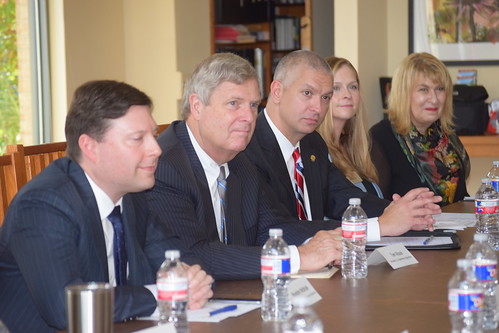
Secretary Vilsack and RUS Administrator McBride announcing an Energy Efficiency and Conservation Loan Program award
Yesterday, Secretary Vilsack and RUS Administrator McBride announced an Energy Efficiency and Conservation Loan Program award to Pedernales Electric Co-op of Johnson City, TX. Left to right: RUS Administrator Brandon McBride, Secretary Vilsack, John Hewa (CEO, Pedernales Electric Cooperative, Inc.), Emily Pataki (Board President, Pedernales Electric Cooperative, Inc.), and Cindy Thyfault (Founder & CEO, Westar Trade Resources)
This is a special year for rural electric cooperative utilities.  Eighty years ago, Congress passed and President Roosevelt signed the Rural Electrification Act of 1936.
The REA brought electricity to rural America, ultimately making the United States the source of the world’s food, fuel and fiber—the breadbasket for the world.
Today’s cooperatives not only provide electricity, but build stronger and more vital communities, particularly in rural areas. Rural electric co-ops are leading the way with their commitment to communities, investment in infrastructure to deliver reliable, affordable power and deployment of smart grid technologies, energy efficiency and renewable energy programs.
Energy Efficiency
Rural electric cooperatives are using energy efficiency—the fifth fuel—to reduce power use and costs. Cooperatives have been very strategic in implementing energy efficiency programs to meet growing electric demand and the increasing costs of power, using nearly $127 million of RUS loans to help increase our energy independence and strengthen rural economies.
Smart Grid
To improve electric utility resiliency and efficiency, rural electric cooperatives are investing in smart grid technologies. Co-ops used over $1.5 billion of RUS loans to deploy fiber connections to provide for smart grid needs.
Investments Improve the Quality of Life in Rural America
Rural electric cooperatives are the power that helps drives investment in the rural economy—an investment that builds the foundation for a vibrant future. Since 2009, rural electric cooperatives have invested over $38 billion in rural electric infrastructure, improving over 196,000 miles of line, and connecting 1.5 million new customers.
The economic stability of rural America continues to rely on the availability of affordable and reliable electricity to serve families, businesses, and attract new opportunities to these areas.
Cooperatives understand that America is strongest when we work together. That’s why 80 years after the REA became law, co-ops remain strong and successful.
To find out more about how USDA is Powering America with a More Sustainable Energy Future, visit the latest chapter in our USDA Results page. October is Co-op Month.  See Secretary Vilsack’s Proclamation. See today’s electric program award announcement.
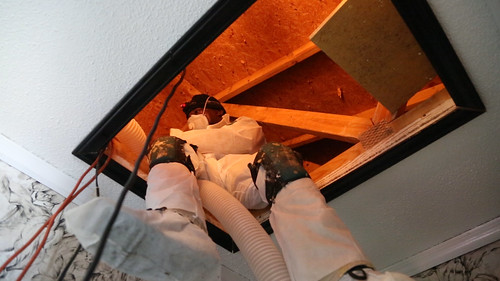
A person blowing insulation into an attic
RUS Energy Efficiency and Loan Conservation Program can help rural electric consumers reduce energy costs by blowing insulation into an attic, benefitting both rural electric cooperatives and their members. Photo courtesy of North Carolina’s Roanoke Membership Corporation.

Thursday, October 27, 2016

REAPing America’s Clean Energy Future

From the #USDA:


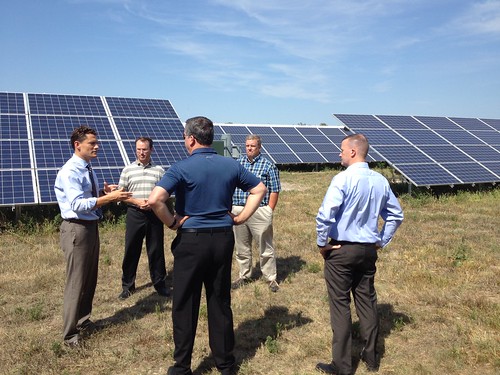
Administrator Sam Rikkers discussing the Central City Solar Garden Project
Administrator Sam Rikkers (left) discusses the Central City Solar Garden Project with (L-R) City Administrator Chris Anderson, Cliff Mesner of Mesner Development Company (with his back to the camera), and Bill Sheppard and Jeff Carpenter of USDA Rural Development’s Nebraska offices.
USDA Rural Development’s Rural Energy for America Program, commonly referred to as ‘REAP’, provides financial resources for rural agricultural producers and small businesses to help them improve their bottom line. REAP provides loan guarantees and small grants to support these producers and owners as they improve the energy efficiency of their operations and develop renewable energy sources.
Today, Secretary Vilsack announced hundreds of new projects like the one I visited over the summer in Central City, Nebraska.  It exemplifies the strategic thinking our rural communities use daily to find new ways to prosper.  A community just shy of 3,000 residents, Central City is home to the first community solar garden project ever developed in Nebraska.
Our USDA staff worked with a forward thinking public/private partnership between Cliff Mesner of Mesner Development, and Central City Administrator Chris Anderson to finance the project. Three small businesses: Mesner Development, Co.; Central City Scale, Inc.; and D Bar K, P.C. were awarded small grants they leveraged with low-interest loans from the State of Nebraska’s Energy Office.
Using a concept called ‘virtual net metering’ where the energy produced at the solar array can be applied directly toward the owner’s off-site meter, this partnership has been able to lower electric costs for these businesses, help the environment, and establish an effective price hedge against rising electricity costs. The solar garden initially has eight systems tied together generating nearly 300,000 kWh annually, and the City is planning to develop at least double that amount before the end of 2016.
The business model works like this: The solar panels are owned by what is, essentially, a cooperative partnership comprised of local businesses, individuals, and Central City itself. The array of panels are located in the city’s industrial park, which gives room for growth of the project. Since each of the respective partners own a share of the power, they can assign and reassign it as needed for their homes or businesses, and if they move, they can transfer the power to the new property without having to move the panels.
I spoke with project developer Cliff Mesner about the project, and he pointed out the diversity of ownership, ranging from small business owners looking to improve their bottom line to homeowners – grandmothers, even – who want to use ecologically friendly power sources to preserve the earth for their grandchildren. I’m glad USDA could be a part of making this project possible.
To read more about USDA’s investments in renewable energy and the bio-based economy, visit USDA’s entry on Medium.com, Powering America with a More Sustainable Energy Future.

Tuesday, October 4, 2016

The Bio-Based Economy and Renewable Energy: USDA’s Record of Success

From the #USDA:


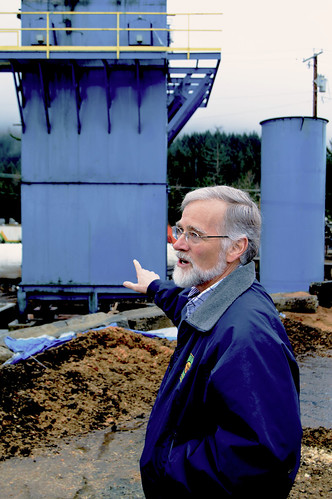
Bear Mountain Forest Products Owner Bob Sourek
Bear Mountain Forest Products plant owner Bob Sourek in Oregon produces BBQ pellets and home heating fuel pellets. Bear Mountain Bear Bricks (similar to firewood logs), and animal bedding are produced at the Cascade Locks facility.
One of the hallmarks of the Obama Administration has been our commitment to economic growth through an expanding bio-based economy.  Nowhere is that transformation more pronounced than the success of renewable energy.   And USDA Rural Development has been a leader in that effort.
The proof is in the numbers: Domestic energy-related emissions have fallen to their lowest level in 20 years.  Our dependence on foreign oil is at a 40-year low and declining. In the last eight years, USDA has helped lead an effort to promote the domestic production and use of advanced biofuels and biobased products, supporting millions of jobs and pumping hundreds-of-billions-of-dollars into the U.S. economy.
The biobased economy and renewable energy has certainly been a boon to farmers and ranchers.  It has also lifted the economic prospects of small and large businesses and created wealth in small towns and communities throughout rural America.  Much like our continued commitment to reliable and affordable electricity through our rural electric coops which started more than 80 years ago, USDA’s investments in today’s bio-based economy and renewable energy sources are giving rural America the capacity to thrive.
In February, we visited Bear Mountain Forest Products in my home state of Oregon. Last year, Rural Development provided them with $1,437,305 in Repowering Assistance Program funds to purchase and install a biomass dryer (replacing their propane fueled drying system with a wood fired system).  The efficiency upgrade is anticipated to save the company $800,000 per year in operating costs.  That’s a big boost to their bottom line, which has allowed them to expand and create even more jobs.
Bear Mountain is part of a bio-based industry that is generating $393 billion for the U.S. economy and contributing over 4.2 million jobs each year.
For farms and small businesses looking to reduce their energy consumption and costs, our signature energy efficiency program, the Rural Energy for America Program (REAP), provides guaranteed loan financing and grant funding to farmers, ranchers and rural businesses to purchase or install renewable energy systems or make energy efficiency improvements. Through this program alone, USDA has assisted over 15,000 rural small businesses, reducing greenhouse emissions that are equivalent to removing almost 1.2 million cars from the road annually.
REAP has supported over 4,000 wind and solar renewable energy projects, enough to power more than 158,000 homes annually and more than 100 anaerobic digesters to help farm operations produce and capture methane to produce electricity.
I am proud of the work we’ve done in Rural Development, and across USDA with investments in today’s bio-based economy and renewable energy sources are giving rural America the capacity to thrive.
To read more about USDA’s record of accomplishment in promoting the bio-based economy and renewable energy, visit our most recent Results Chapter on Medium.
Oregon’s Columbia River Gorge
Oregon’s majestic Columbia River Gorge is home to Bear Mountain Forest Products. Creating jobs and vitality to the bio-based economy.

Thursday, August 11, 2016

EPA Recognizes U.S. Department of Agriculture Among Nation’s Leading Green Power USERS

From the #USDA:


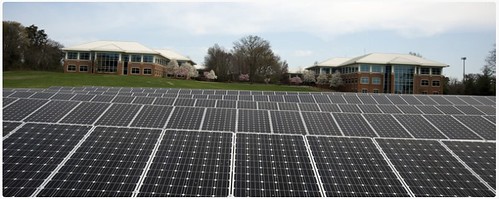
A 1.6 Megawatt solar farm at the George Washington Carver Center
The 1.6 Megawatt solar farm, located at the George Washington Carver Center in Beltsville, Maryland, helps position USDA to meet President Obama’s Executive Order goal to increase the share of electricity the Federal Government consumes from renewable.
In 2015, USDA launched the answer to President Obama’s Climate Action Plan challenge for food and forestry, with the Building Blocks for Climate Smart Agriculture and Forestry. Ten building blocks span a range of technologies and practices to reduce greenhouse gas emissions, increase carbon storage and generate clean renewable energy.  Through the Department’s voluntary and incentive-based conservation and energy programs, USDA and its partners are moving forward to reduce net emissions and enhance carbon sequestration by over 120 million metric tons of CO2 equivalent per year, or about 2 percent of economy-wide net greenhouse emissions, by 2025. This reduction is the equivalent of taking 25 million cars off the road or offsetting the emissions produced by powering nearly 11 million homes per year.
In keeping with these efforts, USDA too is working to reduce its own carbon footprint.  USDA is proud to be part of the Green Power Partnership, a voluntary program that encourages organizations to use green power as a way to reduce the environmental impacts associated with electricity use.  And USDA is even more proud to be recognized as number five on the U.S. Environmental Protection Agency’s (EPA’s) Top 10 Federal Government list of the largest green power users from the Green Power Partnership. Additionally, USDA is number 43 on the National Top 100 list.
USDA is using more than 169 million kilowatt-hours (kWh) of green power annually, which represents 35 percent of its total power needs. And USDA is generating green power from on-site renewable energy including: solar, wind, biomass, hydro and geothermal systems. Because USDA is using green power to advance the green power market and support clean renewable energy alternatives, USDA becomes more sustainable, while also sending a message to others across the United States that using green power is a sound business decision and an important tool in reducing one’s carbon footprint in the fight against climate change.
According to EPA, USDA’s green power use of more than 169 million kWh is equivalent to avoiding the carbon dioxide (CO2) emissions from electricity use of nearly 15,500 average American homes annually.  USDA is leading by example for its green power use and for advancing on-site generation.
Green power is zero-emissions electricity that is generated from environmentally preferable renewable resources, such as wind, solar, geothermal, biogas, eligible biomass, and low-impact hydro. Using green power helps build demand for the development of new renewable energy capacity nationwide and helps users reduce their carbon footprints.
In addition to purchasing green power, USDA employs various other sustainable strategies as part of the Department’s operations and practices; including, using alternative fuels in vehicles, designing and constructing high performance green buildings, green purchasing and promoting the use of biobased products. To learn more about USDA’s sustainable operations, please visithttp://greening.usda.gov/.
Currently, this Partnership has more than 1,400 partner organizations that voluntarily use billions of kilowatt-hours of green power annually. Partners include a wide variety of leading organizations such as Fortune 500® companies; small and medium sized businesses; local, state, and federal governments; and colleges and universities. For additional information, please visithttp://www.epa.gov/greenpower.
More information about USDA’s efforts and the results for How Food and Forestry Are Adapting to a Changing Climate is available at https://medium.com/usda-results/how-food-and-forestry-are-adapting-to-a-changing-climate-2f5b84bff9c0#.dn5gf01un.

Thursday, June 30, 2016

REAP: Working Well in North Carolina

From the #USDA:


Joel Olson (left), President of O2 Energies, Inc. of North Carolina speaking with USDA staff
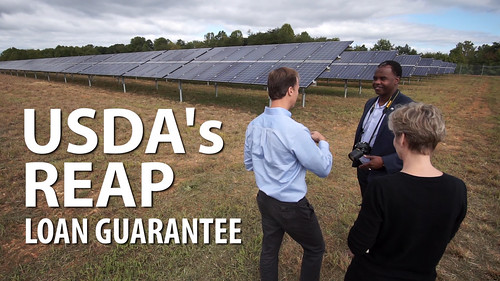
Joel Olson (left), President of O2 Energies, Inc. of North Carolina speaks with U.S. Department of Agriculture (USDA) staff in front of one of O2's solar projects. O2 worked with local North Carolina lender Surrey Bank & Trust and USDA Rural Development to finance the project.
USDA Rural Development’s Rural Energy for America Program, or REAP as we call it, is one of the flagship programs found in the energy title of the Farm Bill. Through REAP, USDA helps rural agricultural producers and small businesses improve their financial bottom line through increased energy efficiency and the development of renewable energy sources.
We wanted to share two great examples of this investment and development in North Carolina. In Mt. Airy, NC, local lenders took advantage of REAP’s loan guarantees to finance O2 Energies and build a solar farm that can provide up to 20% of the power needed by the community.
In Mt. Olive, NC, Doug Jernigan used the REAP program to turn his farm’s animal waste into energy.  Generating power from poop, Mr. Jernigan puts the energy created back into the grid and offsets the costs associated his ranching operation.
Ultimately, through our loans, grants, and loan guarantees, the USDA REAP program is having a positive impact across the nation – not just by reducing fossil fuel impact and the carbon footprint of rural small businesses and producers – but by supporting jobs and economic investment in the rural communities we serve.

Friday, May 27, 2016

California’s Clean Energy Pioneers Come in Black and White

From the #USDA:


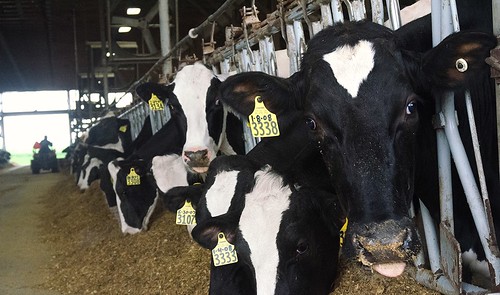
Cows
New recruits in the battle against climate change.
California has a pioneering spirit. Rural folks there have been on the frontier for generations. That frontier may have been gold mines and cattle grasslands in the past, but today that frontier is the very air, soil and water of California itself. Climate change is transforming California like it’s transforming our globe. But Californians are leading the pioneer charge to transform, with pragmatism, ingenuity and a commitment to rural communities.
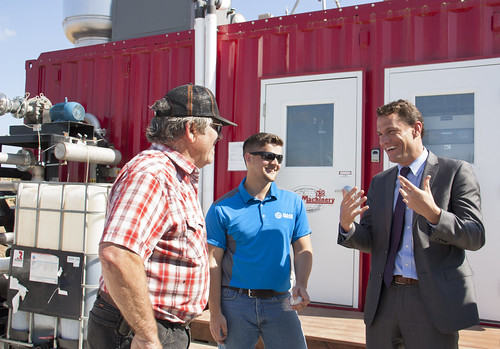
Just recently, I visited a small dairy farm in Elk Grove, California, the site of an anaerobic digester. Case Van Steyn’s operation of around 700 cows produces manure, and the Maas Energy digester, secluded in an unobtrusive red shipping container, uses the manure to produce methane. That methane creates enough electricity to power 125 homes—and enough to sell electricity back to the Sacramento Municipal Utility District, or SMUD.
SMUD unveiled the Van Steyn anaerobic digester project last Thursday as its newest dairy-fueled renewable energy plant, financed in part by USDA’s Renewable Energy for America Program. Van Steyn works the cows and Maas Energy works the digester. It’s a new model, where every player does what they do best, and it may mean many more digesters will crop up in the future.
For the sake of California and our nation’s struggle with climate change, I hope we see a lot more successes just like the Van Steyns’. Dairies are a backbone of California agriculture; milk and cream products are the second largest agricultural export and represented over $9.4 billion in production value in 2014. Turning dairies into clean energy plants positions them in a new, more sustainable niche—one that supports California families and one that is better for the state’s air, the water, and the soil. With a digester, local dairies can produce milk for the world and clean energy for their own communities.
“Dairying isn’t farming,” said Van Steyn when I visited him. “Dairying is a way of life. If you don’t want to wake up at two in the morning on a Sunday to pull a calf, then this isn’t for you.”
Van Steyn’s commitment shows in the dairy itself, from the hand-built dairy sheds to the bright red digester. He inherited the land, the buildings, the cows, and the way of life from his parents, who bought the dairy in the 1970s. Now his son works with him to run the farm today.
Digesting on the dairy is certainly a new way of doing business. But the high-tech system helps Van Steyn to manage the manure and makes money, too. He calls it a win-win. And he says he couldn’t have done it without help from the USDA.
Dairyman Case Van Steyn, Nathan Nisly of Maas Energy, and RBS Administrator Sam Rikkers
Dairyman Case Van Steyn, Nathan Nisly of Maas Energy, and RBS Administrator Sam Rikkers.

Friday, May 9, 2014

Renewable Energy: Bringing New Opportunities to Indian Country

USDA Blog Post:

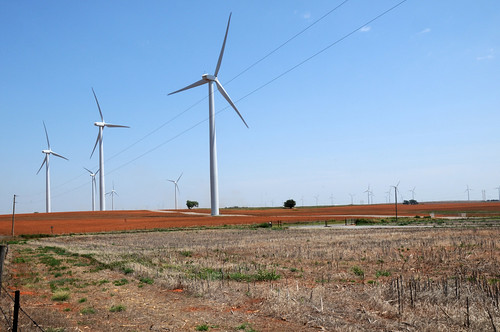
A tractor tills the soil among wind turbines in Oklahoma on August 13, 2009. USDA photo by Alice Welch.
In rural communities across the country, USDA Rural Development is bringing new energy efficiency and cost saving opportunities to Indian Country.
Choggiung Limited, a Native American Corporation in southwest Alaska, received a $20,000 energy assistance grant from USDA Rural Development to install a wind turbine at the courthouse in Dillingham – a Native-owned building and leased to the state – that has reduced its energy costs by 80 percent and is saving Choggiung about $20,000 a year.  Choggiung is a for-profit Native corporation serving Tribal residents in Dillingham, Ekuk, and Portage Creek, Alaska. “This wind turbine marks a new approach to sustainable business management and renewable energy in Dillingham,” Choggiung CEO Doug Calaway said.
In the southwest, USDA awarded the Arizona, the Navajo Tribal Utility Authority a $100,000 grant to conduct energy audits that helped farmers, ranchers, and small business owners across the Navajo Nation make their operations more energy efficient and economical.
Careful stewardship and sustainable management of forest lands are essential to the culture of the Menominee Indian Tribe of Wisconsin.  Since 1908, Menominee Tribal Enterprises (MTE) has operated a sawmill to provide lumber and fuel for the community.  Tribal members make hand-crafted, natural wood products, such as furniture and cabinets, which are an important source of income and cultural pride for the Menominee. MTE received a $250,000 grant for a new, energy efficient boiler that produces steam used in kilns that dry the wood and to heat MTE’s building facilities.  The boiler helps the environment because it is clean burning and uses less wood residue as fuel.
USDA Rural Development’s Rural Energy for America Program (REAP) is helping these and many other Tribal communities carry out their renewable energy projects.  USDA supports Tribal communities, businesses, and producers in a vast array of projects.  And renewable energy development is just one way we provide enormous economic opportunities in Indian Country.  The REAP Program helps farmers, ranchers, and rural small business owners incorporate renewable energy and energy efficiency technology into their operations.  Although government entities such as Tribes are not directly eligible for REAP assistance, individual entities and Tribally owned corporations – like those above – are eligible to apply.
Agriculture Secretary Vilsack just announced funding availability of more than $70 million in REAP grants and loan guarantees in 2014.  REAP is one of many USDA programs that are expanding our energy economy.  REAP also creates quality jobs in rural America and encourages U.S. energy independence.  Cutting energy costs with cleaner and more efficient energy generates more income for farmers and rural businesses, and reduces greenhouse gasses that affect our climate.
With everything that Rural America provides us – abundant food, clean water, beautiful outdoor spaces, and renewable energy – the positive impact of our rural areas is further strengthened by the diversity, knowledge and traditions of our Tribal communities.
To learn more about how REAP can benefit Indian Country farmers, ranchers, and small businesses, or for help in applying, please contact the USDA Rural Development American Indian/Alaska Native Coordinator that serves your area.

Wednesday, July 31, 2013

Renewable Energy on Farms Study Released - First to Look at Role of State-Level Policies


Organize your life with FranklinCovey!


USDA Blog Post:

USDA has published a study examining states’ adoption rates of distributed generation for solar and wind energy on U.S. farms. The results show that states with higher energy prices, more organic acres per farm, and more Internet connectivity adopt renewable electricity at higher rates.  For solar systems, full-farm ownership and solar resources were also significant factors.  Renewable Portfolio Standards (RPS) targets were found to increase state level renewable electricity adoption at the distributed-generation scale while electric cooperative prevalence in the state was found to have a negative relationship to renewable electricity adoption share.
The results of this study highlight the importance of coordinating approaches to policy formulation, and can assist states in refining their policies for promoting renewable electricity, particularly during an era of declining government budgets.
To read the study, please go to:  www.usda.gov/oce/.

Friday, April 27, 2012

USDA Rural Development State Offices Hold Energy Stakeholder Meetings


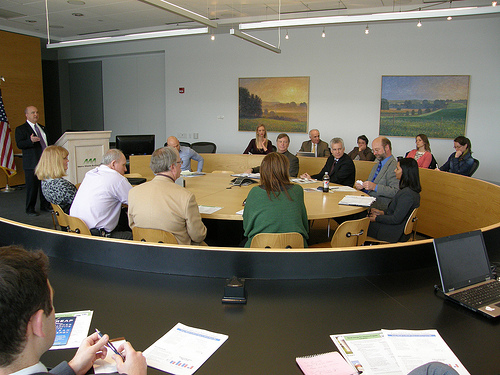
Senator Al Franken and Minn. Rural Development State Director Colleen Landkamer participate in a roundtable meeting on the USDA Rural Energy For America Program.
Throughout the first quarter of 2012, the 47 Department of Agriculture (USDA) Rural Development (RD) State Offices held energy stakeholder meetings across the country to discuss ways the Rural Energy For America Program (REAP) can assist agricultural producers and rural businesses with their energy needs.   Meeting participants included local lenders, grant writers, small business owners, and local, state and federal government agencies.
REAP provides loans, loan guarantees, and grants to agricultural producers and small rural businesses who want to purchase and install renewable energy systems (solar panels, wind turbines, flexible fuel pumps, or anaerobic digesters), make energy efficiency improvements (installing irrigation pumps, replacing ventilation systems, or purchasing grain dryers), and conduct energy audits and feasibility studies.  Over the past nine years, REAP has helped over 13,000 businesses install renewable energy systems.  REAP has also help stimulate economic growth and prosperity in rural America by creating and saving thousands of jobs.
Since President Obama took office, REAP has:
  • Supported 5,733 renewable energy and energy efficiency projects nationwide
  • Generated or saved an estimated 6.5 million megawatt hours of power – enough energy to
power 600,000 American homes for a year
  • Provided $192 million in grants and $165 million in loan guarantees to agricultural producers and rural small business owners for renewable energy systems and energy efficiency improvements
  • Fostered partnerships that leveraged an estimated $800 million from other sources
  • Helped create or save almost 10,000 jobs throughout rural America
Thanks in part to REAP, since 2008, the amount of renewable energy produced in the U.S. from wind, solar, and geothermal sources has nearly doubled.
ENERGY STAKEHOLDER MEETING HIGHLIGHTS
Iowa Rural Development State Director Bill Menner (Standing, Left) addresses participants in a renewable energy meeting in Des Moines.
On March 20, 2012, Agriculture Secretary Vilsack released a 44 page report highlighting the ways REAP contributes to U.S. energy independence and helps rural small businesses and farmers become energy efficient.
In February 2012, USDA Rural Development Under Secretary Dallas Tonsager hosted a stakeholders meeting in Sioux Falls, South Dakota to discuss renewable energy funding opportunities with a group of 25 participants.
On April 10, 2012, Minnesota Senator Al Franken, along with 40 farmers, small business owners, and energy partners gathered in Mankato, Minnesota to discuss the REAP program.  Six hundred and seventy-four projects have received funding in Minnesota since 2003.

Friday, March 30, 2012

USDA Works to Reduce Its Environmental Footprint

Did you know that USDA manages 193 million acres of land; occupies approximately 89 million square feet of office and laboratory space and operates over 23,000 buildings?  And if this isn’t enough, USDA also operates a fleet of over 40,000 motor vehicles and equipment.
Photo of green roof on court 5 of the South Building.  Saves energy and reduces excessive stormwater runoff (which supports our efforts to restore the Chesapeake Bay).
Photo of green roof on court 5 of the South Building. Saves energy and reduces excessive stormwater runoff (which supports our efforts to restore the Chesapeake Bay).
With statistics like these, it is no wonder that USDA remains focused on reducing its rather significant environmental footprint by using clean energy while working towards improving the environment.   To accomplish this, USDA conducts its operations in a sustainable manner, complies with environmental laws and regulations and walks its talk.
In order to realize these goals, USDA works on many fronts to:
  • Reduce its reliance on nonrenewable energy by improving energy conservation;
  • Increase efficiency and promote renewable energy projects and programs;
  • Support green transportation and travel practices that reduce harmful emissions;
  • Increase operational and fuel efficiency; and
  • Reduce nonrenewable fuel use.
To better coordinate this effort and build on past success, the Department created the USDA Sustainable Operations Council.  This Council includes representatives from each USDA mission area which represents each of USDA’s agencies.  The efforts of the Council are supported through several other groups, specifically, USDA’s Asset Management Council, Procurement Council, employee green teams and various workgroups throughout the Department.
Photo of one of our new “Cool Roofs” (made from biobased materials) at the USDA HQ Complex Facility - helps save energy.
Green teams embody USDA’s efforts to achieve sustainable operations at the grass roots level.  A USDA green team is a group of employees, regardless of discipline or organizational level, specifically chartered by leadership to promote and foster sustainable operations that reduce a unit’s environmental footprint.  For example, some successes which can be attributed to USDA green teams include:
  • Reductions in electricity use by seven percent and natural gas use by 26 percent in the Pike-San Isabel National Forest; and
  • Installing electric steam kettles and electric hot water heaters within the USDA Headquarters Complex for summer mode use which yielded an annual savings of $194,000.
And another success can be illustrated through USDA’s energy initiative, the “USDA Unplugged Challenge,” which was designed to bring awareness to USDA employees about the energy usage and waste that occurs at the USDA facilities during the evenings and on weekends.  The “USDAUnplugged Challenge” demonstrated that employees can make a significant difference in reducing electric consumption and costs. USDA energy managers found that employees within the Headquarters Complex were able to reduce electric use by 9,000 kilowatt-hours in a 24 hour period during the work week and by 24,000 kilowatt-hours over the weekend during the “USDA Unplugged Challenge.
USDA has synergistically combined its strategic plans and policies with the services that the U.S. Department of Energy’s Federal Energy Management Program (FEMP) provides to create effective management tools and energy initiatives.  Examples include FEMP-sponsored Energy Savings Performance Contracts and Utility Energy Service Contracts, green power purchase agreements, internal USDA Agency scorecards, corporate energy data management systems and environmental management systems.  Specific energy initiatives entail increasing the use of alternative transportation fuels, procuring more energy efficient replacement vehicles, performing facility energy evaluations and strategically disseminating energy-related outreach and awareness materials.
The Forest Service is building net-zero energy installations, including the San Dimas Technology and Development Center, shown.

Thursday, March 29, 2012

The Legend Grows – South Dakota Seed Company Saves Big Bucks with Biomass

As the team at Legend Seeds of De Smet, South Dakota, gears up for spring and the 2012 growing season, they do so from a newly-constructed, state-of-the-art facility, located just east of their former space on Highway 14.  The new office, seed lab and expanded warehouse space were designed to better accommodate the additional full-time office staff needed to support the stretching trade area and growing field staff for the Legend organization. Thanks to a USDA program, the building is also energy efficient.
USDA Business & Cooperative Program Director Dana Kleinsasser(left), Area Specialist Darlene Bresson, and Legend Seeds President Glen Davis check out the biomass boiler system, which saves 60 percent of the cost of heating the seed company building, compared to the previous system.
The former office space that was purchased in 1992 had been remodeled and updated over the years but Legend owner, Glen Davis, recognized that the increasing demand for productivity would be best met if he augmented the workspace and workflow for his talented team.  In addition to a fresh contemporary look and serviceable layout, the new space boasts an impressive, highly-efficient heating and cooling system powered by a 250,000 BTU biomass boiler.
Using the biomass boiler accomplished two goals – to reduce energy usage and to reduce the amount of carry-over corn that was going to the local landfill.  Typically, renewable energy, such as the biomass boiler, carry large up-front installation costs.  But with the assistance of the Rural Energy for America program (REAP) from USDA Rural Development, Legend Seeds received a grant for 25 percent of the boiler cost.  With the boiler, Legend’s energy bill is projected to be reduced by nearly 60 percent, and the cost to dispose of waste corn will decline also – a win-win situation.
“The funding provided by REAP has been not only a help in construction of the new office’s heating system but also the advice and support has been valuable in completing the entire project,” said Glen Davis, president of Legend Seeds.
Seed company President Glen Davis explains to Business & Cooperative Program Director Dana Kleinsasser how the USDA-funded boiler heats the facility, saving 60 percent of the cost of energy.
USDA is currently accepting applications for Rural Energy for America funding, but the deadline for some applications is rapidly approaching.  To find out more, call your State Rural Development office or click here.  To read more about how REAP has been used to reduce energy costs across America, click here.

Thursday, March 22, 2012

Deputy Under Secretary Cheryl Cook Announces Obama Administration Accomplishments Supporting Renewable Energy

David Fink, owner of Heidel Hollow Farm, described the farm’s energy savings from the 896 panel solar array funded by USDA Rural Development to USDA officials and others gathered at his farm.
The sun shone brightly on the 896 panel solar array at Heidel Hollow Farm in Germansville, Penn., as USDA Rural Development Deputy Under Secretary Cheryl L. Cook, other USDA officials and guests celebrated the farm’s successful renewable energy project and the announcement of a new USDA Renewable Energy and Energy Efficiency Report. Heidel Hollow Farm, a family-owned, 1,600 acre hay farm, was awarded two USDA  Rural Energy for America Program (REAP) grants in 2010. The grants were used toward a solar energy project that provides approximately 252,800 KW of electricity used in the hay compressing operation of the farm and an energy efficiency project that replaced one diesel engine with five electric motors, saving over 8,000 gallons of diesel fuel each year.  The compactor increases the density of baled hay by 2 1/2 times for more efficient shipping to overseas customers.
According to Deputy Under Secretary Cook, “Rural Development’s REAP grants to Heidel Hollow Farm are excellent examples of funding that contributes to making farm operations more energy efficient and economical. This funding for renewable energy projects helps rebuild and revitalize rural America.”   The Renewable Energy and Energy Efficiency report, released by Secretary Vilsack, highlights the ways in which USDA’s REAP program contributes to U.S. energy independence. Heidel Hollow Farm is one of 79 renewable energy projects funded in Pennsylvania since 2009. In total, Rural Development invested over $5.6 million in Pennsylvania energy projects.  Click here to find out how REAP is making a difference and saving energy in Pennsylvania.
USDA Rural Development Deputy Under Secretary Cheryl  L. Cook, Esq.  lifts one of the 35 lb. compressed hay bales currently being produced at Heidel Hollow Farm in Germansville for overseas shipment.  Energy used to compress the bales comes from solar power.
USDA Rural Development Deputy Under Secretary Cheryl L. Cook, Esq. lifts one of the 35 lb. compressed hay bales currently being produced at Heidel Hollow Farm in Germansville for overseas shipment. Energy used to compress the bales comes from solar power.
The deadline for some 2012 Energy applications is approaching. To find out more, contact your local USDA Rural Development office or click here.

New Funding for Biomass Research and Development

Obama Administration Announces New Funding for Biomass Research and Development Initiative

March 22, 2012 - 1:12pm

COLUMBUS, Ohio  – Today, as President Obama went to Ohio State University to discuss the Administration’s all-out, all-of-the-above strategy for American energy, the White House announced up to $35 million over three years to support research and development in advanced biofuels, bioenergy and high-value biobased products. The projects funded through the Biomass Research and Development Initiative (BRDI) – a joint program through the U.S. Department of Agriculture (USDA) and the U.S. Energy Department (DOE) – will help develop economically and environmentally sustainable sources of renewable biomass and increase the availability of renewable fuels and biobased products that can help replace the need for gasoline and diesel in vehicles and diversify our energy portfolio. Today’s announcement to invest in advanced biofuels supports President Obama’s blueprint for an economy fueled by homegrown, alternative energy sources designed and produced by American workers.  These investments will help cut America’s oil imports, develop clean alternative energy technologies, and protect American families and businesses from the ups and downs of the global oil market. 

“USDA’s partnership with the Department of Energy aims to improve our country’s energy security and provide sustainable jobs in communities across the country,” said Agriculture Secretary Tom Vilsack. “This funding represents the kind of innovation we need to build American-made, homegrown biofuels and biobased products that will help to break our dependence on foreign oil and move our nation toward a clean energy economy.”

“President Obama called for an all-of-the-above strategy that develops every available source of American energy and advances technologies that will help reduce our dependence on foreign oil and save money for American consumers,” said Secretary Chu. “Investing in next-generation biofuels helps boost the competitiveness of the U.S. biofuels industry, supports economic development in rural communities, and creates skilled jobs for American workers.”

For fiscal year 2012, applicants seeking BRDI funding must propose projects that integrate science and engineering research in the following three technical areas that are critical to the broader success of alternative biofuels production:

·         Feedstock Development
Funding will support research, development and demonstration activities for improving biomass feedstocks and their supply, including the harvest, transport, preprocessing, and storage necessary to produce biofuels and biobased products.
·         Biofuels and Biobased Products Development
Research, development and demonstration activities will support cost-effective technologies to increase the use of cellulosic biomass in the production of biofuels and biobased products. Funding will also support the development of a wide range of technologies to produce various biobased products, including animal feeds and chemicals that can potentially increase the economic viability of large-scale fuel production in a biorefinery.
·         Biofuels Development Analysis
Projects will develop analytical tools to better evaluate the effects of expanded biofuel production on the environment and to assess the potential of using federal land resources to sustainably increase feedstock production for biofuels and biobased products.

Integrating multiple technical areas in each project will encourage collaborative problem-solving approaches, enable grantees to identify and address knowledge gaps, and facilitate the formation of research consortia.
Subject to annual appropriations, USDA and DOE plan to contribute up to $35 million over three years for this year’s BRDI solicitation. This funding is expected to support five to seven projects over three to four years. A description of the solicitation, eligibility requirements, and application instructions is available at https://www.fedconnect.net/ and http://www.grants.gov/ under Reference Number DE-FOA-0000657. Applications are due April 23, 2012, and must be submitted electronically. It is anticipated that applicants who submit completed applications will be notified of the results by June 15, 2012.

In addition to the funding announced today by USDA and DOE, the Obama Administration is taking a number of aggressive steps to support the growth of robust renewable energy and biobased markets in the U.S.

For example, in August 2011, the President announced that USDA, DOE and the Navy are investing up to $510 million during the next three years in partnership with the private sector to produce advanced drop-in aviation and marine biofuels to power military and commercial transportation. The initiative supports the President’s Blueprint for A Secure Energy Future, the Administration’s framework for reducing America’s dependence on foreign oil.

On Feb. 21, President Obama issued a Presidential Memorandum directing the federal government to take decisive steps to dramatically increase the purchase of biobased products over the next two years. Biobased products include items like paints, soaps and detergents and are developed from farm-grown plants, rather than chemicals or petroleum bases. The biobased products sector marries the two most important economic engines for rural America: agriculture and manufacturing. To support these efforts, USDA created the BioPreferred program to promote the increased purchase and use of biobased products. Last year, USDA released the USDA Certified Biobased Product label to assure consumers that a product or package contains a verified amount of renewable biological ingredients.

Grants awards and national program leadership for the BRDI program will be administered by USDA’s National Institute of Food and Agriculture (NIFA) and DOE’s Office of Energy Efficiency and Renewable Energy.

Through federal funding and leadership for research, education and extension programs, NIFA focuses on investing in science and solving critical issues impacting people’s daily lives and the nation’s future. More information is available at: www.nifa.usda.gov.

The Energy Department's Office of Energy Efficiency and Renewable Energy (EERE) accelerates development and facilitates deployment of energy efficiency and renewable energy technologies and market-based solutions that strengthen U.S. energy security, environmental quality, and economic vitality. Learn more about EERE’s work with industry, academia and national laboratory partners on a balanced portfolio of research in biomass feedstocks and conversion technologies.