From Little Rock District, U.S. Army Corps of Engineers:
The seven steps to hydropower. The Army Corps of Engineers generates hydropower at Ozark and Dardanelle dams on the river as well as at 5 lake projects.
Search This Blog
Showing posts with label electricity. Show all posts
Tuesday, December 23, 2014
Monday, June 2, 2014
Boom und Bremse bei globaler Windkraft | Wissen & Umwelt | DW.DE | 02.06.2014
Requirements for electric current are increasingly covered by wind power - at least in Asia, Latin America and Eastern Europe. There, the boom is just beginning. In Western industrialized countries, however, the wind expansion is losing momentum.
Boom und Bremse bei globaler Windkraft | Wissen & Umwelt | DW.DE | 02.06.2014
Sunday, May 19, 2013
Downstream Face
Labels:
electricity,
energy,
green,
Hoover Dam,
Nevada,
NV,
renewable
Sign in Generation Room
Labels:
electricity,
energy,
green,
Hoover Dam,
Nevada,
NV,
sign
Tuesday, September 4, 2012
GE to Provide Cleaner, Efficient Power for China’s Zhejiang Province
Press release:
04 September 2012
04 September 2012
GE to Provide Cleaner, Efficient Power for China’s Zhejiang Province
- 6FA Technology Selected for Three Distributed Energy Projects
- GE to Provide Approximately 575 Additional Megawatts of Power
- High Cogeneration Efficiency, Low Emissions Plants to Replace Older Coal Units
BEIJING, CHINA—September 4, 2012—GE (NYSE: GE) will supply five Frame 6FA gas turbine-generators for three power plants in China’s Zhejiang Province that will help to meet the province’s strong power needs. Designed for high efficiency and low emissions, all three projects support the provincial government’s initiative to develop gas turbine cogeneration plants to replace less efficient coal-fired boilers in order to reduce environmental impact and increase energy efficiency in the region.
GE will provide two 6FA gas turbine-generators to Harbin Electric Corporation, the main equipment contractor for a combined-cycle power plant in Jiangshan county owned by Datang International Power Generation, Ltd. The plant will be a key energy supplier for the Jiangshan area. GE also will supply similar equipment for a facility in Quzhou city owned by Quzhou Puxing, a subsidiary of Wanxiang Group, which will supply power for the Quzhou Kecheng economic development zone. Each of these plants will produce up to 230 megawatts of power with a thermal efficiency of 53.5 percent in combined-cycle operation and up to approximately 80 percent in cogeneration mode. A typical coal-fired plant of similar size operates at efficiency levels around 30 percent.
In addition, GE will provide one 6FA gas turbine-generator for a power plant near Huzhou city owned by Amber Energy Co. Ltd. That plant, a key energy supplier for the Anji economic development zone, will have an output capacity of 115 megawatts.
When they enter commercial operation in December 2012, the three new plants will produce a total of approximately 575 megawatts of power in Zhejiang province, alleviating this year’s power shortage of approximately 7000 megawatts and securing the process heating supply for related industries in the area. Natural gas from China’s landmark West-to-East Pipeline II will be the primary fuel for each plant.
“Each project will meet the electricity and heating demands of the surrounding industrial areas and residential districts with limited environmental impact, compared with older technology plants,” said Walter Wang, GM, thermal enterprise commercial for GE Power & Water. “With their midrange output, high efficiency, high exhaust energy for steam production and low emissions, our 6FA gas turbines are an excellent match for distributed energy applications such as these.”
In a distributed energy project, electricity and heat are generated on-site, at or near the point of use. This is a highly reliable source of energy and eliminates the cost and the risk associated with distributing power from a centralized power plant over long distances.
The 6FA gas turbine is a mid-sized version of GE’s widely used 7FA and 9FA gas turbines. Designed for 50 or 60 hertz grids, the gear-driven 6FA gas turbine addresses mid-sized power block needs with high performance. Its output range, high exhaust energy, full packaging and robust design make the 6FA well suited for a wide range of distributed energy applications, including industrial cogeneration and district heating. More than 140 6FA gas turbines have been sold worldwide. The 6FA is ecomagination- qualified.Ecomagination is GE’s commitment to providing innovative solutions that maximize resources, drive efficiencies and help make the world work better.
About GE
GE (NYSE: GE) works on things that matter. The best people and the best technologies taking on the toughest challenges. Finding solutions in energy, health and home, transportation and finance. Building, powering, moving and curing the world. Not just imagining. Doing. GE works. For more information, visit the company's website at www.ge.com.
Follow GE Power & Water and ecomagination on Twitter @GE_PowerWaterand @ecomagination.
GE will provide two 6FA gas turbine-generators to Harbin Electric Corporation, the main equipment contractor for a combined-cycle power plant in Jiangshan county owned by Datang International Power Generation, Ltd. The plant will be a key energy supplier for the Jiangshan area. GE also will supply similar equipment for a facility in Quzhou city owned by Quzhou Puxing, a subsidiary of Wanxiang Group, which will supply power for the Quzhou Kecheng economic development zone. Each of these plants will produce up to 230 megawatts of power with a thermal efficiency of 53.5 percent in combined-cycle operation and up to approximately 80 percent in cogeneration mode. A typical coal-fired plant of similar size operates at efficiency levels around 30 percent.
In addition, GE will provide one 6FA gas turbine-generator for a power plant near Huzhou city owned by Amber Energy Co. Ltd. That plant, a key energy supplier for the Anji economic development zone, will have an output capacity of 115 megawatts.
When they enter commercial operation in December 2012, the three new plants will produce a total of approximately 575 megawatts of power in Zhejiang province, alleviating this year’s power shortage of approximately 7000 megawatts and securing the process heating supply for related industries in the area. Natural gas from China’s landmark West-to-East Pipeline II will be the primary fuel for each plant.
“Each project will meet the electricity and heating demands of the surrounding industrial areas and residential districts with limited environmental impact, compared with older technology plants,” said Walter Wang, GM, thermal enterprise commercial for GE Power & Water. “With their midrange output, high efficiency, high exhaust energy for steam production and low emissions, our 6FA gas turbines are an excellent match for distributed energy applications such as these.”
In a distributed energy project, electricity and heat are generated on-site, at or near the point of use. This is a highly reliable source of energy and eliminates the cost and the risk associated with distributing power from a centralized power plant over long distances.
The 6FA gas turbine is a mid-sized version of GE’s widely used 7FA and 9FA gas turbines. Designed for 50 or 60 hertz grids, the gear-driven 6FA gas turbine addresses mid-sized power block needs with high performance. Its output range, high exhaust energy, full packaging and robust design make the 6FA well suited for a wide range of distributed energy applications, including industrial cogeneration and district heating. More than 140 6FA gas turbines have been sold worldwide. The 6FA is ecomagination- qualified.Ecomagination is GE’s commitment to providing innovative solutions that maximize resources, drive efficiencies and help make the world work better.
About GE
GE (NYSE: GE) works on things that matter. The best people and the best technologies taking on the toughest challenges. Finding solutions in energy, health and home, transportation and finance. Building, powering, moving and curing the world. Not just imagining. Doing. GE works. For more information, visit the company's website at www.ge.com.
Follow GE Power & Water and ecomagination on Twitter @GE_PowerWaterand @ecomagination.
Labels:
6FA,
China,
Chinese,
efficiency,
efficient,
electric,
electricity,
energy,
ge,
General,
power
Wednesday, August 8, 2012
Lockheed Martin to Integrate Fuel Cells, Solar Power for Military Applications Under Contract with Office of Naval Research
Press release:
Lockheed Martin to Integrate Fuel Cells, Solar Power for Military Applications Under Contract with Office of Naval Research
AKRON, Ohio – Aug. 8, 2012 – Lockheed Martin [NYSE: LMT] secured a contract with the Office of Naval Research for the design and development of solid oxide fuel cell generator sets as an alternative to traditional battlefield power generation equipment. Lockheed Martin’s fuel cell technology will be integrated with solar panels, providing the military with the power needed to perform missions while using dramatically less fuel.
At the end of the 32-month development program, Lockheed Martin will demonstrate and deliver a multi-kilowatt JP-8 compatible Fuel Cell Efficient Power Node for evaluation by the U.S. Marines. The goal of the approximately $3 million dollar contract is to reduce overall fuel usage required for tactical electrical generation by 50 percent or more.
More than 100,000 military generators are used worldwide to power services from lighting and air conditioning to computers, radios, and command and control systems. Solid oxide fuel cells convert fuel into electricity using a chemical reaction that is 30 to 50 percent more efficient than the combustion engines used in diesel generators, which are the largest consumers of fuel on the battlefield today. Because fuel cells require less fuel to create the same amount of power, they offer the potential to save billions of dollars in operational costs and to reduce the number of military casualties that are directly related to the delivery of fuel.
“Lockheed Martin shares the U.S. Department of Defense’s top goals of increasing the safety of our troops and reducing operational costs,” said Dan Heller, vice president of new ventures for Lockheed Martin Mission Systems & Sensors. “Alternative energy solutions, such as the fuel cell we are developing for the Office of Naval Research, can help mitigate these challenges, advancing the strength and flexibility of our military operating in some of the world’s toughest conditions.”
Lockheed Martin is working with Cleveland-based TMI to mature the fuel cell technology. In addition to Lockheed Martin-funded research and development, this team has received competitive grants from the Ohio Third Frontier, a program committed to creating new technology-based products, companies, industries and jobs. In 2011, Lockheed Martin became the first company to continuously operate a solid oxide fuel cell generator set for over one thousand hours on standard DoD-supplied JP-8, and remains the only company to do so to date.
Headquartered in Bethesda, Md., Lockheed Martin is a global security and aerospace company that employs about 120,000 people worldwide and is principally engaged in the research, design, development, manufacture, integration and sustainment of advanced technology systems, products and services. The Corporation's net sales for 2011 were $46.5 billion.
Labels:
cell,
contract,
electrical,
electricity,
energy,
fuel,
generation,
generator,
LMT,
Lockheed,
Martin,
naval,
office,
oxide,
power,
renewable,
research,
solar,
solid,
technology
Wednesday, May 9, 2012
Las Vegas Bets It All on White with Energy-Saving LED Streetlights from GE
From Press Release:
09 May 2012
09 May 2012
Las Vegas Bets It All on White with Energy-Saving LED Streetlights from GE
EAST CLEVELAND, Ohio — May 9, 2012 — (NYSE:GE) — Las Vegas is best known for the bright lights of ‘The Strip’; but thanks to new LED fixtures from GE Lighting, the city’s surrounding streets are starting to take on a shine of their own. Far from a gamble, an investment in new brighter streetlights will soon save The Entertainment Capital of the World nearly $1.7 million in annual energy costs by reducing electricity use by more than 20 million kilowatt hours (kWhs).
Lowering expenses with LEDsNearly 6,600 GE Evolve™ LED Roadway fixtures have already replaced mercury vapor and high-pressure sodium (HPS) lights on arterial streets and residential thoroughfares throughout Las Vegas. As a result, the city will consume approximately 2.2 million fewer kWhs this year, equating to $175,000 in energy savings.
This spring, Las Vegas will launch the second phase of its street lightingupdate, installing 35,000 additional Evolve LED Roadway fixtures over the next 12 months. Stage-two utility savings alone will exceed $1.5 million a year by diminishing electricity use by more than 18 million kWhs.
Upon project completion, more than 80 percent of Las Vegas’ 50,000 streetlights will be powered by GE fixtures. And while previous streetlights lasted about four years on average, GE’s new Evolve Roadway LEDs have a longer life estimated at more than 11 years based on 12 hours use per day—significantly extending the time between maintenance cycles. The city calculates this will yield an additional $1 million cost benefit, bringing combined annual energy and maintenance savings to $2.7 million. The bright white light produced by the LED light source further improves visibility on streets.
"Las Vegas has a strong commitment to the environment, and we are recognized internationally for our green initiatives," says Las Vegas City Manager Elizabeth N. Fretwell. "People who don't live in Southern Nevada may not think of Las Vegas when they talk about the environment and energy efficiency, but the truth is our city is a leader in these areas."
Making a local bidThe Las Vegas lighting project was opened to public bid in late 2010 and allowed for all types of illumination technologies. Design Concepts, Inc. (DCI), GE Lighting’s authorized Las Vegas representative agency, met with city officials to tout the advantages of an LED solution. Among many different competitors and technology offerings, GE was selected as one of five finalists to participate in an extended trial that concluded in March 2011.
“This was a long and rigorous testing and qualifying process,” explains Bob King, president and CEO of DCI. “The city conducted a thorough study in cooperation with a local engineering consulting firm familiar with the city’s roadway lighting requirements as set forth by the Regional Transportation Commission (RTC) of Southern Nevada. Ultimately, the decision fell to a team of lighting experts who meticulously analyzed performance, construction, engineered design characteristics, aesthetics and long-term value.”
In April 2011, GE was awarded the contract for the first 6,600 fixtures. In early 2012, the city proceeded with phase two of the lighting update with an additional 35,000 fixtures. The complete project represents the largest roadway lighting contract in GE Lighting’s history.
“Our products are designed to compete from an overall performance perspective,” explains Pete Porte, western regional manager for GE Lighting. “From light levels to street size dimensions to pole heights, the specification put forth by the RTC of Southern Nevada was based on meeting myriad criteria. We hit all the marks with an efficient fixture that yields up to a 60 percent reduction in energy consumption compared to standard high-intensity discharge (HID) systems.”
DCI coordinated LED fixture fulfillment through local distributor Crescent Electric Supply Company and electrical contractor TransCore to provide installation services for the majority of Las Vegas’ new streetlights.
GE and DCI further engaged the city’s maintenance and energy management teams in discussions that produced an NV Energy utility rebate, while Crescent Electric coordinated a recycling program for Las Vegas’ old HPS fixtures that will provide the city a direct credit that will be applied to the purchase of the new LED lights.
An environmental payoutBy transitioning to more than 41,000 GE Evolve LED Roadway fixtures over the next year, Las Vegas will remove more than 12,000 metric tons of carbon dioxide (CO2) from its atmosphere annually. This is equivalent to eliminating the CO2 emissions of more than 2,300 passenger cars or to planting more than 3,200 acres of trees.*
Evolve LED Roadway fixtures are designed to meet recommended luminance and illuminance requirements for local and major highway and street classifications. Advanced reflective optic technology effectively directs light where it’s needed, improves horizontal and vertical uniformity and reduces glare. A refined thermal management system incorporates a robust heat sink directly in the fixture to ensure maximum heat transfer for long LED life. These energy-efficient fixtures can also be paired with programmable dimming options for even greater control and savings.
For more information on the GE Lighting products used in this project, visitwww.gelightingsolutions.com.
About GE Lighting
GE Lighting invents with the vigor of its founder Thomas Edison to develop energy-efficient solutions that change the way people light their world in commercial, industrial, municipal and residential settings. The business employs over 17,000 people in more than 100 countries, and sells products under the Reveal® and Energy Smart® consumer brands, and Evolve™, GTx, Immersion™, Infusion™, Lumination™ and Tetra® commercial brands, all trademarks of GE. General Electric (NYSE: GE) works on things that matter to build a world that works better. For more information, visitwww.gelighting.com.
Thursday, May 3, 2012
GE’s Waukesha Factory Delivers Generator Sets for Potawatomi Tribe’s Milwaukee Biogas Power Project
Press release:
03 May 2012
03 May 2012
GE’s Waukesha Factory Delivers Generator Sets for Potawatomi Tribe’s Milwaukee Biogas Power Project
- Biogas Combined Heat and Power Plant to Generate 2 Megawatts of Renewable Electricity for WE Energies’ Customers
- Thermal Power from GE’s Waukesha Gas Engines to Support Milwaukee Tribe’s Operations
WAUKESHA, WIS.—May 3, 2012—GE’s (NYSE: GE) Waukesha gas enginesfactory manufactured and recently delivered two, 1-megawatt (MW) cogeneration sets for the Forest County Potawatomi Community’s (FCPC) planned biogas combined heat and power (CHP) project in Milwaukee’s Menomonee Valley. The biogas project will convert waste from area food processing operations into a reliable supply of renewable energy for the tribal community as well as the local grid.
GE delivered the two Waukesha APG1000 Enginator biogas engines to FCPC on April 13. The Waukesha plant employs 680 people, including 385 production workers.
An anaerobic digester will process the food processor waste-to-produce biogas that will fuel GE’s Waukesha engines in the CHP plant. The engines are designed specifically to run on biogases that are rich in methane, a potent greenhouse gas. Burning the methane in a reciprocating engine reduces the amount of gas that can escape into the atmosphere.
The two generator sets will produce a total of 2 MW of renewable electricity, enough to power about 1,500 Milwaukee-area homes. The biogas plant’s electricity will be sold to WE Energies and can assist the utility in meeting the state’s Renewable Portfolio Standard, which requires a certain portion of the utility’s power be generated by renewable energy sources. The Potawatomi Tribe expects the CHP plant to begin operation in April 2013.
GE’s high-efficiency gas engines are designed to make the most power for the fuel they consume, with benefits for both the plant owner and the environment. The CHP process recovers what would normally be “waste” heat from the engines’ operation. This effectively doubles the Waukesha units’ total efficiency, producing the greatest amount of usable power from the fuel burned in the engine. The Potawatomi Tribe’s Milwaukee operations may use the engines’ heat for a variety of heating and cooling purposes, potentially including the tribe’s planned new hotel.
“Renewable energy projects, like this biogas facility, make both environmental and economic sense,” said Jeff Crawford, attorney general for the Forest County Potawatomi Community. “In addition to increasing the amount of renewable energy being used and saving on energy costs, this project also benefits Wisconsin’s economy. Wisconsin is fortunate to have a number of companies, like GE Energy, that manufacture the components that make these projects possible.”
“While gases from landfills, animal waste and wastewater treatment facilities have long been used as fuel in power generation systems, the use of food waste as a source of biogas for these types of installations is still relatively new,” said Brian White, president of GE Energy’s Waukesha gas engines business. “The Waukesha team is excited to work closely with the Forest County Potawatomi Community to successfully bring this project to fruition as Wisconsin and other states work to diversify their energy supplies.“
Wisconsin has been at the forefront of the U.S. agricultural industry’s efforts to deploy technologies that convert animal and food wastes into new sources of renewable energy. For example, in the last several years, a growing number of Wisconsin dairy farms have installed GE’s Jenbacher biogas engines to generate renewable electricity for onsite uses and the local grid. For example, GE’s Jenbacher biogas engine technology is generating 633 kilowatts (kW) at the Crave Brothers Farm, LLC in Waterloo, Wis.
The Potawatomi Tribe CHP project illustrates how GE’s comprehensive suite of distributed power solutions—ranging in size from 100 kW to 100 MW—are helping customers worldwide to generate more reliable, on-site electricity and heat. The project also exemplifies the company’s focus on the food and beverage industry. GE’s dedicated Food and Beverage Solutions organization is bringing energy management, CHP and other waste-to-value solutions to the industry, benefitting the companies involved and surrounding communities.
About GE
GE (NYSE: GE) works on things that matter. The best people and the best technologies taking on the toughest challenges. Finding solutions in energy, health and home, transportation and finance. Building, powering, moving and curing the world. Not just imagining. Doing. GE works. For more information, visit the company's website at www.ge.com.
GE Energy works connecting people and ideas everywhere to create advanced technologies for powering a cleaner, more productive world. With more than 100,000 employees in over 100 countries, our diverse portfolio of product and service solutions and deep industry expertise help our customers solve their challenges locally. We serve the energy sector with technologies in such areas as natural gas, oil, coal and nuclear energy; wind, solar, biogas and water processing; energy management; and grid modernization. We also offer integrated solutions to serve energy- and water-intensive industries such as mining, metals, marine, petrochemical, food & beverage and unconventional fuels.
Follow GE Energy on Twitter @GE_Energy.
GE delivered the two Waukesha APG1000 Enginator biogas engines to FCPC on April 13. The Waukesha plant employs 680 people, including 385 production workers.
An anaerobic digester will process the food processor waste-to-produce biogas that will fuel GE’s Waukesha engines in the CHP plant. The engines are designed specifically to run on biogases that are rich in methane, a potent greenhouse gas. Burning the methane in a reciprocating engine reduces the amount of gas that can escape into the atmosphere.
The two generator sets will produce a total of 2 MW of renewable electricity, enough to power about 1,500 Milwaukee-area homes. The biogas plant’s electricity will be sold to WE Energies and can assist the utility in meeting the state’s Renewable Portfolio Standard, which requires a certain portion of the utility’s power be generated by renewable energy sources. The Potawatomi Tribe expects the CHP plant to begin operation in April 2013.
GE’s high-efficiency gas engines are designed to make the most power for the fuel they consume, with benefits for both the plant owner and the environment. The CHP process recovers what would normally be “waste” heat from the engines’ operation. This effectively doubles the Waukesha units’ total efficiency, producing the greatest amount of usable power from the fuel burned in the engine. The Potawatomi Tribe’s Milwaukee operations may use the engines’ heat for a variety of heating and cooling purposes, potentially including the tribe’s planned new hotel.
“Renewable energy projects, like this biogas facility, make both environmental and economic sense,” said Jeff Crawford, attorney general for the Forest County Potawatomi Community. “In addition to increasing the amount of renewable energy being used and saving on energy costs, this project also benefits Wisconsin’s economy. Wisconsin is fortunate to have a number of companies, like GE Energy, that manufacture the components that make these projects possible.”
“While gases from landfills, animal waste and wastewater treatment facilities have long been used as fuel in power generation systems, the use of food waste as a source of biogas for these types of installations is still relatively new,” said Brian White, president of GE Energy’s Waukesha gas engines business. “The Waukesha team is excited to work closely with the Forest County Potawatomi Community to successfully bring this project to fruition as Wisconsin and other states work to diversify their energy supplies.“
Wisconsin has been at the forefront of the U.S. agricultural industry’s efforts to deploy technologies that convert animal and food wastes into new sources of renewable energy. For example, in the last several years, a growing number of Wisconsin dairy farms have installed GE’s Jenbacher biogas engines to generate renewable electricity for onsite uses and the local grid. For example, GE’s Jenbacher biogas engine technology is generating 633 kilowatts (kW) at the Crave Brothers Farm, LLC in Waterloo, Wis.
The Potawatomi Tribe CHP project illustrates how GE’s comprehensive suite of distributed power solutions—ranging in size from 100 kW to 100 MW—are helping customers worldwide to generate more reliable, on-site electricity and heat. The project also exemplifies the company’s focus on the food and beverage industry. GE’s dedicated Food and Beverage Solutions organization is bringing energy management, CHP and other waste-to-value solutions to the industry, benefitting the companies involved and surrounding communities.
About GE
GE (NYSE: GE) works on things that matter. The best people and the best technologies taking on the toughest challenges. Finding solutions in energy, health and home, transportation and finance. Building, powering, moving and curing the world. Not just imagining. Doing. GE works. For more information, visit the company's website at www.ge.com.
GE Energy works connecting people and ideas everywhere to create advanced technologies for powering a cleaner, more productive world. With more than 100,000 employees in over 100 countries, our diverse portfolio of product and service solutions and deep industry expertise help our customers solve their challenges locally. We serve the energy sector with technologies in such areas as natural gas, oil, coal and nuclear energy; wind, solar, biogas and water processing; energy management; and grid modernization. We also offer integrated solutions to serve energy- and water-intensive industries such as mining, metals, marine, petrochemical, food & beverage and unconventional fuels.
Follow GE Energy on Twitter @GE_Energy.
Labels:
biogas,
electric,
electricity,
energy,
ge,
General,
Potawatomi,
power,
Waukesha
Tuesday, March 27, 2012
IBM and Hydro One Team to Improve the Power Grid in Ontario
Smarter technologies to be tested on Hydro One's distribution power grid
Tab navigation
ARMONK, N.Y. and TORONTO - 27 Mar 2012: IBM (NYSE: IBM) and its Business Partner Telvent announced that they have been selected by Hydro One, the largest distributor of electricity in Ontario (Canada), for a new smart grid project that will help transform the province's electrical system. Together, the companies will run simulations and tests to determine the smart grid technologies that have the potential to improve power efficiency and reliability.
Installed in the 1950s, many components of Ontario's current electricity distribution system have reached the end of their service life. More recently, technological advancements, provincial governmental policy, market forces and increased environmental awareness have added pressure to the demands on Ontario's electricity distribution system.
"As equipment on our distribution system ages, it needs to be replaced. This creates an opportunity to create a world-class network with new, intelligent and sophisticated technologies to meet the changing needs of our customers," Rick Stevens, Vice President, Asset Management, Hydro One. "Our collaboration with IBM and Telvent will help Hydro One assess the next generation of distribution equipment and make the right choices for our customers looking for more reliable electricity, particularly in rural areas."
The Advanced Distribution System (ADS) project will help the utility identify and assess equipment, test new delivery models for electricity, validate the costs and benefits anticipated with a new smart grid and recommend changes to cost effectively modernize Ontario's distribution system.
The project intends to enable an increased amount of Distributed Generation into the grid as well as help increase the reliability of the current distribution system and improve outage management during large scale situations. By taking advantage of the insights gained from new data sources based on analytics, Hydro One will be able to optimize energy utilization and management for greater efficiency while accommodating consumer demand.
"Utilities around the world are investigating new smart grid technologies to help solve complex challenges caused by an aging infrastructure and increasing demand," said Guido Bartels, General Manager of IBM's Energy & Utilities Industry and Chairman of the Global Smart Grid Federation. "Together with Hydro One, we are paving the way for transformation by testing new sophisticated monitoring and control technologies that will enable the integration of renewable energy in the distribution grid while improving its reliability and responsiveness, and ensuring customer satisfaction. This will prepare Hydro One and the province of Ontario for further growth and deliver more affordable and reliable renewable energy for Ontarians."
As the overall system integrator, IBM will provide expertise in smart grid technologies, planning and implementation to oversee the reliability of the network solution. Hydro One will use the Advanced Distribution Management System (ADMS), from Telvent, a real-time solution that will provide complete functionality for planning, operation and analysis of its distribution system. This will allow Hydro One to more accurately manage and plan their grid investments.
According to Telvent's Chairman and CEO, Ignacio Gonzalez, "In addition to the ADMS solution, Hydro One will benefit from the strategic collaboration between Telvent and IBM. Over the years, we have provided solutions to several large utilities to help make mid-project technology adjustments while increasing the speed of the solution development."
The project is in line with the requirements of Ontario's Green Energy and Green Economy 2009 Act ("GEGEA"), which fosters the growth of renewable and cleaner sources of energy while promoting a greener economy.
About Hydro One Hydro One provides services to 1.2 million residents of Ontario with the vast majority of its rural customers in low-density areas. Hydro One is the largest distributor of electricity with about 120,000 km of distribution lines over a rural service territory of about 640,000 square kilometers covering 75% of the province.
About IBM
IBM is involved in more than 150 smart grid engagements around the world, in both mature and emerging markets. IBM is the founding member of the Global Intelligent Utility Network Coalition, a unique collaboration of utilities from around the globe who are working to accelerate the use of smart grid technologies and move the industry forward through its most challenging transformation. More about IBM's vision to bring a new level of intelligence to how the world works—how every person, business, organization, government, natural system, and man-made system interacts, can be found here: http://www.ibm.com/smarterplanet.
For more information about Smarter Energy at IBM, please visit:www.ibm.com/press/smarterenergy. Follow us on Twitter and LinkedIn.
Labels:
awareness,
distribution,
efficiency,
electrical,
electricity,
environment,
environmental,
grid,
hydro,
IBM,
improve,
one,
power,
reliability,
smart,
smarter,
team,
technologies,
technology
Monday, March 26, 2012
GE’s Jenbacher Cogeneration Technology Set to Power Urban District Energy Project in Melbourne
26 March 2012
GE’s Jenbacher Cogeneration Technology Set to Power Urban District Energy Project in Melbourne
- 2-Megawatt (MW) Jenbacher Unit to Help Cogent Energy Supply Power, Heat and Cooling for Dandenong Commercial District
- Cogeneration Plant Could be Expanded Up to 6 MW to Meet Melbourne’s Growing Energy Needs
MELBOURNE, AUSTRALIA—March 26, 2012—One of GE’s (NYSE: GE) natural gas-fired Jenbacher gas engines will be powering a cogeneration plant that will provide reliable electricity and thermal energy for a major urban revitalization initiative in Dandenong, Victoria. Built by Cogent Energy, the plant will play a pivotal role in the VicUrban-lead Revitalising Central Dandenong (RCD) initiative that is rejuvenating the south-east region of Melbourne.
The collaboration marks GE’s first urban district energy project in Australia.Clarke Energy Australia, GE’s authorized distributor for Jenbacher gas engines in Australia, will supply project owner Cogent Energy with a 2-MW,J612 Jenbacher cogeneration unit for Phase 1 of the new power facility, which could be expanded to 6 MW.
GE’s ecomagination-qualified Jenbacher system was shipped to the Dandenong site in January, with commercial operation set to begin this year. The gas engine is expected to save the equivalent of about 9,900 tons of carbon emissions a year, which equals the removal of more than 5,500 cars from the road.
The cogeneration plant is set to dramatically reduce the emissions and energy use of the Dandedong Commercial District by reducing its reliance on energy from the grid. The plant also will have the capacity to produce surplus hot water, which Cogent Energy will then sell back to local commercial buildings to provide cooling via building owner-supplied absorption chillers.
“Helping central Dandenong transform itself into a vibrant, 21st century retail and services district will require a reliable, cleaner, cost-effective supply of energy to meet the growing needs of the area’s business and residential communities,” said Blair Healy, manager of Cogent Energy. “GE’s Jenbacher technology offers the optimal energy efficiency we required to make this project successful.”
“Australia represents an important growth region for GE as more customers embrace various distributed power applications—including industrial cogeneration—to bring the sources of energy production closer to end-users,” said Rafael Santana, CEO and president—Gas Engines for GE Energy.
GE is helping customers worldwide to generate reliable on-site electricity and heat at or near the point of use through its comprehensive suite of distributed power solutions ranging in size from 119 kilowatts to 100 MW. The fuel flexibility of GE’s Jenbacher gas engines and its other distributed energy technologies also promotes greater regional energy and economic security by enabling countries to use more of their own energy resources to meet their domestic needs.
The Dandenong project builds on GE’s commitment to supporting Australia’s energy goals. The company’s involvement in Australia dates back to 1902 when GE installed one of the electric motors in Sydney to open the Pyrmont Bridge over Darling Harbour.
More recently, in September 2011, GE announced it would supply an integrated solution of on-site power and water filtration equipment to a consortium that is building a water treatment plant on behalf of Australian coal seam gas company QGC. The project, located at QGC’s Kenya site near Chinchilla in Queensland, integrates GE’s Jenbacher and Waukesha gas engines for the first time. The units will generate on-site power for GE’s advanced membrane and thermal water treatment technologies that will desalinate water produced during the extraction of coal seam gas.
GE’s Jenbacher gas engines are designed to run soley on a variety of gases, which results in high levels of generator efficiency, reliability and environmental performance.
Many of GE’s Jenbacher products are ecomagination-qualified, providing customers with products that improve their operating performance and reduce environmental impact. Ecomagination is GE’s business strategy to help meet customers’ demand for products that improve their bottom line and reduce their impact on the environment. Ecomagination reflects GE’s commitment to invest in a future that creates innovative solutions to environmental challenges.
About GE
GE (NYSE: GE) works on things that matter. The best people and the best technologies taking on the toughest challenges. Finding solutions in energy, health and home, transportation and finance. Building, powering, moving and curing the world. Not just imagining. Doing. GE works. For more information, visit the company's website at www.ge.com.
GE Energy works connecting people and ideas everywhere to create advanced technologies for powering a cleaner, more productive world. With more than 100,000 employees in over 100 countries, our diverse portfolio of product and service solutions and deep industry expertise help our customers solve their challenges locally. We serve the energy sector with technologies in such areas as natural gas, oil, coal and nuclear energy; wind, solar, biogas and water processing; energy management; and grid modernization. We also offer integrated solutions to serve energy- and water-intensive industries such as mining, metals, marine, petrochemical, food & beverage and unconventional fuels.
Follow GE Energy on Twitter @GE_Energy.
Labels:
cogeneration,
cooling,
district,
electricity,
energy,
ge,
heat,
megawatt,
MW,
power,
project,
technology,
thermal,
urban
Thursday, March 22, 2012
GE LED Lamps Cast an Even Brighter Future for National Automobile Museum
22 March 2012
GE LED Lamps Cast an Even Brighter Future for National Automobile Museum
EAST CLEVELAND, Ohio – March 22, 2012 – (NYSE:GE) – Colors have never been richer at the National Automobile Museum (The Harrah Collection) in Reno, Nev., and it has enthusiasts seeing vintage cars in a new light. Following the installation of more than 600 GE energy smart® LED replacement lamps, patrons are remarking on a “remarkable difference” and the museum is enjoying $18,000 in annual electricity savings as the result of its environmentally intelligent investment.
When National Automobile Museum opened in 1989, it was reported to have set new standards for automotive exhibits with its extensive collection and dramatic displays. Recently named one of ‘America’s Five Greatest Automobile Museums’ by AutoWeek magazine, it features more than 200 cars, the majority from the world-famous collection of the late gaming pioneer, Bill Harrah. In August 2011, 635 90-watt standard lamps in four galleries were replaced with an equal number of GE 17-watt PAR38 LEDs. Museum management, working with the Business Environmental Program (BEP) at The University of Nevada, Reno to identify areas to conserve energy, had efficiency in mind, and didn’t mind sacrificing lighting quality to achieve it – or so they thought.
“I felt that when we entered into this project, because of the significance of the energy savings, that we would be compromising the quality of lighting in the museum, and we were prepared to make those adjustments,” says Jackie Frady, executive director for National Automobile Museum. “That was the expectation, and we were so surprised to find that the end product far exceeds the quality of the lighting we had.”
The lensed design of GE’s PAR38 LEDs made the difference when the displays were illuminated. Exposed LEDs would have been visible in the cars’ paint, a distraction to the museum’s more than 65,000 annual visitors. Instead, GE’s LEDs diffused the light evenly and outperformed the 90-watt lamps they replaced.
“Now the collection just comes to life,” says Frady. “The paint colors are more striking on the vehicles. There’s also a new vibrancy in the galleries. A few people who are very familiar with the museum have come in just to see the lighting, and I heard back from them saying, ‘What a great project, what a difference!’”
The new LEDs are making a difference in utility and maintenance expense as well. National Automobile Museum will save $18,000 (nearly $30 per fixture) this year in electricity costs alone. Including reduced lamp maintenance and replacement, annual savings will approach $30,000. Instead of changing each light every year, a task requiring between two and five hours a week, the LEDs will last between three and five years based on the museum’s hours of operation.
Project payback, based on energy savings alone, will be achieved in approximately 17 months.
“Lighting is a key opportunity for lower energy use for businesses,” says Peter Millar, the BEP energy management specialist who steered the museum to new energy-efficient practices including re-lamping. Established in 2006, the BEP provides free and confidential environmental management assistance to commercial and business operations in Nevada.
“Lighting can represent up to 40 percent of your energy consumption depending on your type of operation. Among all energy-efficient improvements, lighting has perhaps the highest return-on-investment potential in most cases,” notes Millar.
GE energy smart® LED replacement lamps use an electronic chip (not a superheated filament) to produce more light with less power versus comparable incandescent bulbs. They also generate less heat and could, depending upon the particular environment, bring additional HVAC savings. Solid-state construction means no moving parts and no filaments to burn out. Sturdy and dependable, some are rated up to 50,000 hours of life, depending on the lamp.
“Particularly for nonprofit businesses, we need to save money, and the fact that this project has brought forth such a significant savings makes it worth it,” says Frady. “And then when you have that extra benefit of improving your product or environment, you just can’t beat it.”
For more information on the GE Lighting products used in this project, visitwww.gelightingsolutions.com.
About National Automobile Museum
The National Automobile Museum (The Harrah Collection) is an internationally recognized museum and a nonprofit 501(c3) organization formed solely for educational purposes. The Museum’s mission is to collect and preserve the automobile for future generations, with an emphasis on vehicles collected by William “Bill” Fisk Harrah, to tell the story of the impact of the automobile on American society, and to perpetuate the legacy of Mr. Harrah as a renowned collector. Visit www.automuseum.org to learn more.
About The Business Environmental Program
The Business Environmental Program is an active component of The Nevada Small Business Development Center, a statewide business assistance outreach program of the University of Nevada, Reno, College of Business. The BEP provides free and confidential assistance in environmental management issues and energy efficiency opportunity evaluation and project implementation. For more information, visit www.unrbep.org .
About GE Lighting
GE Lighting invents with the vigor of its founder Thomas Edison to develop energy-efficient solutions that change the way people light their world in commercial, industrial, municipal and residential settings. The business employs over 17,000 people in more than 100 countries, and sells products under the Reveal® and Energy Smart® consumer brands, and Evolve™, GTx, Immersion ™, Infusion ™, Lumination™ and Tetra® commercial brands, all trademarks of GE. General Electric (NYSE: GE) works on things that matter to build a world that works better. For more information, visitwww.gelighting.com.
Labels:
electric,
electricity,
ge,
General,
intelligent,
lamp,
LED,
replacement,
savings,
smart
Wednesday, March 21, 2012
San Antonio Small Businesses "Seeing the Light" with Energy Upgrades
San Antonio Small Businesses “Seeing the Light” with Energy Upgrades
March 21, 2012
1 of 5
KBK to the Trade
Thanks to the City Lights program, this design shop is saving an estimated 25,500 kilowatt-hours and $2,000 on electricity bills each year. | Photo Credit: City of San AntonioDate taken: 05/24/2011 - 15:06
- 1 of 5
KBK to the Trade
Thanks to the City Lights program, this design shop is saving an estimated 25,500 kilowatt-hours and $2,000 on electricity bills each year. | Photo Credit: City of San Antonio
Date taken: 05/24/2011 - 15:06 - 2 of 5
Gallista Gallery
Joe Lopez, artist and owner of the Gallista Gallery, received energy and money-saving lights through the City Lights program. “We compared our bills to last year and we have seen a decrease...They should have more programs like this... Small businesses need help. We struggle as a small business, every little bit helps.” | Photo Credit: City of San Antonio
Date taken: 05/25/2011 - 15:02 - 3 of 5
Ronald McDonald House
The Ronald McDonald houses in San Antonio serve as a home-away-from-home for families with children being treated at medical facilities in San Antonio. Pat Bivin, executive director of the Ronald McDonald House of San Antonio, says that any money the houses can save by being more energy efficient goes right back to the families that they are serving. City Lights saved the organization an estimated 105,500 kilowatt-hours and $8,600 on electricity bills each year. | Photo Credit: City of San Antonio
Date taken: 05/25/2011 - 16:49 - 4 of 5
Magik Theatre
Richard Rosen, executive director of Magik Theatre, says that the lighting upgrades have saved money, but more importantly send a message of energy conservation to the students who visit. City Lights is saving the theatre an estimated 11,700 kilowatt-hours and $960 on electricity bills each year. | Photo Credit: City of San Antonio
Date taken: 05/25/2011 - 14:09 - 5 of 5
AJ's Fresh Line Up
Richard Sanchez, co-owner of AJ'S Fresh Lineup, says he and his parter paid about $20 to have all the lights in their small barbershop replaced through San Antonio's City Lights program. The program is saving the barbershop an estimated 1,630 kilowatt-hours and $133 on electricity bills each year. | Photo Credit: City of San Antonio
Date taken: 05/24/2011 - 16:31
Todd Allen
Project Officer, Golden Field Office
What does this mean for me?
- In the first 10 months, City Lights has saved San Antonio businesses an estimated 3.4 million kilowatt-hours of energy.
If you were going to a new gallery showing of your favorite local artist, would you want to view the canvasses under dim lights? Or if you were reupholstering your favorite sofa, would you want to look at fabric samples under fluorescent lighting and risk mistaking indigo blue for charcoal black?
Small businesses are a main economic driver in cities across the country -- and San Antonio is no different. Lighting may seem like a small detail, but as more than 800 small businesses in San Antonio have discovered, having the right lighting can improve business and conserve energy. With over 40 percent of a company’s energy consumption coming from interior lighting, upgrading to more efficient lighting can dramatically reduce a company’s energy consumption and lower utility bills.
As part of San Antonio’s “Mission Verde” initiative, the city launched the City Lights Small Business Lighting Retrofit Program using Recovery Act funding through the Energy Department’s EECBG program. The City Lights program is helping business owners increase their lighting efficiency, reduce energy use and lower electricity bills.
In the first 10 months of City Lights, participating small business saved an estimated 4.9 million kilowatt-hours of electricity. Beyond these savings, the program trained and employed local energy audit experts and electrical contractors who helped businesses identify potential energy and cost saving measures.
The program worked in cooperation with the municipally owned local utility, CPS Energy, as well as the energy-efficiency program management company EnerPath, which helped the city oversee the program.
City Lights has not only lowered utility bills, but the city has also received positive feedback from owners and staff of the participating businesses as well as their patrons.
Richard Sanchez, co-owner of A.J’s Fresh Line Up barbershop, offered his views on his shop’s new lighting upgrades, which only cost the business approximately $20 after the program’s incentives were included.
“You can’t give a good haircut in bad lighting. We are already seeing our bills drop and it’s much brighter than it was before,” said Sanchez.
Like Richard Sanchez, the 847 other businesses owners participating in the program are leading the way for San Antonio to become a sustainable community leader in the 21st century.
Wednesday, March 14, 2012
USDA Blog Post
Rural New Mexico Businesses Saving Energy and Going Green!

Posted by Terry Brunner, USDA New Mexico Rural Development State Director, on March 14, 2012 at 1:21 PM

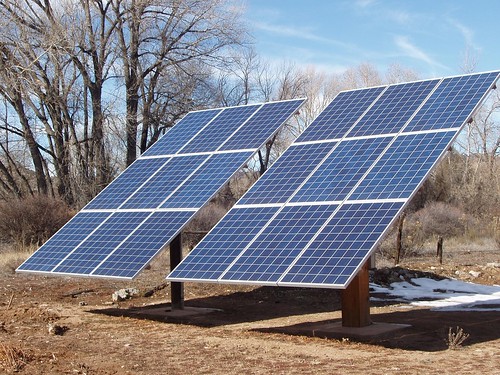
This eighteen solar panel array is generating more than enough electricity to offset the cost of energy it takes to run the Los Ebanistas, Inc. contracting firm’s woodshop and offices in Dixon, NM on an everyday basis. The extra energy that is generated is then routed back into the electric grid allowing Los Ebanistas to make a profit on the additional energy.
It’s 8:20 AM and Jo Ann Shelby, the manager of Compass Components, in Deming, New Mexico is beginning her day by going over her latest work production and business expense reports. She finds the cost of electricity to light the 90,000 square foot assembly plant is down 50 percent.
At the exact same time across the state in Dixon, New Mexico, Mark Johnson the owner of Los Ebanistas, Incorporated construction firm is in his office and hears the sound of a table saw ripping a piece of oak. He knows even though he’s using the same amount of electricity as he did last year, he’s actually making money.
What do these two businesses have in common? The answer is simple. They both invested in energy efficient and renewable energy systems with the help of the federal government.
Both businesses applied for and received financial help to offset the cost of installing these new energy systems through the Rural Energy for America Program (REAP) administered by USDA Rural Development. The REAP program was created to help agricultural producers and small rural businesses take advantage of installing alternative energy systems to help them be more competitive in their business dealings and at the same time help America become more energy independent.
This program can offset the cost of installing energy efficiency or an alternative energy system with a 25 percent grant. REAP can be used to pay for the installation of energy efficient air conditioners, heaters and lighting systems. It can also be used to pay for the installation of bioenergy, flexible fuel pumps, small and large wind and solar; geothermal-electric generation and direct use; hydropower, hydrogen, and anaerobic digester systems.

The main assembly plant building at Compass Components, Inc. in Deming, New Mexico is now equipped with a new more efficient lighting system. By replacing the old fluorescent light system the company is now saving 50 percent on its lighting bill.
Using the REAP program Compass Components Incorporated (CCI) installed a new lighting system at the Deming assembly plant. CCI received a grant to offset the cost of installing the new energy efficient lighting system. The system replaces 630 fluorescent tube lights with 48 energy-efficient T-8 Hi-Bay lights. Since installing the new lighting system CCI has seen enough savings in its electric bill to recoup its investment in a few years.
Los Ebanistas, Inc. received a grant to help pay for the cost of the installation of an 18 panel solar power system. The new system provides enough electricity to power the Los Ebanistas offices and woodworking shop where they manufacture custom cabinets and furniture. By making the investment to install the solar power array, Los Ebanistas has become more energy efficient and more profitable at the same time because it sells the extra power its solar array produces to the Jemez Mountains Electric Cooperative.
USDA is currently accepting applications for funding through the REAP program. To find out more, call your local USDA Rural Development State Office.
Labels:
business,
development,
Dixon,
efficient,
electricity,
energy,
lighting,
NM,
REAP,
save,
solar
Subscribe to:
Posts (Atom)